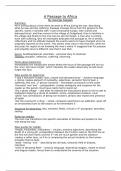
A Passage to Africa
By George Alagiah
Summary:
He is writing about a time when he went to Africa during the war, describing
what he saw and the suffering. Passage changes focus from the general to the
specific, starts in Somalia with 'I saw a thousand hungry, lean scared and
betrayed faces' and then moves to the village of Gufgaduud, then to families in
the village and finally to the one man he will not forget, a man who is smiling
even with suffering, who he eventually dedicates the passage to. He is writing
reflectively and his attitude towards the events seems to have changed since he
originally reported on the event. This seems most clear in the final line, when he
discusses his regret at not knowing the man’s name. It suggests that his purpose
and empathy level is different now that it was then.
Genre: Autobiographical, Anecdote – personal story to illustrate
Themes: macabre, reflection, suffering, informing
Points about beginning:
Immediately the introduction shows where the focus of the passage will turn to,
the 'one I will never forget', which interests the reader about why he will never
forget this face.
Wow quotes for beginning:
‘I saw a thousand hungry, lean, scared and betrayed faces’ – emotive language
+ listing creates element of sympathy, adjectives, semantic field of pain +
suffering, first line, 1st person narrative – immediate connection to the writer
‘thousand’ and ‘one’ – juxtaposition, creates ambiguity and suspense for the
reader as this person must have really had to stand out
‘like a ghost village’ – said after he repeats the instructions given to him to get to
Gafgadud implying a sense of isolation, simile, emphasises isolation, noun
‘ghost’ has connotations of being non-existent, phrase also implies the presence
of death
‘like the craving for a drug’ – simile, compares reporting to an addiction, gives off
an emotionless tone to the search as he remembers it
Structure for beginning: lists, semantic fields, critical in 3rd paragraph, describes
setting
Points for middle:
The text now transitions into specific anecdotes of families and people he has
met along the way
Wow quotes for middle:
‘simple, frictionless, motionless’ – tricolon, emotive adjectives, describing the
death of a young girl, juxtaposition between the tricolon used on the first line as
the first set were harsh and the 2nd set are much gentler and the sibilance
creates a softer tone, as if he is comparing the actual incidents to the human
empathy that he feels
‘weak’ ‘rotting’ ‘sick’ – describing the old lady, semantic field of disease,
repulsive
‘smell of decaying flesh’ – sensory language, disturbing imagery, meant to shock
and disgust reader, forces them to understand the severity of the situation
By George Alagiah
Summary:
He is writing about a time when he went to Africa during the war, describing
what he saw and the suffering. Passage changes focus from the general to the
specific, starts in Somalia with 'I saw a thousand hungry, lean scared and
betrayed faces' and then moves to the village of Gufgaduud, then to families in
the village and finally to the one man he will not forget, a man who is smiling
even with suffering, who he eventually dedicates the passage to. He is writing
reflectively and his attitude towards the events seems to have changed since he
originally reported on the event. This seems most clear in the final line, when he
discusses his regret at not knowing the man’s name. It suggests that his purpose
and empathy level is different now that it was then.
Genre: Autobiographical, Anecdote – personal story to illustrate
Themes: macabre, reflection, suffering, informing
Points about beginning:
Immediately the introduction shows where the focus of the passage will turn to,
the 'one I will never forget', which interests the reader about why he will never
forget this face.
Wow quotes for beginning:
‘I saw a thousand hungry, lean, scared and betrayed faces’ – emotive language
+ listing creates element of sympathy, adjectives, semantic field of pain +
suffering, first line, 1st person narrative – immediate connection to the writer
‘thousand’ and ‘one’ – juxtaposition, creates ambiguity and suspense for the
reader as this person must have really had to stand out
‘like a ghost village’ – said after he repeats the instructions given to him to get to
Gafgadud implying a sense of isolation, simile, emphasises isolation, noun
‘ghost’ has connotations of being non-existent, phrase also implies the presence
of death
‘like the craving for a drug’ – simile, compares reporting to an addiction, gives off
an emotionless tone to the search as he remembers it
Structure for beginning: lists, semantic fields, critical in 3rd paragraph, describes
setting
Points for middle:
The text now transitions into specific anecdotes of families and people he has
met along the way
Wow quotes for middle:
‘simple, frictionless, motionless’ – tricolon, emotive adjectives, describing the
death of a young girl, juxtaposition between the tricolon used on the first line as
the first set were harsh and the 2nd set are much gentler and the sibilance
creates a softer tone, as if he is comparing the actual incidents to the human
empathy that he feels
‘weak’ ‘rotting’ ‘sick’ – describing the old lady, semantic field of disease,
repulsive
‘smell of decaying flesh’ – sensory language, disturbing imagery, meant to shock
and disgust reader, forces them to understand the severity of the situation