MCB-30806 Sensory Perception and Consumer Preference Summary
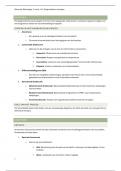
Lecture 1 Hans van Trijp
Sensory marketing = marketing that engages the consumers’ senses and affects their perception,
judgment and behaviour
Senses = haptics (touch), olfaction (smell), audition (sound), gustation (taste) and vision (sight) à
effect on:
• Attitude (liking)
• Learning
• Memory
• Behaviour
• Effects often subconsciously but with predictable effect
Experiment citrus scent = scent as sensory influence:
• Can have non-conscious effect
• On cognition (thinking) and behaviour (doing)
• Through associations with scent, the cleaning concept came into consciousness (accessible)
Other effects =
• Sensory labels of food
• Signature scents in hotels
• Packaging cues (such as Orangina)
• Crispy food sounds
How sensory input affects response =
• Direct affective response to the physical/sensory stimulus à sensory liking/sensory product
quality
• An affective response to the match between the physical/sensory aspects of the stimulus
and the internal representation or schema associated with the stimulus à
(in)appropriateness and schema affect
• Affective response to the meaning to the stimulus beyond the physical/sensory aspects à
associations with other concepts in knowledge structures
• By affecting the judgmental and decision environment à sensory can induce affect which
affects decision making
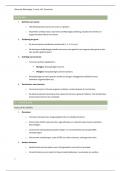
Sensory perception and consumer preference =
• The senses are the window to the outside world
• Senses include vision, audition, gustation, olfaction and somasthesis sight, sound, taste,
smell and touch/texture
• They bring outside information inside the human system
• Provide the basic inputs from which we make sense of the world
• The sensory information guides perception, preference and behaviour
• Understanding how this works and how this translates back into offering, allows for better
marketing strategy
1
Lecture 1 Hans van Trijp
Sensory marketing = marketing that engages the consumers’ senses and affects their perception,
judgment and behaviour
Senses = haptics (touch), olfaction (smell), audition (sound), gustation (taste) and vision (sight) à
effect on:
• Attitude (liking)
• Learning
• Memory
• Behaviour
• Effects often subconsciously but with predictable effect
Experiment citrus scent = scent as sensory influence:
• Can have non-conscious effect
• On cognition (thinking) and behaviour (doing)
• Through associations with scent, the cleaning concept came into consciousness (accessible)
Other effects =
• Sensory labels of food
• Signature scents in hotels
• Packaging cues (such as Orangina)
• Crispy food sounds
How sensory input affects response =
• Direct affective response to the physical/sensory stimulus à sensory liking/sensory product
quality
• An affective response to the match between the physical/sensory aspects of the stimulus
and the internal representation or schema associated with the stimulus à
(in)appropriateness and schema affect
• Affective response to the meaning to the stimulus beyond the physical/sensory aspects à
associations with other concepts in knowledge structures
• By affecting the judgmental and decision environment à sensory can induce affect which
affects decision making
Sensory perception and consumer preference =
• The senses are the window to the outside world
• Senses include vision, audition, gustation, olfaction and somasthesis sight, sound, taste,
smell and touch/texture
• They bring outside information inside the human system
• Provide the basic inputs from which we make sense of the world
• The sensory information guides perception, preference and behaviour
• Understanding how this works and how this translates back into offering, allows for better
marketing strategy
1