Definition of a hazard An event which has the potential to cause harm to the environment, people or the economy
Definition of a natural hazard A natural event that threatens people or has the potential to cause damage, destruction or death
Definition of a hazard risk The propability or chance that a natural hazard may take place
Definition of a disaster A disaster occurs when harm actually occurs to the environment, people or the economy
Categorise examples of hazards into 4
categories.
Under what condition do natural events
become hazards? If only they impact people, the environment or the economy
Magnitude - the strength/power of the event
Frequency - how often the event occurs
List 5 other ways natural hazards can be Size - the area covered by the hazard
categorised/Why are some places more Duration - the time a hazard event lasts
hazardous than others? Location - where a hazard event occurs (HICs might have more resources, therefore cope better than LICs)
Factors of risk
1. Geological location
A) along plate boundaries (tectonic activities)
B) climate (e.g. tropical storms require warm water of 27°C to form)
c) relief (higher relief, e.g. hills/ mountains, less likely to be affected deeply by hazards that mainly happen on
land)
2. Wealth/poverty
•more access to resources, like rescue teams, building hazard-proof structures, carry out preventative
measures and develop education
•poverty = more vulnerable
• developed countries vs developing countries (HIC vs LIC)
3. Social and cultural factors
A) Education (→ know how to act when a hazard happens)
Analyse 3 factors of hazard risks. B) Health/local facilities
A tropical cyclone is a very powerful rotating, low-pressure weather system which forms in the tropics (between
Tropic of Cancer 23.5°N and Tof Capricorn 23.5°S), resulting in thunderstorms, strong winds (over 120 km/h)
and heavy rainfall (up to 250 mm in one day). It consists of warm and humid air rapidly rotating around a calm
What are tropical cyclones? 'eye' in which cold and dense air sink back down to the ground.
Name 3 other names for tropical cyclones,
depending on the location. In the US and the Caribbean they are known as hurricanes, in South Asia - cyclones, in East Asia - typhoons
3 characteristics of a tropical cyclone Thunderstorms, strong winds (over 120 km/h), heavy rainfall (up to 250 mm one day)
During late summer, seawater evaporates from the warm oceans of at least 27°C, and the rapidly rising of
warm and humid air causes a increasing low pressure and also creates strong winds of at least 118 kmph. The
winds cause a circulatory motion of the air, encouraged by the Coriolis effect (spinning of earth), making the
rising air spiral up (creating an updraught), then cools and condenses to form Cumulonimbus clouds (and
releases latent heat which powers the storm). These clouds form an eyewall of the storm, and the cold and
dense air sinks down the eye of the storm, leading to the calm and low pressure conditions of the eye.
Therefore, a cyclone is a system of intense low pressure in which warm and humid air spirals around a calm
Explain how a cyclone is formed. central point which is the eye.
Difference in spinning patterns in northern and
southern hemispheres Tropical cyclones rotate due to the spin of the Earth. In the southern, spin clockwise. Northern, anticlockwise
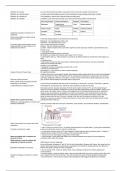
Draw a cross section of a cyclone with some
explanation
1. warm, moist air is forced to rise. 2. air spirals upwards becasue of Coriolis effect 3. cooling and condensation
Formation of cyclone in 4 steps produce cumulonimbus clouds 4. cold air in centre sinks
☐ a deep layer of humid, warm (27°C) and unstable air (where high and low air pressure meet) = a supply of
energy (heat and moisture) from the surface of the sea (during late summer)
☐ around, but not on the equator to support the Coriolis effect.
Name and explain the 3 conditions for ☐ small changes in wind speed and direction with increasing altitude (wind shear); this encourages the
cyclones to form. circulatory motion within the cyclone.
What measure is used to measure the
magnitude of tropical cyclones? Saffir-Simpson scale (5 categories)
Not at the Equator (is between 5° and 15° N/S for the Coriolis effect). Between the Tropics. Spin away from the
equator. Sea+coast zones only (powered by consensation of hot humid air, evaporated from sea). Blow from
Describe the distribution of cyclones. East to West (east countries are more susceptible)
☐the very strong winds - these can destroy trees, crops, buildings, transport links, power supplies and
communications
☐the storm surges - these are sudden rises in sea level associated with the very low pressure which allows the
Identify the damages of cyclones to coastal sea to 'expand' and the level of the sea to rise; storm surges can cause immense damage incoastal areas.
areas. ☐the torrential rain - this can lead to serious inland flooding and often triggers landslides and mudslides
Definition of a natural hazard A natural event that threatens people or has the potential to cause damage, destruction or death
Definition of a hazard risk The propability or chance that a natural hazard may take place
Definition of a disaster A disaster occurs when harm actually occurs to the environment, people or the economy
Categorise examples of hazards into 4
categories.
Under what condition do natural events
become hazards? If only they impact people, the environment or the economy
Magnitude - the strength/power of the event
Frequency - how often the event occurs
List 5 other ways natural hazards can be Size - the area covered by the hazard
categorised/Why are some places more Duration - the time a hazard event lasts
hazardous than others? Location - where a hazard event occurs (HICs might have more resources, therefore cope better than LICs)
Factors of risk
1. Geological location
A) along plate boundaries (tectonic activities)
B) climate (e.g. tropical storms require warm water of 27°C to form)
c) relief (higher relief, e.g. hills/ mountains, less likely to be affected deeply by hazards that mainly happen on
land)
2. Wealth/poverty
•more access to resources, like rescue teams, building hazard-proof structures, carry out preventative
measures and develop education
•poverty = more vulnerable
• developed countries vs developing countries (HIC vs LIC)
3. Social and cultural factors
A) Education (→ know how to act when a hazard happens)
Analyse 3 factors of hazard risks. B) Health/local facilities
A tropical cyclone is a very powerful rotating, low-pressure weather system which forms in the tropics (between
Tropic of Cancer 23.5°N and Tof Capricorn 23.5°S), resulting in thunderstorms, strong winds (over 120 km/h)
and heavy rainfall (up to 250 mm in one day). It consists of warm and humid air rapidly rotating around a calm
What are tropical cyclones? 'eye' in which cold and dense air sink back down to the ground.
Name 3 other names for tropical cyclones,
depending on the location. In the US and the Caribbean they are known as hurricanes, in South Asia - cyclones, in East Asia - typhoons
3 characteristics of a tropical cyclone Thunderstorms, strong winds (over 120 km/h), heavy rainfall (up to 250 mm one day)
During late summer, seawater evaporates from the warm oceans of at least 27°C, and the rapidly rising of
warm and humid air causes a increasing low pressure and also creates strong winds of at least 118 kmph. The
winds cause a circulatory motion of the air, encouraged by the Coriolis effect (spinning of earth), making the
rising air spiral up (creating an updraught), then cools and condenses to form Cumulonimbus clouds (and
releases latent heat which powers the storm). These clouds form an eyewall of the storm, and the cold and
dense air sinks down the eye of the storm, leading to the calm and low pressure conditions of the eye.
Therefore, a cyclone is a system of intense low pressure in which warm and humid air spirals around a calm
Explain how a cyclone is formed. central point which is the eye.
Difference in spinning patterns in northern and
southern hemispheres Tropical cyclones rotate due to the spin of the Earth. In the southern, spin clockwise. Northern, anticlockwise
Draw a cross section of a cyclone with some
explanation
1. warm, moist air is forced to rise. 2. air spirals upwards becasue of Coriolis effect 3. cooling and condensation
Formation of cyclone in 4 steps produce cumulonimbus clouds 4. cold air in centre sinks
☐ a deep layer of humid, warm (27°C) and unstable air (where high and low air pressure meet) = a supply of
energy (heat and moisture) from the surface of the sea (during late summer)
☐ around, but not on the equator to support the Coriolis effect.
Name and explain the 3 conditions for ☐ small changes in wind speed and direction with increasing altitude (wind shear); this encourages the
cyclones to form. circulatory motion within the cyclone.
What measure is used to measure the
magnitude of tropical cyclones? Saffir-Simpson scale (5 categories)
Not at the Equator (is between 5° and 15° N/S for the Coriolis effect). Between the Tropics. Spin away from the
equator. Sea+coast zones only (powered by consensation of hot humid air, evaporated from sea). Blow from
Describe the distribution of cyclones. East to West (east countries are more susceptible)
☐the very strong winds - these can destroy trees, crops, buildings, transport links, power supplies and
communications
☐the storm surges - these are sudden rises in sea level associated with the very low pressure which allows the
Identify the damages of cyclones to coastal sea to 'expand' and the level of the sea to rise; storm surges can cause immense damage incoastal areas.
areas. ☐the torrential rain - this can lead to serious inland flooding and often triggers landslides and mudslides