

Chapter 22
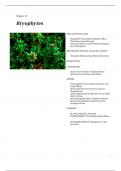
Bryophytes
THE LEAP ONTO LAND
Bryophytes Faced Many Problems When
They Moved onto the Land
Key Innovations in Land Plants First Appear
in the Bryophytes
BRYOPHYTES ARE NOT A NATURAL GROUP
Bryophyte Relationships Remain Uncertain
HORNWORTS
LIVERWORTS
Some Liverworts Have Thalloid Bodies
Most Liverworts Have Leafy Bodies
MOSSES
Gametophytes Have Protonemal, Bud, and
Leafy Phases
Mosses Have Several Forms of Asexual
Reproduction
Sexual Reproduction Typically Occurs at the
Ends of Stems
Moss Sporophytes Have Complex Capsules
Mosses Have Significant Economic and
Ecological Value
SUMMARY
PLANTS, PEOPLE, AND THE
ENVIRONMENT: The Ultimate Shade Plants
ECONOMIC BOTANY: Mining Moss: Peat
for Profit
1
,KEY CONCEPTS
1. Bryophytes are land plants that differ from all other plants lacking lignified
vascular tissue by having the gametophyte generation dominant and having
unbranched sporophytes that produce a single sporangium.
2. Modern bryophytes almost certainly evolved from a single common ancestor, and
they likely represent several lineages along the evolutionary path to vascular plants.
Recent fossil discoveries push back the earliest appearance of bryophytes to 475
million years ago. Existing bryophytes preserve a suite of ancestral characteristics
that give us insight into the origin of land plants. Bryophyte relationships remain
uncertain; however, existing bryophytes fall into three lineages: liverworts
(Marchantiophyta), hornworts (Anthocerotophyta), and mosses (Bryophyta).
Traditionally, liverworts have been considered the earliest evolving lineage of
bryophytes, but recent evidence suggests that hornworts may be the earliest.
Mosses are likely the closest sister group to vascular plants.
3. Key innovations of the bryophyte radiation, not present in their algal ancestors,
include multicellular gametangia (antheridia and archegonia) that protect and
insulate gametes from the environment; a multicellular sporophyte that develops
from an embryo embedded within and nutritionally dependent on the gametophyte;
and the presence of a waxy coating on the shoots (cuticle) and the spores
(sporopollenin). The most complex bryophyte sporophytes also contain novel
structures such as stomata and water- and sugar-conducting tissue (unlignified
vascular tissue). Bryophyte gametophytes are not able to control their water
balance, and they dry out rapidly in the absence of free water. The desiccated plants
are still alive and can become active within minutes of being rewetted.
4. Mosses are important in many ecosystems. They provide most of the biomass in
boreal vegetation such as tundra, they dominate the understory of cool-temperate
forests, and they are common in damp microenvironments. Some species are
aquatic and most require humid conditions, but some can colonize dry, exposed
habitats such as rock outcrops and desert soil surfaces.
22.1 THE LEAP ONTO LAND
Despite being common almost everywhere, bryophytes often are ignored because of
their small stature, lack of familiar features, and the fact that in many environments
they are dormant for much of the year. Yet bryophytes are exceptionally diverse,
with nearly 25,000 named species. Among land plants, only flowering plants and
ferns have more species. Bryophytes also are extremely widespread, being present
on all continents, including Antarctica. They have a long evolutionary history, and
some bryophytes are a sister group to vascular plants (Fig. 22.1).
2
, The great diversity of
bryophyte species reflects a stunning
diversity of habitats, from barren
arctic and alpine ground to hot
deserts, from the bottom of lakes to
the canopy of tropical rain forests.
Peat mosses grow submerged in the
acidic waters of bogs, whereas
various liverworts grow as epiphytes
on the leaves of trees. Some mosses
grow on rocks exposed to ocean salt
spray or intense heat and sunlight.
Others tolerate very dim light and
grow in the understory of dense
forests or inside caves and burrows
(Fig. 22.2). These adaptable plants
can be found nearly everywhere that
plant life is possible. But despite
being so adaptable, all bryophytes
have one major limitation. They
require free water, not just soil
moisture, in their environment.
Without it, they cannot reproduce
sexually.
As you might expect from the Figure 22.1. A cladogram of relationships
diverse environments inhabited by between the bryophytes and vascular plants.
bryophytes, they have a Hornworts are the basal-most lineage of
corresponding diversity of body land plants, although other hypotheses
forms, from the giant moss place liverworts in that position. Mosses are
Dawsonia superba, which can reach almost certainly the sister group to vascular
a height of 70 cm and resembles a plants.
pine tree seedling, to Ptychomnion
aciculare, in which "dwarf" male
plants grow attached to the leaves of
the female plants.
These relatively inconspicuous and overlooked plants warrant more careful
study for a number of reasons. Bryophytes can be important ecologically, by altering
pH, absorbing carbon, regulating nutrient cycling, colonizing barren surfaces,
creating soils, and reducing erosion. They often are important elements in the local
water cycle, absorbing and holding moisture so that other plants benefit. They are
also useful to environmental scientists because the majority of bryophytes, despite
their amazing resilience, are intolerant of pollution and often disappear from
contaminated areas. This sensitivity makes them good indicators of air and water
quality. Bryophytes also possess many physiological adaptations that interest
scientists. For example, some bryophytes can survive extended periods (more than
3
Bryophytes
THE LEAP ONTO LAND
Bryophytes Faced Many Problems When
They Moved onto the Land
Key Innovations in Land Plants First Appear
in the Bryophytes
BRYOPHYTES ARE NOT A NATURAL GROUP
Bryophyte Relationships Remain Uncertain
HORNWORTS
LIVERWORTS
Some Liverworts Have Thalloid Bodies
Most Liverworts Have Leafy Bodies
MOSSES
Gametophytes Have Protonemal, Bud, and
Leafy Phases
Mosses Have Several Forms of Asexual
Reproduction
Sexual Reproduction Typically Occurs at the
Ends of Stems
Moss Sporophytes Have Complex Capsules
Mosses Have Significant Economic and
Ecological Value
SUMMARY
PLANTS, PEOPLE, AND THE
ENVIRONMENT: The Ultimate Shade Plants
ECONOMIC BOTANY: Mining Moss: Peat
for Profit
1
,KEY CONCEPTS
1. Bryophytes are land plants that differ from all other plants lacking lignified
vascular tissue by having the gametophyte generation dominant and having
unbranched sporophytes that produce a single sporangium.
2. Modern bryophytes almost certainly evolved from a single common ancestor, and
they likely represent several lineages along the evolutionary path to vascular plants.
Recent fossil discoveries push back the earliest appearance of bryophytes to 475
million years ago. Existing bryophytes preserve a suite of ancestral characteristics
that give us insight into the origin of land plants. Bryophyte relationships remain
uncertain; however, existing bryophytes fall into three lineages: liverworts
(Marchantiophyta), hornworts (Anthocerotophyta), and mosses (Bryophyta).
Traditionally, liverworts have been considered the earliest evolving lineage of
bryophytes, but recent evidence suggests that hornworts may be the earliest.
Mosses are likely the closest sister group to vascular plants.
3. Key innovations of the bryophyte radiation, not present in their algal ancestors,
include multicellular gametangia (antheridia and archegonia) that protect and
insulate gametes from the environment; a multicellular sporophyte that develops
from an embryo embedded within and nutritionally dependent on the gametophyte;
and the presence of a waxy coating on the shoots (cuticle) and the spores
(sporopollenin). The most complex bryophyte sporophytes also contain novel
structures such as stomata and water- and sugar-conducting tissue (unlignified
vascular tissue). Bryophyte gametophytes are not able to control their water
balance, and they dry out rapidly in the absence of free water. The desiccated plants
are still alive and can become active within minutes of being rewetted.
4. Mosses are important in many ecosystems. They provide most of the biomass in
boreal vegetation such as tundra, they dominate the understory of cool-temperate
forests, and they are common in damp microenvironments. Some species are
aquatic and most require humid conditions, but some can colonize dry, exposed
habitats such as rock outcrops and desert soil surfaces.
22.1 THE LEAP ONTO LAND
Despite being common almost everywhere, bryophytes often are ignored because of
their small stature, lack of familiar features, and the fact that in many environments
they are dormant for much of the year. Yet bryophytes are exceptionally diverse,
with nearly 25,000 named species. Among land plants, only flowering plants and
ferns have more species. Bryophytes also are extremely widespread, being present
on all continents, including Antarctica. They have a long evolutionary history, and
some bryophytes are a sister group to vascular plants (Fig. 22.1).
2
, The great diversity of
bryophyte species reflects a stunning
diversity of habitats, from barren
arctic and alpine ground to hot
deserts, from the bottom of lakes to
the canopy of tropical rain forests.
Peat mosses grow submerged in the
acidic waters of bogs, whereas
various liverworts grow as epiphytes
on the leaves of trees. Some mosses
grow on rocks exposed to ocean salt
spray or intense heat and sunlight.
Others tolerate very dim light and
grow in the understory of dense
forests or inside caves and burrows
(Fig. 22.2). These adaptable plants
can be found nearly everywhere that
plant life is possible. But despite
being so adaptable, all bryophytes
have one major limitation. They
require free water, not just soil
moisture, in their environment.
Without it, they cannot reproduce
sexually.
As you might expect from the Figure 22.1. A cladogram of relationships
diverse environments inhabited by between the bryophytes and vascular plants.
bryophytes, they have a Hornworts are the basal-most lineage of
corresponding diversity of body land plants, although other hypotheses
forms, from the giant moss place liverworts in that position. Mosses are
Dawsonia superba, which can reach almost certainly the sister group to vascular
a height of 70 cm and resembles a plants.
pine tree seedling, to Ptychomnion
aciculare, in which "dwarf" male
plants grow attached to the leaves of
the female plants.
These relatively inconspicuous and overlooked plants warrant more careful
study for a number of reasons. Bryophytes can be important ecologically, by altering
pH, absorbing carbon, regulating nutrient cycling, colonizing barren surfaces,
creating soils, and reducing erosion. They often are important elements in the local
water cycle, absorbing and holding moisture so that other plants benefit. They are
also useful to environmental scientists because the majority of bryophytes, despite
their amazing resilience, are intolerant of pollution and often disappear from
contaminated areas. This sensitivity makes them good indicators of air and water
quality. Bryophytes also possess many physiological adaptations that interest
scientists. For example, some bryophytes can survive extended periods (more than
3


