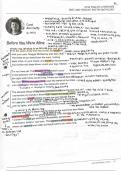
Reliability- means that findings can be checked by another Primary data- information that was Different types of research methods:
researcher and if they redid the research in the same way they not present before the research Structured questionnaire
would get the same results began, generated first hand by the Unstructured questionnaire
Quantitive data- refers to researcher Structured interview
Validity- the truthfulness and information in a numerical form Unstructured interview
accuracy of the data; the more Representative- refers to whether or not Covert observation
accurate something i the more Qualatitve data- refers to all data the people we study are a typical cross Participant observation
valid it is. not in the form of numbers section of the group we are interested in Experiment (lab and field)
Secondary data- refers to second hand data that already Durkheim Data/statistics: primary and secondary
exists. Includes data from historical records, official
statistics, government reports, auto biographies, Positivism: A positivist sociologist Factors influencing choice
newspaper wants to identify the underlying of topic:
He wanted to establish sociology as causes of peoples behaviour Theoretical perspective
a science Data collected is Society's values
Demonstrate that suicide Data collected
"
qualitative Funding bodies
could not be explained by He used the suicide is quantitative Practical issues
sociology alone statistics from several Interpretivism: wants to understand
European counties how people give meaning to the social
Durkheim & suicide world around them Theoretical issues:
Reliability
Max Weber Validity
He would establish corrections Representative
and reveal the casual
Research methods
.
relationships which lead to
suicide
Practical issues:
Ethical issues: Time and money
Aim: state to that identifies what a sociologist intends to study and
hope to achieve by carrying out the research Informed consent/ right to withdraw Requirements and funding bodies
Confidentiality and privacy Personals skills and characteristics
Operationalism: the process in which Effects on research participants Subject matter
Hypothesis: its a testable statement sociologists define concepts and ideas Vulnerable groups Research opportunity
which a researcher will address in in order to measure them
their research and collect evidence Covert research- deception
to see whether the hypothesis is Quasi random/ systemic sampling-
true or not Research process:
every NTH perso chosen eg 36th Select a research or topic to investigate
person Formulate a aim or hypothesis
Sampling: aim is that the sample of people are representative Operationalise concepts
of the research population Choose research method/ sampling technique
Quota sampling- the population is stratified
I.
' ' The sampling frame- A list of all the and then each interviewer is given a quota Ensure ethical guidelines are being followed
Conduct pilot study
members of the population we are eg 20 females and 20 males Collect data
Random sampling- interested in studying Analyse results
names out of a hat but Conclude and evaluate research
large sample Stratified random sampling- E.g. the population is broken
down into age, class, gender etc and the sample is created Snowball sapling- to overcome
in the same proportion eg if 20% of the population is practical problems, a researcher could
Opportunity sampling- choose from use snowball sampling- contact a
individuals that are easiest to reach under 18 then 20% of the sample is under 18 number of key individuals who suggest
such as passers by on the street others to include
researcher and if they redid the research in the same way they not present before the research Structured questionnaire
would get the same results began, generated first hand by the Unstructured questionnaire
Quantitive data- refers to researcher Structured interview
Validity- the truthfulness and information in a numerical form Unstructured interview
accuracy of the data; the more Representative- refers to whether or not Covert observation
accurate something i the more Qualatitve data- refers to all data the people we study are a typical cross Participant observation
valid it is. not in the form of numbers section of the group we are interested in Experiment (lab and field)
Secondary data- refers to second hand data that already Durkheim Data/statistics: primary and secondary
exists. Includes data from historical records, official
statistics, government reports, auto biographies, Positivism: A positivist sociologist Factors influencing choice
newspaper wants to identify the underlying of topic:
He wanted to establish sociology as causes of peoples behaviour Theoretical perspective
a science Data collected is Society's values
Demonstrate that suicide Data collected
"
qualitative Funding bodies
could not be explained by He used the suicide is quantitative Practical issues
sociology alone statistics from several Interpretivism: wants to understand
European counties how people give meaning to the social
Durkheim & suicide world around them Theoretical issues:
Reliability
Max Weber Validity
He would establish corrections Representative
and reveal the casual
Research methods
.
relationships which lead to
suicide
Practical issues:
Ethical issues: Time and money
Aim: state to that identifies what a sociologist intends to study and
hope to achieve by carrying out the research Informed consent/ right to withdraw Requirements and funding bodies
Confidentiality and privacy Personals skills and characteristics
Operationalism: the process in which Effects on research participants Subject matter
Hypothesis: its a testable statement sociologists define concepts and ideas Vulnerable groups Research opportunity
which a researcher will address in in order to measure them
their research and collect evidence Covert research- deception
to see whether the hypothesis is Quasi random/ systemic sampling-
true or not Research process:
every NTH perso chosen eg 36th Select a research or topic to investigate
person Formulate a aim or hypothesis
Sampling: aim is that the sample of people are representative Operationalise concepts
of the research population Choose research method/ sampling technique
Quota sampling- the population is stratified
I.
' ' The sampling frame- A list of all the and then each interviewer is given a quota Ensure ethical guidelines are being followed
Conduct pilot study
members of the population we are eg 20 females and 20 males Collect data
Random sampling- interested in studying Analyse results
names out of a hat but Conclude and evaluate research
large sample Stratified random sampling- E.g. the population is broken
down into age, class, gender etc and the sample is created Snowball sapling- to overcome
in the same proportion eg if 20% of the population is practical problems, a researcher could
Opportunity sampling- choose from use snowball sampling- contact a
individuals that are easiest to reach under 18 then 20% of the sample is under 18 number of key individuals who suggest
such as passers by on the street others to include