Theme 1: Introduction
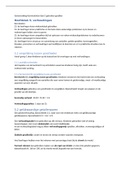
Accounting
The process of identifying, measuring and communicating economic information to
permit informed and decisions by users of information
Accounting equation
Capital = Assets - liability
Purpose of business
● Purpose of business is to create and keep of customers
● In order to succeed a business must focus on keeping the customer satisfied
Types of business
● Sole trader
● Partnership
● Limited Company
● PLC
● Charity organisations
● Governments
● Franchise
Objectives
● Profitability
● Productivity
● Customer service
● Growth
● Maintain Finance
● Marketing
● Competitive Analysis
Why are businesses divided in departments?
● The sheer volume of activity or number of staff employed makes it impossible for
one person to manage them.
● Certain business operations require specialised knowledge and expertise
● Geographical locations of some of business operations makes it more practical to
have managers managing the different operations in each location.
Purpose of cost information;
1. Inventory valuation
, 2. Future costs and budgeting
3. Cost control and performance
Strategic management process:
1. Establish mission and objectives
2. Undertake a position analysis
3. Identify and assess the strategic options and formulate plans
4. Preform, review and control
Management information system:
- MIS is a computerised database of financial information organised and
programmed in a way that produces regular reports on operations for every level
Common features:
● information identification
● Information recording
● information analysis
● Information reporting
What information do managers need?
1. Developing objectives and plans: managers are responsible for establishing
mission and objectives - so MIS need to generate information financial and non
financial to allow the to set the goal and objectives
2. Performance evaluation and control: MIS can help in reviewing performance of
the business against agreed
3. Allocating resources: resources available to a business are limited. Managers
need to ensure that they are used in an effective and efficient manner
4. Determining costs and benefits: management accounting can provide managers
with costs and benefits associated with a particle strategy
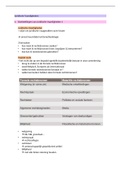
Financial vs management accounting;
- Managerial accounting: (cost accounting)
The process of identifying, measuring & interpreting and communicating information for
the pursuit of an organisation
● information used by the managers in order to assess progress and take
important decisions
● Tends to be more detailed
● Not subject to any regulations as they are for internal business use
● Prepared when are required by managers
, ● Can be used for budgeting or future planning
● Reports include opportunities, risk, analysis
- Financial
● information used by external shareholders i.e government, investors, employees
● Shows the big picture (overview)
● Reports are subject to regulatory framework set down by laws
● Prepared on an annual basis
● Tends to summarise historic information
● Only quantitative capital (monetary valued items) included in reports
- Key aspects:
● Identifying: key financial components of an organisation i.e assets, liabilities
● Measuring: the monetary value of key components of an organisation in a way
that represents its true value
● Communicating: the financial information in ways that are useful to the users of
that information
- Strategic management process
1.Establish mission and objectives
2.Undertake a position analysis
3.Identify and assess the strategic options
4.Select strategic options and plan ahead
5.Preform review and control
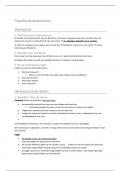
Accounting concepts
Accounting assumptions & characteristics & concepts
- Assumptions
● going concern (accountants assume unless there is evidence that the company
is not going broke - continuity)
● Accrual/matching (income should be properly matched with the expenses of a
given accounting period)
- Characteristics
● Understandability; easy to understand with basic skills
● Relevance; has to be useful in context
● Reliability; truthful, accurate and verifiable
● Comparability; comparable in performance over time
- Concepts:
● Prudence: profits are not recognised until a sale has been complete
Accounting
The process of identifying, measuring and communicating economic information to
permit informed and decisions by users of information
Accounting equation
Capital = Assets - liability
Purpose of business
● Purpose of business is to create and keep of customers
● In order to succeed a business must focus on keeping the customer satisfied
Types of business
● Sole trader
● Partnership
● Limited Company
● PLC
● Charity organisations
● Governments
● Franchise
Objectives
● Profitability
● Productivity
● Customer service
● Growth
● Maintain Finance
● Marketing
● Competitive Analysis
Why are businesses divided in departments?
● The sheer volume of activity or number of staff employed makes it impossible for
one person to manage them.
● Certain business operations require specialised knowledge and expertise
● Geographical locations of some of business operations makes it more practical to
have managers managing the different operations in each location.
Purpose of cost information;
1. Inventory valuation
, 2. Future costs and budgeting
3. Cost control and performance
Strategic management process:
1. Establish mission and objectives
2. Undertake a position analysis
3. Identify and assess the strategic options and formulate plans
4. Preform, review and control
Management information system:
- MIS is a computerised database of financial information organised and
programmed in a way that produces regular reports on operations for every level
Common features:
● information identification
● Information recording
● information analysis
● Information reporting
What information do managers need?
1. Developing objectives and plans: managers are responsible for establishing
mission and objectives - so MIS need to generate information financial and non
financial to allow the to set the goal and objectives
2. Performance evaluation and control: MIS can help in reviewing performance of
the business against agreed
3. Allocating resources: resources available to a business are limited. Managers
need to ensure that they are used in an effective and efficient manner
4. Determining costs and benefits: management accounting can provide managers
with costs and benefits associated with a particle strategy
Financial vs management accounting;
- Managerial accounting: (cost accounting)
The process of identifying, measuring & interpreting and communicating information for
the pursuit of an organisation
● information used by the managers in order to assess progress and take
important decisions
● Tends to be more detailed
● Not subject to any regulations as they are for internal business use
● Prepared when are required by managers
, ● Can be used for budgeting or future planning
● Reports include opportunities, risk, analysis
- Financial
● information used by external shareholders i.e government, investors, employees
● Shows the big picture (overview)
● Reports are subject to regulatory framework set down by laws
● Prepared on an annual basis
● Tends to summarise historic information
● Only quantitative capital (monetary valued items) included in reports
- Key aspects:
● Identifying: key financial components of an organisation i.e assets, liabilities
● Measuring: the monetary value of key components of an organisation in a way
that represents its true value
● Communicating: the financial information in ways that are useful to the users of
that information
- Strategic management process
1.Establish mission and objectives
2.Undertake a position analysis
3.Identify and assess the strategic options
4.Select strategic options and plan ahead
5.Preform review and control
Accounting concepts
Accounting assumptions & characteristics & concepts
- Assumptions
● going concern (accountants assume unless there is evidence that the company
is not going broke - continuity)
● Accrual/matching (income should be properly matched with the expenses of a
given accounting period)
- Characteristics
● Understandability; easy to understand with basic skills
● Relevance; has to be useful in context
● Reliability; truthful, accurate and verifiable
● Comparability; comparable in performance over time
- Concepts:
● Prudence: profits are not recognised until a sale has been complete