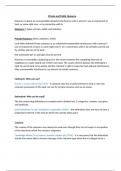
Private and Public Nuisance
Nuisance is about an unreasonable/unlawful interference with a person’s use or enjoyment of
land, or some right over, or in connection with it.
Nuisance: 3 types: private, public and statutory
Private Nuisance: Noise, pollution, smells
Lord Atkin defined Private nuisance as an unlawful/unreasonable interference with a person’s
use or enjoyment of land, or some right over it, or in connection with it, by activities carried out
by another person on his land.
Not actionable per se; damage must be proved
Nuisance is essentially a balancing act for the courts between the competing interests of
neighbours to make lawful use of their own land. The courts need to balance the defendant’s
right to use his land as he wishes and the claimant’s right to enjoy his land without interference.
Only unreasonable interference can amount to private nuisance.
Claimants: Who can sue?
Hunter v Canary Wharf Ltd [1997] - A claimant who has a lawful interest in land or who has
exclusive possession of the land can sue for private nuisance such as an owner.
Defendant: Who can be sued?
The law concerning defendants is complex and is divided into 3 categories: creators, occupiers
and landlords.
Esso Petroleum Co Ltd v Southport Corporation [1956] – the defendant does not have to have a
proprietary interest in the land on which the activity takes place
Creators:
The creator of the nuisance may always be sued even though they are no longer in occupation
of the land from which the nuisance originates.
Cambridge Water Co v Eastern Counties Leather plc [1994] – it is necessary that the defendant
should have been able to foresee damage of the relevant type when the act alleged to be a
Nuisance is about an unreasonable/unlawful interference with a person’s use or enjoyment of
land, or some right over, or in connection with it.
Nuisance: 3 types: private, public and statutory
Private Nuisance: Noise, pollution, smells
Lord Atkin defined Private nuisance as an unlawful/unreasonable interference with a person’s
use or enjoyment of land, or some right over it, or in connection with it, by activities carried out
by another person on his land.
Not actionable per se; damage must be proved
Nuisance is essentially a balancing act for the courts between the competing interests of
neighbours to make lawful use of their own land. The courts need to balance the defendant’s
right to use his land as he wishes and the claimant’s right to enjoy his land without interference.
Only unreasonable interference can amount to private nuisance.
Claimants: Who can sue?
Hunter v Canary Wharf Ltd [1997] - A claimant who has a lawful interest in land or who has
exclusive possession of the land can sue for private nuisance such as an owner.
Defendant: Who can be sued?
The law concerning defendants is complex and is divided into 3 categories: creators, occupiers
and landlords.
Esso Petroleum Co Ltd v Southport Corporation [1956] – the defendant does not have to have a
proprietary interest in the land on which the activity takes place
Creators:
The creator of the nuisance may always be sued even though they are no longer in occupation
of the land from which the nuisance originates.
Cambridge Water Co v Eastern Counties Leather plc [1994] – it is necessary that the defendant
should have been able to foresee damage of the relevant type when the act alleged to be a