Silent witness
Music is thriller/ demonic/ scary
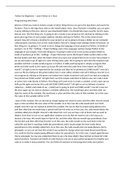
To what extent does Silent Witness fulfil the key tropes of forensic television?
You could address the key elements as the show began, placing it within the wider literature
on forensics tv, and then address how the narrative changes, with all that implies. You still
need to address the nature of the cases and what they suggest about crime and
punishment, does it lead to the containment of crime at the end of each episode
First episode titled Amanda Burton (About the woman female pathologists) episode begins in a
prison for young boys and memoires from his childhood. Then moves to projector of crime scene
photos Amanda teaching students in a university.
Police crime scene workers have a social life and difficult home life. Cuts between the pathologist
and the criminals/ murder.
PPE and police and investigator awaited the pathologist and forensic scientist. They build a team
here. Identified the body in the mortuary. Examining body and identifying cause of death, showing
what pathologists do. Very scientific and systematic recording of the body. Using film camera and
rulers and has two others taking written notes. Cleaning and showering after post-mortem.
Police station and labs separate, very real-life situation in time with society in 1996.
Crime – using science to find cause of death
- Trying to prove it was murder, a child died to must be murder.
- Police investigator questions witnesses at their homes using pen and paper.
- Interview people separately.
- Broadcasting the murder on news.
- Very calm no crazy chases or any danger.
- Court proceeding, pathologist giving evidence in court.
- “it’s all a matter of emphasis”
- Real life ideology that the investigation must be approved by court first, not all dependant
on the post-mortem also comes down to the investigative work.
- Pathologist interviewing prisoner for evidence, being empathetic to prisoner for answers
alongside police officer.
- Missing link is found.
- Look at different location of linked murder to find more evidence.
- Media and press filming, causing a riot.
- Showing everything, corpse. Scientific talk.
- Investigator goes after criminal seeks out the murderer.
- Attack on police, investigator, pathologist. Criminal leaves clues.
- Questioned criminal in question room at police department.
The investigator is hardboiled traditional type character.
Music is thriller/ demonic/ scary
To what extent does Silent Witness fulfil the key tropes of forensic television?
You could address the key elements as the show began, placing it within the wider literature
on forensics tv, and then address how the narrative changes, with all that implies. You still
need to address the nature of the cases and what they suggest about crime and
punishment, does it lead to the containment of crime at the end of each episode
First episode titled Amanda Burton (About the woman female pathologists) episode begins in a
prison for young boys and memoires from his childhood. Then moves to projector of crime scene
photos Amanda teaching students in a university.
Police crime scene workers have a social life and difficult home life. Cuts between the pathologist
and the criminals/ murder.
PPE and police and investigator awaited the pathologist and forensic scientist. They build a team
here. Identified the body in the mortuary. Examining body and identifying cause of death, showing
what pathologists do. Very scientific and systematic recording of the body. Using film camera and
rulers and has two others taking written notes. Cleaning and showering after post-mortem.
Police station and labs separate, very real-life situation in time with society in 1996.
Crime – using science to find cause of death
- Trying to prove it was murder, a child died to must be murder.
- Police investigator questions witnesses at their homes using pen and paper.
- Interview people separately.
- Broadcasting the murder on news.
- Very calm no crazy chases or any danger.
- Court proceeding, pathologist giving evidence in court.
- “it’s all a matter of emphasis”
- Real life ideology that the investigation must be approved by court first, not all dependant
on the post-mortem also comes down to the investigative work.
- Pathologist interviewing prisoner for evidence, being empathetic to prisoner for answers
alongside police officer.
- Missing link is found.
- Look at different location of linked murder to find more evidence.
- Media and press filming, causing a riot.
- Showing everything, corpse. Scientific talk.
- Investigator goes after criminal seeks out the murderer.
- Attack on police, investigator, pathologist. Criminal leaves clues.
- Questioned criminal in question room at police department.
The investigator is hardboiled traditional type character.