Samenvatting: European Politics
Prof. Steven Van Hecke
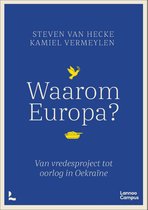
Boek: Waarom Europa? – Van vredesproject tot oorlog in Oekraïne
(Steven Van Hecke & Kamiel Vermeylen)
European Integration since 1945
Why Europe?
Introduction and Political Geography
Inleidende clip: History of Europe (1000-2020)
Quotes
‘Not one inch eastward’
o About the enlargement of NATO
o Said by: Foreign Affairs Minister James Baker (USA)
Focus on history (+ link with current affairs) vs integration theories, decision-making, politicies etc.
From 1940s until today
6 questions = 6 topics + 6 periods
Written examen (definitions, closed and open questions – EN/NL)
Course/handbook = non-exhaustive but representative overview BUT limitations:
Gender bias: only founding fathers & Main focus on Western Europe
o First female Prime Minister of a Western country = Margaret Thatcher
o First female German Councilor = Angela Merkel (CDU; 1 of the biggest parties of
Europe)
Top-down approach: Only most important people/protagonists and most important member
states
History taught by a political scientist:
Empirics matter: facts, persons and events (as well as ideas, interests, representations…)
Long term developments, consequences of certain events (vs dates, names and ‘petites histoires’
(For example.: Liz Truss was born a hundred years after Churchill)
Structural role of actors and institutions, modes of decision-making, opposing views on European
Integration + with references to primary resources + what is relevant to understand the EU as it is
nowadays
‘Deadly sins’ in the EU…
1. Council of the European Union (the Council) ≠ European Council ≠ Council of Europe
2. British Isles > Republic of Ireland + United Kingdom of Great Britain and Northern Ireland >
Great Britain > England + Wales + Scotland
3. Benelux ≠ Benelux countries
4. EMU = Economic and Monetary Union
5. Regulation = verordening
Directive = richtlijn
6. Scandinavië (Denemarken, Noorwegen, Zweden) ≠ Nordic Countries (Denemarken, Finland,
IJsland, Noorwegen en Zweden en hun overzeese gebiedsdelen)
7. …
1
,Exam tips to write a successful exam
Definitions will be asked
Closed questions & open questions
Bullet points (with sentences) are allowed
No passe-partout answers (level)
From Schuman to von der Leyen
3 perspectives: Treaties (deepening) – Geography/enlargement (enlargement and exit) – Crises
1) EU = treaty history
Schuman declaration 1950 > Paris 1950-51-52 > ECSC
EDC 1951-51- (1954)
Treaties of Rome 1956-57-58 > EEC + Euratom
SEA 1985-86-87
Maastricht Treaty 1990-92-93 (Summit December 1991) > EU
Amsterdam 1996-97-99
Nice 2000-01-03
Convention 2002-03 > Constitutional Treaty 2003-04- (2005)
Lisbon Treaty 2007-07-09
+ Fusion treaty/Schengen/Fiscal Compact ...
How powerful is the EU as a political system?
> How question = decision-making
> What question = competences
2) EU = enlargement history
1952: France/(West) Germany/Italy/Benelux-countries
1973: UK/Ireland/Denmark (Norway)
1981: Greece
1986: Spain/Portugal
1990: former GDR (= East Germany)
1995: Austria/Finland/Sweden (Norway)
2004: Estonia/Latvia/Lithuania/Poland/Czech
Republic/Slovakia/Slovenia/Hungary/Cyprus/Malta
Big Bang enlargement = The largest expansion of the European Union
10 countries enter in once
2007: Bulgaria/Romania
2013 (1 juli): Croatia
2020 (31 January): United Kingdom
+ Iceland/Türkiye/Western Balkan countries + ...
27 member states & 1 mistake
3) EU = history of crises
Council of Europe Referenda
EDC > NATO membership Maastricht/Nice/
Germany Constitutional Treaty
British accession Euro crises
‘Empty chair crises’ 1965- Covid-19 crisis
1966 Migration crisis
Monetary union Brexit
Eurosclerose …
2
,3
,Some book notes:
Wilfried Martens: pro-European point of view
Brussel en Staatsburg zijn beide de zetel vh Europees Parlement
Doel vh boek = dieper ingaan op de waaromvragen vh Europees integratieporces
Geschiedenis vd EU
o Evolutie vd Schumanverklaring (1950) tot aan de State of the Union van Ursula von
der Leyen
o Adhv 3 lenzen
1) De totstandkoming en inhoud vd Europese verdragen – de
juridische basis waarop het Eruopees project tot stan dis
gekomen en vandaag nog steeds stoelt
1952: Verdrag vn Parijs – EGKS Vandaag: Debat over
de rol die de EU op vlak vn volksgezondheid moet spelen
2) Geografische uitbreiding
Oorlog in Oekraïne heeft uitbreiding opnieuw bovenaan
politieke agenda gezet
Verschillende landen will nu kanididaat-lidstaat worden
3) Ettelijke crisismomenten
Dienen als brandstof vr Europees integratieproces
Lidstaten bundelen soevereiniteit om samen te werken
Voor- en nadelen
Failing forward: Proces waarbij EU een probleem
gaandeweg minder slecht aanpakt
4
,Chapter 1: Why is there no European army yet?
24th February 2022: Days after recognizing Donetsk and Luhansk as independent states, Russian
president Vladimir Putin orders a full-scale invasion of Ukraine.
Wake-up call for the European Union (the West-European countries
We need more cooperation in the field of external security
European Peace Facility = financial instrument (active since 2021) that frees up money for
arms deliveries and the financing of other equipment
It are still the Americans and the Britains who must solve the safety problems concerning
Europe
A European army could have helped Ukraine, but there isn’t one << The question is:
“Why not?”
o Maybe the war in Ukraine gives the EU a chance to initiate a more integrated
defense policy within its institutions and member states
Why Putin’s War is the West’s biggest test since World War II It isn’t the first war since
1945/WWII. There were for example wars concerning the implosion of Yugoslav
Europe 1939: Molotov-Ribbentrop Pact
Molotov = Minister of Foreign Affairs (SU)
o Treaties are always signed by ministers of Foreign Affairs
Von Ribbentrop = Minister of Foreign Affairs (Nazi-Germany)
Also present: Stalin, but not Hitler
The Molotov-Ribbentrop Pact was a non-aggression pact signed in 1939 by Nazi
Germany and the Soviet Union shortly before World War II. In the pact, the 2 former
enemies agreed to take no military action against each other for the next 10 years.
Nazi Germany and SU surprised the whole world by signing this pact where they would
not attack each other
o From now on Nazi-Germany could concentrate on Western Europe and the
Soviets on the East
A couple weeks later: WOII started
Europe 1939: Invasion of Poland
German troops invaded Poland on September 1, 1939, triggering WWII. In response to
German aggression, Great Britain and France declared war on Nazi Germany. Nazi
Germany possessed overwhelming military superiority over Poland.
Secret agenda inside the Molotov-Ribbentrop Pact
o Decided that Poland would be divided between SU and Nazi-Germany
o Decided that they would divide all countries between their 2 reigns, including the
Balkan-countries and Estonia, Lithonia & Latvia
Europe 1940: Blitzkrieg in the West
While the Allies were still dealing with the fall of Denmark and Norway, Germany struck
west. The attack began with a German invasion of the Netherlands and northern
Belgium. Then, as the Allied armies raced north to deal with this threat, the main German
offensive smashed through the lightly defended hills of southern Belgium. The out-
maneuvered British and French forces had been split in two.
To struck = (toe)slaan
To smash (through) = doorbreken
5
, Europe 1941: Operation Barbarossa
War shifts from the West to the East back to the West
The German invasion of the SU
The failure of German troops to defeat Soviet signaled a crucial turning point in the war.
Europe 1944: Normandy Landings = Normandy Invasion = Operation Overlord = D-Day =
The Allied invasion of Western Europe
The simultaneous landing of US, British, and Canadian forces on 5 separate beachheads
in Normandy, France. By the end of August 1944 all of northern France was liberated,
and the invading forces reorganized for the drive into Germany, where they would
eventually meet with Soviet forces advancing from the east to bring an end to the Nazi
Reich.
Simultaneous = gelijktijdig
Stalin had to wait 3 years before the Western powers landed on the European continent
o Reason? They weren’t ready yet BUT critic on Europe: neither Stalin was ready!
Stalin became very suspicious, bc he thought that it was the idea of the American and the
British to let the SU fight Nazi-Germany so that they would be suffocated, and the West
could take them over
o Stalin’s hypothesis (today we name such thing a conspiracy theory) Sights of
the professor = this hypothesis formed the start of the Cold War
The West and the SU didn’t trust each other anymore = Start of the Cold War
o However, they concurred/defeated Nazi-Germany together
Europe 1945: German Surrender
The end of WOII (how we/the West see(s) it)
Europe 1946: The Iron Curtain Descends
Decisions on the division of Europe
Spain and Portugal still have communist regimes
Italy became part of the victors
Both Greece and Turkey would not have communist regimes
o In Greece a civil war starts: between nationalists and communists (< Supported
by Stalin)
o Maybe Stalin is undermining democratic regimes through civil wars?
United Nations have been established
Belgian Minister of Foreign Affairs: Paul-Henri Spaak
o He gave a speech (28 September 1948) in the General Assembly (Algemene
Vergadering)
Wants to retain peace between the SU and the USA
Not a proponent of NAVO and of the financial support that the USA wants to
offer Europe through the Marshall Plan
o Nous avons peur < Something needs to happen
Hope for a more constructive international cooperation
Berlin Blockade (June 1948 – May 1949)
Stalin imposed the Berlin Blockade cutting off all land and river transit between West
Berlin and West Germany. The Western Allies responded with a massive airlift to come
to West Berlin's aid.
Division of what remains of the German territory
Stalin blocks the free passage of supplies and goods
6
Prof. Steven Van Hecke
Boek: Waarom Europa? – Van vredesproject tot oorlog in Oekraïne
(Steven Van Hecke & Kamiel Vermeylen)
European Integration since 1945
Why Europe?
Introduction and Political Geography
Inleidende clip: History of Europe (1000-2020)
Quotes
‘Not one inch eastward’
o About the enlargement of NATO
o Said by: Foreign Affairs Minister James Baker (USA)
Focus on history (+ link with current affairs) vs integration theories, decision-making, politicies etc.
From 1940s until today
6 questions = 6 topics + 6 periods
Written examen (definitions, closed and open questions – EN/NL)
Course/handbook = non-exhaustive but representative overview BUT limitations:
Gender bias: only founding fathers & Main focus on Western Europe
o First female Prime Minister of a Western country = Margaret Thatcher
o First female German Councilor = Angela Merkel (CDU; 1 of the biggest parties of
Europe)
Top-down approach: Only most important people/protagonists and most important member
states
History taught by a political scientist:
Empirics matter: facts, persons and events (as well as ideas, interests, representations…)
Long term developments, consequences of certain events (vs dates, names and ‘petites histoires’
(For example.: Liz Truss was born a hundred years after Churchill)
Structural role of actors and institutions, modes of decision-making, opposing views on European
Integration + with references to primary resources + what is relevant to understand the EU as it is
nowadays
‘Deadly sins’ in the EU…
1. Council of the European Union (the Council) ≠ European Council ≠ Council of Europe
2. British Isles > Republic of Ireland + United Kingdom of Great Britain and Northern Ireland >
Great Britain > England + Wales + Scotland
3. Benelux ≠ Benelux countries
4. EMU = Economic and Monetary Union
5. Regulation = verordening
Directive = richtlijn
6. Scandinavië (Denemarken, Noorwegen, Zweden) ≠ Nordic Countries (Denemarken, Finland,
IJsland, Noorwegen en Zweden en hun overzeese gebiedsdelen)
7. …
1
,Exam tips to write a successful exam
Definitions will be asked
Closed questions & open questions
Bullet points (with sentences) are allowed
No passe-partout answers (level)
From Schuman to von der Leyen
3 perspectives: Treaties (deepening) – Geography/enlargement (enlargement and exit) – Crises
1) EU = treaty history
Schuman declaration 1950 > Paris 1950-51-52 > ECSC
EDC 1951-51- (1954)
Treaties of Rome 1956-57-58 > EEC + Euratom
SEA 1985-86-87
Maastricht Treaty 1990-92-93 (Summit December 1991) > EU
Amsterdam 1996-97-99
Nice 2000-01-03
Convention 2002-03 > Constitutional Treaty 2003-04- (2005)
Lisbon Treaty 2007-07-09
+ Fusion treaty/Schengen/Fiscal Compact ...
How powerful is the EU as a political system?
> How question = decision-making
> What question = competences
2) EU = enlargement history
1952: France/(West) Germany/Italy/Benelux-countries
1973: UK/Ireland/Denmark (Norway)
1981: Greece
1986: Spain/Portugal
1990: former GDR (= East Germany)
1995: Austria/Finland/Sweden (Norway)
2004: Estonia/Latvia/Lithuania/Poland/Czech
Republic/Slovakia/Slovenia/Hungary/Cyprus/Malta
Big Bang enlargement = The largest expansion of the European Union
10 countries enter in once
2007: Bulgaria/Romania
2013 (1 juli): Croatia
2020 (31 January): United Kingdom
+ Iceland/Türkiye/Western Balkan countries + ...
27 member states & 1 mistake
3) EU = history of crises
Council of Europe Referenda
EDC > NATO membership Maastricht/Nice/
Germany Constitutional Treaty
British accession Euro crises
‘Empty chair crises’ 1965- Covid-19 crisis
1966 Migration crisis
Monetary union Brexit
Eurosclerose …
2
,3
,Some book notes:
Wilfried Martens: pro-European point of view
Brussel en Staatsburg zijn beide de zetel vh Europees Parlement
Doel vh boek = dieper ingaan op de waaromvragen vh Europees integratieporces
Geschiedenis vd EU
o Evolutie vd Schumanverklaring (1950) tot aan de State of the Union van Ursula von
der Leyen
o Adhv 3 lenzen
1) De totstandkoming en inhoud vd Europese verdragen – de
juridische basis waarop het Eruopees project tot stan dis
gekomen en vandaag nog steeds stoelt
1952: Verdrag vn Parijs – EGKS Vandaag: Debat over
de rol die de EU op vlak vn volksgezondheid moet spelen
2) Geografische uitbreiding
Oorlog in Oekraïne heeft uitbreiding opnieuw bovenaan
politieke agenda gezet
Verschillende landen will nu kanididaat-lidstaat worden
3) Ettelijke crisismomenten
Dienen als brandstof vr Europees integratieproces
Lidstaten bundelen soevereiniteit om samen te werken
Voor- en nadelen
Failing forward: Proces waarbij EU een probleem
gaandeweg minder slecht aanpakt
4
,Chapter 1: Why is there no European army yet?
24th February 2022: Days after recognizing Donetsk and Luhansk as independent states, Russian
president Vladimir Putin orders a full-scale invasion of Ukraine.
Wake-up call for the European Union (the West-European countries
We need more cooperation in the field of external security
European Peace Facility = financial instrument (active since 2021) that frees up money for
arms deliveries and the financing of other equipment
It are still the Americans and the Britains who must solve the safety problems concerning
Europe
A European army could have helped Ukraine, but there isn’t one << The question is:
“Why not?”
o Maybe the war in Ukraine gives the EU a chance to initiate a more integrated
defense policy within its institutions and member states
Why Putin’s War is the West’s biggest test since World War II It isn’t the first war since
1945/WWII. There were for example wars concerning the implosion of Yugoslav
Europe 1939: Molotov-Ribbentrop Pact
Molotov = Minister of Foreign Affairs (SU)
o Treaties are always signed by ministers of Foreign Affairs
Von Ribbentrop = Minister of Foreign Affairs (Nazi-Germany)
Also present: Stalin, but not Hitler
The Molotov-Ribbentrop Pact was a non-aggression pact signed in 1939 by Nazi
Germany and the Soviet Union shortly before World War II. In the pact, the 2 former
enemies agreed to take no military action against each other for the next 10 years.
Nazi Germany and SU surprised the whole world by signing this pact where they would
not attack each other
o From now on Nazi-Germany could concentrate on Western Europe and the
Soviets on the East
A couple weeks later: WOII started
Europe 1939: Invasion of Poland
German troops invaded Poland on September 1, 1939, triggering WWII. In response to
German aggression, Great Britain and France declared war on Nazi Germany. Nazi
Germany possessed overwhelming military superiority over Poland.
Secret agenda inside the Molotov-Ribbentrop Pact
o Decided that Poland would be divided between SU and Nazi-Germany
o Decided that they would divide all countries between their 2 reigns, including the
Balkan-countries and Estonia, Lithonia & Latvia
Europe 1940: Blitzkrieg in the West
While the Allies were still dealing with the fall of Denmark and Norway, Germany struck
west. The attack began with a German invasion of the Netherlands and northern
Belgium. Then, as the Allied armies raced north to deal with this threat, the main German
offensive smashed through the lightly defended hills of southern Belgium. The out-
maneuvered British and French forces had been split in two.
To struck = (toe)slaan
To smash (through) = doorbreken
5
, Europe 1941: Operation Barbarossa
War shifts from the West to the East back to the West
The German invasion of the SU
The failure of German troops to defeat Soviet signaled a crucial turning point in the war.
Europe 1944: Normandy Landings = Normandy Invasion = Operation Overlord = D-Day =
The Allied invasion of Western Europe
The simultaneous landing of US, British, and Canadian forces on 5 separate beachheads
in Normandy, France. By the end of August 1944 all of northern France was liberated,
and the invading forces reorganized for the drive into Germany, where they would
eventually meet with Soviet forces advancing from the east to bring an end to the Nazi
Reich.
Simultaneous = gelijktijdig
Stalin had to wait 3 years before the Western powers landed on the European continent
o Reason? They weren’t ready yet BUT critic on Europe: neither Stalin was ready!
Stalin became very suspicious, bc he thought that it was the idea of the American and the
British to let the SU fight Nazi-Germany so that they would be suffocated, and the West
could take them over
o Stalin’s hypothesis (today we name such thing a conspiracy theory) Sights of
the professor = this hypothesis formed the start of the Cold War
The West and the SU didn’t trust each other anymore = Start of the Cold War
o However, they concurred/defeated Nazi-Germany together
Europe 1945: German Surrender
The end of WOII (how we/the West see(s) it)
Europe 1946: The Iron Curtain Descends
Decisions on the division of Europe
Spain and Portugal still have communist regimes
Italy became part of the victors
Both Greece and Turkey would not have communist regimes
o In Greece a civil war starts: between nationalists and communists (< Supported
by Stalin)
o Maybe Stalin is undermining democratic regimes through civil wars?
United Nations have been established
Belgian Minister of Foreign Affairs: Paul-Henri Spaak
o He gave a speech (28 September 1948) in the General Assembly (Algemene
Vergadering)
Wants to retain peace between the SU and the USA
Not a proponent of NAVO and of the financial support that the USA wants to
offer Europe through the Marshall Plan
o Nous avons peur < Something needs to happen
Hope for a more constructive international cooperation
Berlin Blockade (June 1948 – May 1949)
Stalin imposed the Berlin Blockade cutting off all land and river transit between West
Berlin and West Germany. The Western Allies responded with a massive airlift to come
to West Berlin's aid.
Division of what remains of the German territory
Stalin blocks the free passage of supplies and goods
6