

Unit 8: Physiology of Human Body Systems
Assignment 8B
Title: Impact of Lymphatic disorder and associated treatments
Introduction
This case study will cover the gross anatomy and function of the lymphatic system and its
significance to the human body along with a case history of a patient affected by a lymphatic
disorder. It will also cover the effect of the disorder on the lymphatic system and an
evaluation of the effect of the corrective treatments prescribed for the lymphatic disorder.
- Gross Anatomy & function of the lymphatic system
The lymphatic system is a vital system to the human body as it helps regulate the
maintenance of fluid balance in the body by gathering excess amounts of fluids that collect
in tissue back to the bloodstream. Organs and vessels are the main two components of the
lymphatic system and unlike the cardiovascular system, the lymphatic system is not a closed
system.
There are three types of white blood cells: macrophages, dendritic cells, T and B cells.
Lymphocytes such as B cells, T cells and natural killer cells are formed in the primary
lymphoid organs (like the bone marrow & thymus) which are responsible for the production
of antibodies and protect against viruses. Macrophage is found in the liver, spleen and
connective tissues which ingest foreign material. Dendritic cells are described as antigen-
presenting cells that process material & present antigens to T cells. Antigens (foreign
1
, material) are molecules, often proteins, on the surface of all cells like a virus, that have a
role in stimulating an immune response. The mucus membrane lines the body cavities that
open to the exterior, and their function is to secrete mucus that prevents membranes from
dying out.
Lymphoid organs are responsible for carrying out multiple immune functions and are
involved in the growth and development of lymphocytes. There are two types of lymphoid
organs, primary and secondary lymphoid organs which are located throughout the body.
Primary lymphoid organs include the thymus and bone marrow. The thymus is a Bi-lobed
organ (2 lobes are arranged in a shape rather like a bow tie) that lies between your lungs,
above the heart. In infants, it is larger, compared to the rest of the body than in adults. Once
you reach puberty the thymus gland is at its largest size, weighing about 40g. Each lobe is
covered by the connective tissue capsule and subdivided into smaller lobules. Each lobule
has a central medulla and peripheral cortex. The cortex is tightly packed with lymphocyte
cells. The medulla contains epithelial cells, some lymphocytes and thymic corpuscles that
make some chemical messengers. T cell lymphocytes mature in the thymus gland where
they’re educated. T cells that contain receptors for self-antigens or that don’t contain any
receptors are destroyed. This lowers the risk of autoimmune disorders. The thymus gland
also secretes various hormones that encourage the reproduction and maturation of T cells.
Bone marrow is a soft spongy tissue located in the middle of the bones in the human body
where blood stem cells are found. The main function of the blood stem cells is to produce all
the fundamental and crucial blood cells required e.g., red blood cells which carry oxygen
and lymphocytes in aim to eliminate infections.
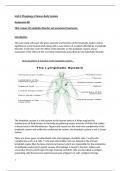
Secondary lymphoid organs include lymph vessels, lymph nodes (Axillary, Supratrochlear,
Abdominal, Inguinal, Popliteal), tonsils and the spleen.
Lymph vessels have small swells called lymph nodes. Lymph nodes are usually found in the
body as small clusters often known as the glands. They are located adjacent to the adenoids,
tonsils, armpits, chest, appendix and groin.
At various points along their path, the vessels join with a knot of tissue called a lymph node
(also called a lymph gland). These nodes are formed around major arteries & you can feel
them. Lymph nodes have three functions such as filtering bacteria from blood, storing
lymphocytes and storing antibodies.
The Axillary is a group of lymph nodes located in the axillary region of the upper limb (the
armpit). Their function is to drain chest walls, abdomen and vessels of the upper limb. There
are only one or two supratrochlear nodes in the human body and are found on the arms
above the elbow joint. They drain lymph from parts of both the upper part of the chest and
collarbone. Inguinal lymph nodes are made up of two layers found under the inguinal
ligament and are 15mm larger in short axis diameter. They're the major drainage
passageway to the lower limbs, genitals and anterior abdominal wall. Popliteal are small-
sized lymph nodes and are only six to seven in number. It is located near the popliteal
2
Assignment 8B
Title: Impact of Lymphatic disorder and associated treatments
Introduction
This case study will cover the gross anatomy and function of the lymphatic system and its
significance to the human body along with a case history of a patient affected by a lymphatic
disorder. It will also cover the effect of the disorder on the lymphatic system and an
evaluation of the effect of the corrective treatments prescribed for the lymphatic disorder.
- Gross Anatomy & function of the lymphatic system
The lymphatic system is a vital system to the human body as it helps regulate the
maintenance of fluid balance in the body by gathering excess amounts of fluids that collect
in tissue back to the bloodstream. Organs and vessels are the main two components of the
lymphatic system and unlike the cardiovascular system, the lymphatic system is not a closed
system.
There are three types of white blood cells: macrophages, dendritic cells, T and B cells.
Lymphocytes such as B cells, T cells and natural killer cells are formed in the primary
lymphoid organs (like the bone marrow & thymus) which are responsible for the production
of antibodies and protect against viruses. Macrophage is found in the liver, spleen and
connective tissues which ingest foreign material. Dendritic cells are described as antigen-
presenting cells that process material & present antigens to T cells. Antigens (foreign
1
, material) are molecules, often proteins, on the surface of all cells like a virus, that have a
role in stimulating an immune response. The mucus membrane lines the body cavities that
open to the exterior, and their function is to secrete mucus that prevents membranes from
dying out.
Lymphoid organs are responsible for carrying out multiple immune functions and are
involved in the growth and development of lymphocytes. There are two types of lymphoid
organs, primary and secondary lymphoid organs which are located throughout the body.
Primary lymphoid organs include the thymus and bone marrow. The thymus is a Bi-lobed
organ (2 lobes are arranged in a shape rather like a bow tie) that lies between your lungs,
above the heart. In infants, it is larger, compared to the rest of the body than in adults. Once
you reach puberty the thymus gland is at its largest size, weighing about 40g. Each lobe is
covered by the connective tissue capsule and subdivided into smaller lobules. Each lobule
has a central medulla and peripheral cortex. The cortex is tightly packed with lymphocyte
cells. The medulla contains epithelial cells, some lymphocytes and thymic corpuscles that
make some chemical messengers. T cell lymphocytes mature in the thymus gland where
they’re educated. T cells that contain receptors for self-antigens or that don’t contain any
receptors are destroyed. This lowers the risk of autoimmune disorders. The thymus gland
also secretes various hormones that encourage the reproduction and maturation of T cells.
Bone marrow is a soft spongy tissue located in the middle of the bones in the human body
where blood stem cells are found. The main function of the blood stem cells is to produce all
the fundamental and crucial blood cells required e.g., red blood cells which carry oxygen
and lymphocytes in aim to eliminate infections.
Secondary lymphoid organs include lymph vessels, lymph nodes (Axillary, Supratrochlear,
Abdominal, Inguinal, Popliteal), tonsils and the spleen.
Lymph vessels have small swells called lymph nodes. Lymph nodes are usually found in the
body as small clusters often known as the glands. They are located adjacent to the adenoids,
tonsils, armpits, chest, appendix and groin.
At various points along their path, the vessels join with a knot of tissue called a lymph node
(also called a lymph gland). These nodes are formed around major arteries & you can feel
them. Lymph nodes have three functions such as filtering bacteria from blood, storing
lymphocytes and storing antibodies.
The Axillary is a group of lymph nodes located in the axillary region of the upper limb (the
armpit). Their function is to drain chest walls, abdomen and vessels of the upper limb. There
are only one or two supratrochlear nodes in the human body and are found on the arms
above the elbow joint. They drain lymph from parts of both the upper part of the chest and
collarbone. Inguinal lymph nodes are made up of two layers found under the inguinal
ligament and are 15mm larger in short axis diameter. They're the major drainage
passageway to the lower limbs, genitals and anterior abdominal wall. Popliteal are small-
sized lymph nodes and are only six to seven in number. It is located near the popliteal
2


