Lecture 8 Notes - Languages
Slides Lecture
1
Languages
2 We have focused on two thinkers who suggest that
Ferdinand de what we do, say and write in the world might be
Saussure affected by forces we can't control (ideology, for Marx,
1857-1913 the unconscious, for Freud).
If writing and language can be shaped in this way, then
perhaps we need to think more language itself
What is langauge?
How does it work? -- a linguistic turn in the 20th ce and
turn to focus on language itself, the start of its
questioning. Ferdinand is the one usually turned to
when concerning these questions
Those are the questions asked and explored by Swiss
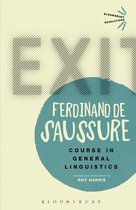
linguist Ferdinand de Saussure.
He was a linguist but his findings and arguments have
had a profound effect across a range do disciplines,
including anthropology, sociology, psychology and
literary criticism.
His ideas come to us through notes he made as a lecture
series and then the book that is published out of those
notes.
He changed how language was thought about and this
change had all sorts of after effects
Most linguist before him where philologists who where
more interested in etemology and the evelution of
words and gramma over time
But F attempted to explore how language worked in a
single moment as opposed to its history. His approach
was synchronic > this was the way he believed we could
really understand how language works
He criticises a comoncensicle view of how laguage was
viewed >> marx did the same about history and ruling
ideology.
3 Some people regard language, when reduced to its
The model of elements, as a naming-process only - a list of words,
language each corresponding to the thing that it names. Saussure
Saussure says we tend to think of language as names linked to
Challenges things. But of course this doesn't account for all
langauge - what about 'the' and 'hilarious' and 'oh
damn' and 'i promise'. This is the model of language
, Saussure offers a synchronic study of language - he
doesn't explore its historical development, its changes
over time, but attempts to freeze-frame langauge to see
how it works in the round, in one particular moment.
Everything in this world has a name
But there are several problems with this model of
language, he suggests the model doesn't make it clear
what we mean by a name
Secondly, assumes that a name simply just points to a
thing > he questions this too
4 The linguistic sign unites, not a thing and name, but a
The linguistic concept and a sound-image >> Sign: "Tree" Signifier
sign (Insert pic of tree)/Signified
Saussure tightens up our terminology around language.
Rather than talking about ‘words’ he talks of ‘signifiers’
– which can be a word, a mark or a ‘sound pattern’. And
instead of things, he talks of ‘signifieds’ – the mental
image that the signifier calls up. The whole package is
the ‘sign’.
Meaning = the mental concept one draws up e.g the
word horse isn't tied to a thing in the world (we dont
think of one horse), we just think of the concept (the
signified)
There is no natural link between the signifier (the
sound) and the signified > there is nothing Cat like
about the word cat > this relationship is arbitrary,
proved by different langauges useing different words:
5
The bond between the signifier and the signified is
The arbitrariness
of the sign arbitrary. […] The idea of “sister” is not linked by any
inner relationship to the succession of sounds s-ö-r
which serves as its signifier in French; that it could be
represented equally by just any other sequence is
proved by differences among languages and by the very
existence of different languages.
There is no necessary link between a signifier and a
signified – there is nothing cat-like about the word cat,
etc.
6
No matter what period we choose or how far back we
We always
inherit language go, language always appears as a heritage of the
preceding period. We might conceive of an act by
which, at a given moment, names were assigned to
things and a contract was formed between concepts
and sound-images; but such an act has never been
Slides Lecture
1
Languages
2 We have focused on two thinkers who suggest that
Ferdinand de what we do, say and write in the world might be
Saussure affected by forces we can't control (ideology, for Marx,
1857-1913 the unconscious, for Freud).
If writing and language can be shaped in this way, then
perhaps we need to think more language itself
What is langauge?
How does it work? -- a linguistic turn in the 20th ce and
turn to focus on language itself, the start of its
questioning. Ferdinand is the one usually turned to
when concerning these questions
Those are the questions asked and explored by Swiss
linguist Ferdinand de Saussure.
He was a linguist but his findings and arguments have
had a profound effect across a range do disciplines,
including anthropology, sociology, psychology and
literary criticism.
His ideas come to us through notes he made as a lecture
series and then the book that is published out of those
notes.
He changed how language was thought about and this
change had all sorts of after effects
Most linguist before him where philologists who where
more interested in etemology and the evelution of
words and gramma over time
But F attempted to explore how language worked in a
single moment as opposed to its history. His approach
was synchronic > this was the way he believed we could
really understand how language works
He criticises a comoncensicle view of how laguage was
viewed >> marx did the same about history and ruling
ideology.
3 Some people regard language, when reduced to its
The model of elements, as a naming-process only - a list of words,
language each corresponding to the thing that it names. Saussure
Saussure says we tend to think of language as names linked to
Challenges things. But of course this doesn't account for all
langauge - what about 'the' and 'hilarious' and 'oh
damn' and 'i promise'. This is the model of language
, Saussure offers a synchronic study of language - he
doesn't explore its historical development, its changes
over time, but attempts to freeze-frame langauge to see
how it works in the round, in one particular moment.
Everything in this world has a name
But there are several problems with this model of
language, he suggests the model doesn't make it clear
what we mean by a name
Secondly, assumes that a name simply just points to a
thing > he questions this too
4 The linguistic sign unites, not a thing and name, but a
The linguistic concept and a sound-image >> Sign: "Tree" Signifier
sign (Insert pic of tree)/Signified
Saussure tightens up our terminology around language.
Rather than talking about ‘words’ he talks of ‘signifiers’
– which can be a word, a mark or a ‘sound pattern’. And
instead of things, he talks of ‘signifieds’ – the mental
image that the signifier calls up. The whole package is
the ‘sign’.
Meaning = the mental concept one draws up e.g the
word horse isn't tied to a thing in the world (we dont
think of one horse), we just think of the concept (the
signified)
There is no natural link between the signifier (the
sound) and the signified > there is nothing Cat like
about the word cat > this relationship is arbitrary,
proved by different langauges useing different words:
5
The bond between the signifier and the signified is
The arbitrariness
of the sign arbitrary. […] The idea of “sister” is not linked by any
inner relationship to the succession of sounds s-ö-r
which serves as its signifier in French; that it could be
represented equally by just any other sequence is
proved by differences among languages and by the very
existence of different languages.
There is no necessary link between a signifier and a
signified – there is nothing cat-like about the word cat,
etc.
6
No matter what period we choose or how far back we
We always
inherit language go, language always appears as a heritage of the
preceding period. We might conceive of an act by
which, at a given moment, names were assigned to
things and a contract was formed between concepts
and sound-images; but such an act has never been