Respiration and Metabolism
Aerobic Respiration
glucose + oxygen carbon dioxide + water
C6H12O6 + 6O2 6CO2 + 6H20
Aerobic respiration is exothermic, it releases energy. It is one of the most important
enzyme-controlled reactions in living things. It takes place constantly in plant and animal
cells. Cellular respiration is an exothermic reaction which is consistently occurring in living
cells. Plants can only photosynthesise during daylight but can respire both day and night.
Respiration Proof Practical
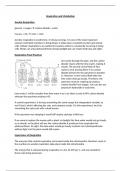
Air travels through the pipe, and the carbon
dioxide reacts with the lime water, making it
cloudy. The second conical flask of lime
water is clear proving there is no carbon
dioxide present for the specimen to breathe
in. However, in the conical flask after the
lime water does go cloudy. Therefore, the
specimen must be respiring to produce
carbon dioxide from oxygen. You can also use
potassium hydroxide or soda lime.
Lime water C will be cloudier than lime water A as in air there is only 0.04% carbon dioxide
whereas the specimen produces 4%.
A control experiment, is to keep everything the same except the independent variable, to
see if that’s what’s affecting the rate, and compare results. For this experiment, we’d do
everything the same just with a dead mouse.
If the specimen was sleeping it would still respire, perhaps a little less.
If we were to replace the mouse with a plant, in daylight the lime water would not go cloudy
or as cloudy, as the plant will use the carbon dioxide it produces from respiration for
photosynthesis. At night, the lime water would go cloudy as plants can’t photosynthesise
without light, but the plant would still respire.
Importance of Respiration
The enzymes that control respiration are located inside the mitochondria, therefore most of
the reactions in aerobic respiration take place inside the mitochondria.
The energy that is released during respiration is a lot, 32 ATP per 1, and are needed for
three main living processes:
Aerobic Respiration
glucose + oxygen carbon dioxide + water
C6H12O6 + 6O2 6CO2 + 6H20
Aerobic respiration is exothermic, it releases energy. It is one of the most important
enzyme-controlled reactions in living things. It takes place constantly in plant and animal
cells. Cellular respiration is an exothermic reaction which is consistently occurring in living
cells. Plants can only photosynthesise during daylight but can respire both day and night.
Respiration Proof Practical
Air travels through the pipe, and the carbon
dioxide reacts with the lime water, making it
cloudy. The second conical flask of lime
water is clear proving there is no carbon
dioxide present for the specimen to breathe
in. However, in the conical flask after the
lime water does go cloudy. Therefore, the
specimen must be respiring to produce
carbon dioxide from oxygen. You can also use
potassium hydroxide or soda lime.
Lime water C will be cloudier than lime water A as in air there is only 0.04% carbon dioxide
whereas the specimen produces 4%.
A control experiment, is to keep everything the same except the independent variable, to
see if that’s what’s affecting the rate, and compare results. For this experiment, we’d do
everything the same just with a dead mouse.
If the specimen was sleeping it would still respire, perhaps a little less.
If we were to replace the mouse with a plant, in daylight the lime water would not go cloudy
or as cloudy, as the plant will use the carbon dioxide it produces from respiration for
photosynthesis. At night, the lime water would go cloudy as plants can’t photosynthesise
without light, but the plant would still respire.
Importance of Respiration
The enzymes that control respiration are located inside the mitochondria, therefore most of
the reactions in aerobic respiration take place inside the mitochondria.
The energy that is released during respiration is a lot, 32 ATP per 1, and are needed for
three main living processes: