Neurocognitive disorders
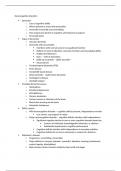
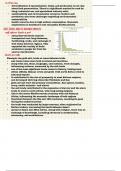
Dementia
o Loss of cognitive ability
o Affects behaviour, mood and personality
o Generally irreversible and unremitting
o Slow progressive decline in cognitive and behavioural aspects
o Promodal states
Types of dementia:
o Vascular dementia
o Dementia with Lewy bodies
Interferes with normal social or occupational function
Deficits on tests of attention, executive function and visuospatial ability
Related to Parkinson’s
Rare - < 10% of dementias
Build up on protein – alpha-synuclein
Neuronal loss
o Frontotemporal dementia (FTD)
o Pick’s disease
o Creutzfeldt-Jacob disease
o Atherosclerotic – multi-infarct dementia
o Huntington’s disease
o HIV/AIDS related
Treatable dementia causes:
o Medications
o Emotional depression
o B12 deficiency
o Chronic alcoholism
o Certain tumors or infections of the brain
o Blood clots pressing on the brain
o Metabolic imbalances
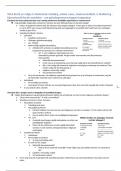
DSM5 criteria
o Mild neurocognitive disorder – cognitive deficits present, independence remains
Less severe, can progress to major
o Major neurocognitive disorder – cognitive deficits interfere with independence
Significant cognitive decline in one or more cognitive domains based on:
Concern of individual, knowledgeable informant, or clinician
Substantial impairment in cognitive performance
Cognitive deficits interfere with independence in everyday activities
Cognitive deficits do not occur exclusively in context of a delirium
Alzheimer’s disease
o Progressive, unremitting, irreversible
o Major deficits in memory (episodic, semantic), attention, learning, behavioural
control (apathy, disinhibition)
o Basic sensory/motor function relatively intact until end stages
Dementia
o Loss of cognitive ability
o Affects behaviour, mood and personality
o Generally irreversible and unremitting
o Slow progressive decline in cognitive and behavioural aspects
o Promodal states
Types of dementia:
o Vascular dementia
o Dementia with Lewy bodies
Interferes with normal social or occupational function
Deficits on tests of attention, executive function and visuospatial ability
Related to Parkinson’s
Rare - < 10% of dementias
Build up on protein – alpha-synuclein
Neuronal loss
o Frontotemporal dementia (FTD)
o Pick’s disease
o Creutzfeldt-Jacob disease
o Atherosclerotic – multi-infarct dementia
o Huntington’s disease
o HIV/AIDS related
Treatable dementia causes:
o Medications
o Emotional depression
o B12 deficiency
o Chronic alcoholism
o Certain tumors or infections of the brain
o Blood clots pressing on the brain
o Metabolic imbalances
DSM5 criteria
o Mild neurocognitive disorder – cognitive deficits present, independence remains
Less severe, can progress to major
o Major neurocognitive disorder – cognitive deficits interfere with independence
Significant cognitive decline in one or more cognitive domains based on:
Concern of individual, knowledgeable informant, or clinician
Substantial impairment in cognitive performance
Cognitive deficits interfere with independence in everyday activities
Cognitive deficits do not occur exclusively in context of a delirium
Alzheimer’s disease
o Progressive, unremitting, irreversible
o Major deficits in memory (episodic, semantic), attention, learning, behavioural
control (apathy, disinhibition)
o Basic sensory/motor function relatively intact until end stages