Lungs, Heart and Blood
Diffusion
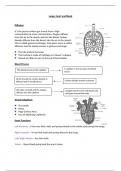
It’s the process where gas travels from a high
concentration to a low concentration. Oxygen diffuses
from the air in the alveoli and into the blood. Carbon
dioxide diffuses from the blood, into the air in the alveoli.
This is called gaseous exchange. How gases move is called
diffusion and the whole process is gaseous exchange.
The ribs protect the lungs
The trachea is made of cartilage so it doesn’t collapse
Alveoli are little air sacs at the end of bronchioles
Blood Process
A capillary is microscopic red blood
The blood travels in the capillary
vessel
At the alveoli the carbon dioxide is
diffused and is breathed out Carbon dioxide travels in plasma
We take a breath and the oxygen Oxygen travels in the red blood cells
diffuses into the capillary and goes around the body
Alveoli Adaptions
Thin Walls
Moist
Huge Surface Area
Lots of Adjoining Capillaries
Heart Functions
Left Ventricle – It has very thick walls and pumps blood to the whole body except the lungs.
Right Ventricle – It has thick walls and pumps blood to the lungs.
Left/ Right Atrium – Has thin walls.
Valves – Stops blood going back the way it came.
, The left side has a thicker muscle as it contracts and pumps blood to the whole body
whereas the right only pumps blood to the lungs, which is a considerably shorter
distance.
The right side is deoxygenated blood
The left side is oxygenated blood
Everything is happening on both sides at the same time. The atria both receive blood into
the heart and both send blood to a ventricle. The lower chambers both have valves, thick
muscle wall and receive blood from the atria. The left ventricle has thicker walls to contract
with more force as it transports oxygenated blood to the whole body. The blood on the right
is deoxygenated and goes to the lungs.
Deoxygenated blood travels through the vena cava. When the right atrium is full, the blood
is squeezed to the right ventricle. The valves ensure all of it moves with no back flow. With a
contraction, it travels up the pulmonary artery and to the lungs. Now the oxygenated blood
travels through the pulmonary vein. Once the left atrium is full, the blood is squeezed to the
left ventricle and contracted up the whole body excluding the lungs. The oxygenated blood
travels around the body and the oxygen enables the cells to respire. Then the blood goes
back to the vena cava and the process is repeated.
SAN
The electrical impulse is sent from a group of cells in the right atrium called the sinoatrial
nodes. The impulse spreads across the atria causing them to contract. The electrical impulse
then spreads from the bottom of the heart up over the ventricles causing them to contract.
The SAN acts as a pacemaker and controls the heart rate.
Exercise
When we conduct exercise, our breathing rate increases so we have more oxygen in our
lungs, and then blood. This oxygen goes to the cells so they can respire and release energy,
so we can continue exercising. We also have to get rid of carbon dioxide, this is because our
muscle cells are respiring faster which produces carbon dioxide. Our heart rate increases so
it can pump more blood around our body. This blood is rich in glucose and oxygen which
helps our cells respire. This in turn gives us energy to exercise. We also get rid of carbon
dioxide faster as it travels in the fast-moving blood and our muscle cells are respiring
efficiently.
Breathe more often
Deeper breaths
Arteries can dilate
Heart pumps faster
lumen
Blood Vessels
Capillary
Diffusion
It’s the process where gas travels from a high
concentration to a low concentration. Oxygen diffuses
from the air in the alveoli and into the blood. Carbon
dioxide diffuses from the blood, into the air in the alveoli.
This is called gaseous exchange. How gases move is called
diffusion and the whole process is gaseous exchange.
The ribs protect the lungs
The trachea is made of cartilage so it doesn’t collapse
Alveoli are little air sacs at the end of bronchioles
Blood Process
A capillary is microscopic red blood
The blood travels in the capillary
vessel
At the alveoli the carbon dioxide is
diffused and is breathed out Carbon dioxide travels in plasma
We take a breath and the oxygen Oxygen travels in the red blood cells
diffuses into the capillary and goes around the body
Alveoli Adaptions
Thin Walls
Moist
Huge Surface Area
Lots of Adjoining Capillaries
Heart Functions
Left Ventricle – It has very thick walls and pumps blood to the whole body except the lungs.
Right Ventricle – It has thick walls and pumps blood to the lungs.
Left/ Right Atrium – Has thin walls.
Valves – Stops blood going back the way it came.
, The left side has a thicker muscle as it contracts and pumps blood to the whole body
whereas the right only pumps blood to the lungs, which is a considerably shorter
distance.
The right side is deoxygenated blood
The left side is oxygenated blood
Everything is happening on both sides at the same time. The atria both receive blood into
the heart and both send blood to a ventricle. The lower chambers both have valves, thick
muscle wall and receive blood from the atria. The left ventricle has thicker walls to contract
with more force as it transports oxygenated blood to the whole body. The blood on the right
is deoxygenated and goes to the lungs.
Deoxygenated blood travels through the vena cava. When the right atrium is full, the blood
is squeezed to the right ventricle. The valves ensure all of it moves with no back flow. With a
contraction, it travels up the pulmonary artery and to the lungs. Now the oxygenated blood
travels through the pulmonary vein. Once the left atrium is full, the blood is squeezed to the
left ventricle and contracted up the whole body excluding the lungs. The oxygenated blood
travels around the body and the oxygen enables the cells to respire. Then the blood goes
back to the vena cava and the process is repeated.
SAN
The electrical impulse is sent from a group of cells in the right atrium called the sinoatrial
nodes. The impulse spreads across the atria causing them to contract. The electrical impulse
then spreads from the bottom of the heart up over the ventricles causing them to contract.
The SAN acts as a pacemaker and controls the heart rate.
Exercise
When we conduct exercise, our breathing rate increases so we have more oxygen in our
lungs, and then blood. This oxygen goes to the cells so they can respire and release energy,
so we can continue exercising. We also have to get rid of carbon dioxide, this is because our
muscle cells are respiring faster which produces carbon dioxide. Our heart rate increases so
it can pump more blood around our body. This blood is rich in glucose and oxygen which
helps our cells respire. This in turn gives us energy to exercise. We also get rid of carbon
dioxide faster as it travels in the fast-moving blood and our muscle cells are respiring
efficiently.
Breathe more often
Deeper breaths
Arteries can dilate
Heart pumps faster
lumen
Blood Vessels
Capillary