CESTODES
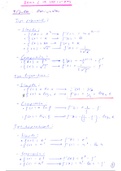
, Introduction.
PHYLUM :- FLATYHELMINTHES
CLASS :- CESTODES
ORDER :- - Cyclophilidia
:- - Pseudophilidia
, PSEUDOPHILIDIA
PSEUDOPHILIDIA
DIPHYLOBOTHRIUM LATUM [Fish tapeworm]
GEOGRAPHICAL DISTRIBUTION: -
- Europe
- South Asia
- Western America
- North America
- Central Africa
- Kenya along the lake regions
HABITAT:
- Intestine
, LIFECYCLE
- The eggs are passed out in stool. Eggs hatch in water to
coracidium after 11 to 15 days of embroynation, eggs
hatch at temperature of 18 to 25 degrees centigrade.
- Coracidium is free swimming and must be ingested by
the appropriate intermediate host [water fleas],
Cyclopes or copepods. Inside the Cyclopes, in the
hemocells; the Coracidium loses its cilia and migrates
to body cavities. Here it grows to an elongated
procercoide larva. If the infected Cyclopes is ingested
by nd intermediate host [Fish], it works its way into the
intestine and develop into Plerocercoide larvae and
lodges into the muscles.
, Introduction.
PHYLUM :- FLATYHELMINTHES
CLASS :- CESTODES
ORDER :- - Cyclophilidia
:- - Pseudophilidia
, PSEUDOPHILIDIA
PSEUDOPHILIDIA
DIPHYLOBOTHRIUM LATUM [Fish tapeworm]
GEOGRAPHICAL DISTRIBUTION: -
- Europe
- South Asia
- Western America
- North America
- Central Africa
- Kenya along the lake regions
HABITAT:
- Intestine
, LIFECYCLE
- The eggs are passed out in stool. Eggs hatch in water to
coracidium after 11 to 15 days of embroynation, eggs
hatch at temperature of 18 to 25 degrees centigrade.
- Coracidium is free swimming and must be ingested by
the appropriate intermediate host [water fleas],
Cyclopes or copepods. Inside the Cyclopes, in the
hemocells; the Coracidium loses its cilia and migrates
to body cavities. Here it grows to an elongated
procercoide larva. If the infected Cyclopes is ingested
by nd intermediate host [Fish], it works its way into the
intestine and develop into Plerocercoide larvae and
lodges into the muscles.