Cell Division and Genetic Variation
Chromosome Structure
Chromosomes are thread-like structures of DNA (deoxyribonucleic acid) found in the
nucleus of plant and animal cells. Each chromosome contains a centromere - a constriction
point which divides the cell into two sections or ‘arms’ known as the ‘p-arm’ and the ‘q-arm’.
This feature helps to keep the chromosomes properly aligned during cell division, which is
essential to ensure proper sharing of the maternal and paternal DNA. The chromosome is
made up of two ‘sister chromatids’, two halves of a chromosome which each contain one
copy of each gene, so that they can split and provide one copy of each gene to both of the
daughter cells during division, this ensures that the daughter cells are genetically identical
and both contain only one copy of each gene. There are two types of chromosomes,
autosomes and sex chromosomes. The sex chromosome is the pair of chromosomes that
determines an individual’s sex as well as some other sex-linked characteristics. The rest of
the pairs of chromosomes are known as autosomes. Humans have 22 pairs of autosomes,
totalling 23 pairs of chromosomes, as their chromosome number is 46; the chromosome
number denotes the number of chromosomes that a species has. When chromosomes are
identical in size and genetic composition, they are known as homologous chromosomes.
They may have different versions, or alleles, of the same genes, one from the mother and
one from the farther. During metaphase of meiosis, they pair up, or synapse, so that they
can be divided between the daughter cells, so each receives two copies of each gene.
Chromosomes which are different from each other are known as non-homologous. These
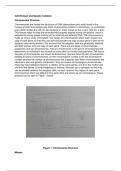
features can be seen in Figure 1 below.
Figure 1: Chromosome Structure
Mitosis
, Mitosis is a process of cell division in which the cells contents are duplicated and then
separated into two cells to produce two genetically identical diploid daughter cells. The first
phase, prophase, chromosomes coil and condense while the nuclear envelope dissolves.
This results in the nucleolus disappearing and the chromosomes become visible as two
chromatids, joined at the centromere. In the next phase, metaphase, the chromosomes line
up in pairs along the metaphase plate, and spindle fibres made of tubulin attach to the
centromeres. In animal cells, these fibres are produced using centrioles, whereas plant cells
produce them without centrioles (Byjus, 2019). Then, in anaphase, the centromere of each
chromosome splits, separating the two sister chromatids from one another, and motor
proteins walk along the tubulin of the spindle fibres, causing the chromatids to be pulled to
opposite poles. Telophase, the final phase, sees chromatids separate at each pole, where a
new nuclear membrane forms around them, so that the cell now contains two genetically
identical nuclei. The cell then splits into two daughter cells via cytokinesis. Both plants and
animals use mitosis for growth and repair, however, in animals, this process occurs in all
cells, whereas it only occurs in meristematic tissues of plant cells. Furthermore, in
cytokinesis of plant cells, a cell plate is formed and grows centrifugally (from inside to
outside), whereas a cleavage is formed in animal cells and proceeds centripetally (from
outside to inside). Mitosis is controlled by a number of factors in animals, for example,
platelet-driven growth factor and epidermal growth factor, unlike plant cell mitosis which is
controlled by a hormone called cytokinin (Byjus, 2019).
Figure 2: Stages of Mitosis (Britannica, 2022).
Meiosis
Chromosome Structure
Chromosomes are thread-like structures of DNA (deoxyribonucleic acid) found in the
nucleus of plant and animal cells. Each chromosome contains a centromere - a constriction
point which divides the cell into two sections or ‘arms’ known as the ‘p-arm’ and the ‘q-arm’.
This feature helps to keep the chromosomes properly aligned during cell division, which is
essential to ensure proper sharing of the maternal and paternal DNA. The chromosome is
made up of two ‘sister chromatids’, two halves of a chromosome which each contain one
copy of each gene, so that they can split and provide one copy of each gene to both of the
daughter cells during division, this ensures that the daughter cells are genetically identical
and both contain only one copy of each gene. There are two types of chromosomes,
autosomes and sex chromosomes. The sex chromosome is the pair of chromosomes that
determines an individual’s sex as well as some other sex-linked characteristics. The rest of
the pairs of chromosomes are known as autosomes. Humans have 22 pairs of autosomes,
totalling 23 pairs of chromosomes, as their chromosome number is 46; the chromosome
number denotes the number of chromosomes that a species has. When chromosomes are
identical in size and genetic composition, they are known as homologous chromosomes.
They may have different versions, or alleles, of the same genes, one from the mother and
one from the farther. During metaphase of meiosis, they pair up, or synapse, so that they
can be divided between the daughter cells, so each receives two copies of each gene.
Chromosomes which are different from each other are known as non-homologous. These
features can be seen in Figure 1 below.
Figure 1: Chromosome Structure
Mitosis
, Mitosis is a process of cell division in which the cells contents are duplicated and then
separated into two cells to produce two genetically identical diploid daughter cells. The first
phase, prophase, chromosomes coil and condense while the nuclear envelope dissolves.
This results in the nucleolus disappearing and the chromosomes become visible as two
chromatids, joined at the centromere. In the next phase, metaphase, the chromosomes line
up in pairs along the metaphase plate, and spindle fibres made of tubulin attach to the
centromeres. In animal cells, these fibres are produced using centrioles, whereas plant cells
produce them without centrioles (Byjus, 2019). Then, in anaphase, the centromere of each
chromosome splits, separating the two sister chromatids from one another, and motor
proteins walk along the tubulin of the spindle fibres, causing the chromatids to be pulled to
opposite poles. Telophase, the final phase, sees chromatids separate at each pole, where a
new nuclear membrane forms around them, so that the cell now contains two genetically
identical nuclei. The cell then splits into two daughter cells via cytokinesis. Both plants and
animals use mitosis for growth and repair, however, in animals, this process occurs in all
cells, whereas it only occurs in meristematic tissues of plant cells. Furthermore, in
cytokinesis of plant cells, a cell plate is formed and grows centrifugally (from inside to
outside), whereas a cleavage is formed in animal cells and proceeds centripetally (from
outside to inside). Mitosis is controlled by a number of factors in animals, for example,
platelet-driven growth factor and epidermal growth factor, unlike plant cell mitosis which is
controlled by a hormone called cytokinin (Byjus, 2019).
Figure 2: Stages of Mitosis (Britannica, 2022).
Meiosis