
BTEC engineering processes, health and safety factors and human factors
Introduction
Bench vice is the product that I have chosen for this report. Hence, in this report, I will be discussing
and evaluating the different processes used for the manufacturing of a bench vice, while also
weighing which one will be the most suitable one for the product. I will also consider the impact that
human factors can have on these processes, and also the dangers that can be present without the
lack of proper health and safety regulations.
Bench Vice
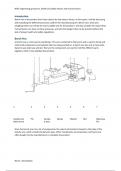
A bench vice is a tool used in workshops. This vice is attached to the bench and is used to clamp and
hold small components and materials that are being worked on. A bench vice has only 3 main parts -
dynamic jaw, static jaw and pin. Rest are the components are used to hold the different parts
together, which I have labelled down below:
1 2 3 4 5 6 7
Handle and Pin Serrate Spring Washer Nut Retaining
Main Screw d Jaws Pin
SInce the bench vice has a lot of components, the report will mainly be based on the body of the
benchy vice, which include the dynamic jaws. Other components are proprietary, and hence are
often bought my the manufacturers to complete the product
Name: Ramandeep
, BTEC engineering processes, health and safety factors and human factors
Forming processes
Since the bench vice is a product not only made of entirely metal but also the product itself is very
blocky, meaning that it would’ve had to be fabricated to form its certain shape instead of forming a
shaping from other methods.
Forging
Forging is one of the most used and oldest metallurgy processes to be used. Forging is conducted by
heating the metal to very high temperatures and then using external forces to (re) shape the metal.
These external forces were created by a blacksmith with the help of an anvil and a hammer, but now,
trip hammers are used which utilise the power of down flowing water. This has not only allowed a
bigger sized metal to be worked on, but also made the process a lot quicker.
Hot forging: This is where metals are deformed about their recrystallisation temperature
Cold forging: This is where metals are deformed at ambient temperature.
Name: Ramandeep
Introduction
Bench vice is the product that I have chosen for this report. Hence, in this report, I will be discussing
and evaluating the different processes used for the manufacturing of a bench vice, while also
weighing which one will be the most suitable one for the product. I will also consider the impact that
human factors can have on these processes, and also the dangers that can be present without the
lack of proper health and safety regulations.
Bench Vice
A bench vice is a tool used in workshops. This vice is attached to the bench and is used to clamp and
hold small components and materials that are being worked on. A bench vice has only 3 main parts -
dynamic jaw, static jaw and pin. Rest are the components are used to hold the different parts
together, which I have labelled down below:
1 2 3 4 5 6 7
Handle and Pin Serrate Spring Washer Nut Retaining
Main Screw d Jaws Pin
SInce the bench vice has a lot of components, the report will mainly be based on the body of the
benchy vice, which include the dynamic jaws. Other components are proprietary, and hence are
often bought my the manufacturers to complete the product
Name: Ramandeep
, BTEC engineering processes, health and safety factors and human factors
Forming processes
Since the bench vice is a product not only made of entirely metal but also the product itself is very
blocky, meaning that it would’ve had to be fabricated to form its certain shape instead of forming a
shaping from other methods.
Forging
Forging is one of the most used and oldest metallurgy processes to be used. Forging is conducted by
heating the metal to very high temperatures and then using external forces to (re) shape the metal.
These external forces were created by a blacksmith with the help of an anvil and a hammer, but now,
trip hammers are used which utilise the power of down flowing water. This has not only allowed a
bigger sized metal to be worked on, but also made the process a lot quicker.
Hot forging: This is where metals are deformed about their recrystallisation temperature
Cold forging: This is where metals are deformed at ambient temperature.
Name: Ramandeep


