

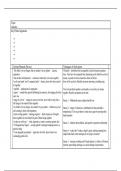
Topic:
Genetics
Key Points/Arguments
Literary/Dramatic Devices Techniques of whole poem
‘My father’s in my fingers, but my mother’s in my palms’ - caesura, Villanelle – symbolises the inescapable (cyclical structure) genetics
separation have. They have two repeated lines alternating as the final line of each
‘look at them with pleasure’ – reminisces when they were once together stanza, so poem revolves around two forms of rhyme.
‘me by my hands’ and ‘to separate lands’ – rhyme, shows how they used to Irony of the cyclical villanelle structure mirroring a wedding ring.
be together
‘repelled’ – euphemism for separation Tries to keep them together, sees hands as a way they are always
‘quarry’ – sounds like quarrel infiltrating his memory, also digging for what together. Reaches acceptance at the end.
once was
‘image by a river’ – change in course over time, never still yet only has a Stanza 1 – Minhinnick poem, adopts playful tone
still image in his mind of them together
‘my father’s by my fingers, my mother’s by my palms’ – further away, but Stanza 2 – image of a hand as a combination of mum and dad is
also coming to terms with separation metaphysical. Tries to get them to touch once again by pressing their
‘priest reciting psalms’, ‘marriage register’ – liked religion as it brought hands together
them together, he sees himself as part of them being together
‘so take me with you,’ – volta, imperative, wants to continue genetic line Stanza 3 – idealises the problems, and quarrels in parents relationship
‘I’ll bequeath my fingers’ – accepts parent’s marriage breaking down as a
positive thing
Stanza 4 – evokes the ‘I make a chapel’ game, echoing opening line,
‘if you bequeath your palms’ – legal term for wills, shows their lover
chapel links back to the marriage she is trying to resurrect
continuing genetic line
Stanza 5 – reinactes wedding with ‘hands demure’ as links to Christian
doctrine, prescribing marriage as a union relating to procreation.
Genetics
Key Points/Arguments
Literary/Dramatic Devices Techniques of whole poem
‘My father’s in my fingers, but my mother’s in my palms’ - caesura, Villanelle – symbolises the inescapable (cyclical structure) genetics
separation have. They have two repeated lines alternating as the final line of each
‘look at them with pleasure’ – reminisces when they were once together stanza, so poem revolves around two forms of rhyme.
‘me by my hands’ and ‘to separate lands’ – rhyme, shows how they used to Irony of the cyclical villanelle structure mirroring a wedding ring.
be together
‘repelled’ – euphemism for separation Tries to keep them together, sees hands as a way they are always
‘quarry’ – sounds like quarrel infiltrating his memory, also digging for what together. Reaches acceptance at the end.
once was
‘image by a river’ – change in course over time, never still yet only has a Stanza 1 – Minhinnick poem, adopts playful tone
still image in his mind of them together
‘my father’s by my fingers, my mother’s by my palms’ – further away, but Stanza 2 – image of a hand as a combination of mum and dad is
also coming to terms with separation metaphysical. Tries to get them to touch once again by pressing their
‘priest reciting psalms’, ‘marriage register’ – liked religion as it brought hands together
them together, he sees himself as part of them being together
‘so take me with you,’ – volta, imperative, wants to continue genetic line Stanza 3 – idealises the problems, and quarrels in parents relationship
‘I’ll bequeath my fingers’ – accepts parent’s marriage breaking down as a
positive thing
Stanza 4 – evokes the ‘I make a chapel’ game, echoing opening line,
‘if you bequeath your palms’ – legal term for wills, shows their lover
chapel links back to the marriage she is trying to resurrect
continuing genetic line
Stanza 5 – reinactes wedding with ‘hands demure’ as links to Christian
doctrine, prescribing marriage as a union relating to procreation.


