
Cardiovascular system heart
-The heart pumps blood into smaller and smaller vessels until it slows down enough that it exchanges
nutrients and waste.
- The system transports oxygen and nutrients but also carbon dioxide and waste products, as well as
hormones, blood cells, and water.
The heart pumps blood into 2 anatomically separate systems of blood vessels
The pulmonary circulation
The right side pumps blood to the lungs where gas exchange occurs- the blood collects oxygen from the air
sacs and excess carbon dioxide diffuses into the air sacs for exhalation.
The systemic circulation
The left side Supplies blood to the rest of the body here tissue wasted is passed into the blood for excretion
and body cells extract nutrients and oxygen.
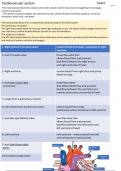
1. Right atrium from vena cavae receive blood from body and pump to right
ventricle
2. past Tricuspid valve three-flap valve that
allows blood flow and prevents
backflow between the right atrium
and right ventricle of heart
3. Right ventricle receive blood from right atria and pump
blood to lungs
4. past Semi lunar valve three-flap valves
- pulmonary that allows blood flow and prevents
backflow between the ventricles and
arteries (pulmonary and aorta) of heart
5. Lungs from 2 pulmonary arteries
6. Left atrium from 4 pulmonary veins receive blood from lungs
(pulmonary veins) and pump to left ventricle
7. past Bicuspid (Mitral) valve two-flap valve that
allows blood flow and prevents
backflow between the left atrium and
left ventricle of heart
8. Left ventricle Left ventricle – receive blood from left
atria and pump to body (aorta)
9. past Semi lunar valve
-aortic
10.To body through Aorta
, Cardiac cycle
blood flows from high pressure to low pressure:
a) The heart relaxes (diastole) lowering the blood
pressure in all 4 chambers.
Blood flows from veins into both atria and then both
ventricles due to the higher blood pressure in the
rest of the body.
c) Both atria relax (diastole) reducing their blood b) Both atria contract (systole) increasing the
pressure and both ventricles contract (systole). blood pressure in the atria.
Blood flows from ventricles to arteries (aorta Blood flows into both ventricles where there is
and pulmonary) increasing the blood pressure less blood pressure (still relaxed).
in the rest of the body to return blood back to
the heart.
Systolic blood pressure – force heart exerts on
Hypertension – abnormally high blood
blood when it beats
pressure
• top/larger number
Hypotension – abnormally low blood
• when ventricle chambers contract (dub of the lub-
pressure
dub)
Diastolic blood pressure – pressure in blood vessels
when heart rests
• bottom/lower number
• in between heart beats, when heart fills with
blood Cardiac muscle tissue.
Myocardium – middle later of the heart
consisting of multiple interlocking layers
of cardiac muscle tissue
Cardiac muscle tissue – involuntary
striated muscle that cells form a
branching, network of cells bound
strongly to one another by intercalated
discs
Intercalated discs – are regions of close
attachment between cardiac cells
that enable the cardiac muscles to work
together during a contraction
Electrical Activity of the Heart
Electrocardiogram:
P wave – atrial node depolarisation (discharge)
QRS complex – ventricular node depolarization
and atrial node repolarisation
• Q – septum depolarisation
• R – ventricle wall depolarisation
, Blood vessels
Arteries – thick muscular blood vessels that convey (usually oxygenated) blood from the
heart to the rest of the body
Arterioles – very small artery
Veins – thin valved blood vessels that convey (usually deoxygenated) blood from the rest
of the body to the heart
Venules – very small vein
Capillaries – tiny branching blood vessels between the arterioles and venules (blood goes
always archery to a vein).
Capillary exchange- Blood cells Drops of things and as they go threw the capillaries the
lower pressure slows them down and they have time to pick things up.
BLOOD CELLS
Erythrocyte – red blood cell, transports
oxygen to tissues and carbon dioxide
from tissues
Leucocyte – white blood cell, immune
system cell that protects from infectious
Disease
Thrombocyte – platelet, fragment of
cytoplasm that helps forms blood clots
by clumping (coagulation)
Plasma – liquid part of blood, transports
nutrients, hormones, and proteins to
tissues and waste products from tissues
-The heart pumps blood into smaller and smaller vessels until it slows down enough that it exchanges
nutrients and waste.
- The system transports oxygen and nutrients but also carbon dioxide and waste products, as well as
hormones, blood cells, and water.
The heart pumps blood into 2 anatomically separate systems of blood vessels
The pulmonary circulation
The right side pumps blood to the lungs where gas exchange occurs- the blood collects oxygen from the air
sacs and excess carbon dioxide diffuses into the air sacs for exhalation.
The systemic circulation
The left side Supplies blood to the rest of the body here tissue wasted is passed into the blood for excretion
and body cells extract nutrients and oxygen.
1. Right atrium from vena cavae receive blood from body and pump to right
ventricle
2. past Tricuspid valve three-flap valve that
allows blood flow and prevents
backflow between the right atrium
and right ventricle of heart
3. Right ventricle receive blood from right atria and pump
blood to lungs
4. past Semi lunar valve three-flap valves
- pulmonary that allows blood flow and prevents
backflow between the ventricles and
arteries (pulmonary and aorta) of heart
5. Lungs from 2 pulmonary arteries
6. Left atrium from 4 pulmonary veins receive blood from lungs
(pulmonary veins) and pump to left ventricle
7. past Bicuspid (Mitral) valve two-flap valve that
allows blood flow and prevents
backflow between the left atrium and
left ventricle of heart
8. Left ventricle Left ventricle – receive blood from left
atria and pump to body (aorta)
9. past Semi lunar valve
-aortic
10.To body through Aorta
, Cardiac cycle
blood flows from high pressure to low pressure:
a) The heart relaxes (diastole) lowering the blood
pressure in all 4 chambers.
Blood flows from veins into both atria and then both
ventricles due to the higher blood pressure in the
rest of the body.
c) Both atria relax (diastole) reducing their blood b) Both atria contract (systole) increasing the
pressure and both ventricles contract (systole). blood pressure in the atria.
Blood flows from ventricles to arteries (aorta Blood flows into both ventricles where there is
and pulmonary) increasing the blood pressure less blood pressure (still relaxed).
in the rest of the body to return blood back to
the heart.
Systolic blood pressure – force heart exerts on
Hypertension – abnormally high blood
blood when it beats
pressure
• top/larger number
Hypotension – abnormally low blood
• when ventricle chambers contract (dub of the lub-
pressure
dub)
Diastolic blood pressure – pressure in blood vessels
when heart rests
• bottom/lower number
• in between heart beats, when heart fills with
blood Cardiac muscle tissue.
Myocardium – middle later of the heart
consisting of multiple interlocking layers
of cardiac muscle tissue
Cardiac muscle tissue – involuntary
striated muscle that cells form a
branching, network of cells bound
strongly to one another by intercalated
discs
Intercalated discs – are regions of close
attachment between cardiac cells
that enable the cardiac muscles to work
together during a contraction
Electrical Activity of the Heart
Electrocardiogram:
P wave – atrial node depolarisation (discharge)
QRS complex – ventricular node depolarization
and atrial node repolarisation
• Q – septum depolarisation
• R – ventricle wall depolarisation
, Blood vessels
Arteries – thick muscular blood vessels that convey (usually oxygenated) blood from the
heart to the rest of the body
Arterioles – very small artery
Veins – thin valved blood vessels that convey (usually deoxygenated) blood from the rest
of the body to the heart
Venules – very small vein
Capillaries – tiny branching blood vessels between the arterioles and venules (blood goes
always archery to a vein).
Capillary exchange- Blood cells Drops of things and as they go threw the capillaries the
lower pressure slows them down and they have time to pick things up.
BLOOD CELLS
Erythrocyte – red blood cell, transports
oxygen to tissues and carbon dioxide
from tissues
Leucocyte – white blood cell, immune
system cell that protects from infectious
Disease
Thrombocyte – platelet, fragment of
cytoplasm that helps forms blood clots
by clumping (coagulation)
Plasma – liquid part of blood, transports
nutrients, hormones, and proteins to
tissues and waste products from tissues


