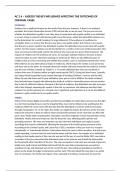
AC 2.4 – ASSEESS THE KEY INFLUENVES AFFECTING THE OUTCOMES OF
CRIMINAL CASES
EVIDENCE:
Evidence has a significant impact on the verdict from the jury, however, if there is no evidence
provided, the Crown Prosecution Service (CPS) will not take a case to court. The jury are not sure
whether the defendant is guilty or not, they have to come back with a guilty verdict as an individual
in a court of law is innocent until proven guilty (so in this sense, viable and admissible evidence can
be the determiner for a verdict making it a large influence). If the evidence is insufficient or
unreliable, there is a chance that the jury may pass a non-guilty verdict, but if there is any reason
that the jury is unsure whether the defendant is guilty, the defendant must come back with a guilty
verdict. For this reason, evidence can be the decider for a verdict, in the case of the prosecution who
must use it to prove their guilt, and for the defence who must use it to prove their innocence. The
impacts of evidence (or the omission of) varies, for example, without evidence, the case at hand
cannot be taken to court, therefore reaching no verdict at all. There are also different types of
evidence that are more convincing and reliable than another, such as eyewitness testimonies verses
DNA evidence (or any other physical types of evidence), which impact the verdict as one party may
only have one or the other. An example where the verdict had been swayed by the evidence at hand
was the case of Peter Connelly (or ‘Baby P’), a 17-month-old British boy who was murdered in
London from over 50 injuries within an eight-month period (2007). During this time frame, Connelly
was being visited frequently by the London Borough of Haringey Children’s services and the NHS.
When 36-year-old Owen and 32-year-old Barker were put on trial in 2008 for the death of Baby P,
they had only been charged with allowing the death of a child or vulnerable person and not murder
due to lack of sufficient evidence. Because of the lack of evidence, the defendant was able to escape
half of the charged, impacting the verdict of the trial. In conclusion, the influence and effect that
evidence has on the outcome of a criminal case is significant and important as it can be the different
between a guilty verdict and a non-guilty verdict.
MEDIA:
Article of the Human Rights Convention and the Human Rights Act states that everyone has the right
to a fair trial meaning the jury must be impartial (they must not be influences by anything but the
evidence within the court room) with the idea that the defendant is innocent until proven guilty.
Through newspapers, TV, or the radio, the media can negatively impact the fairness of the trial and
impact the outcome as they are able to report and provide opinions on the case that can affect the
juror's bias. Media often sensationalise, dramatize, and often emphasis certain characteristics of the
defendant. Media and social media can also lie about the case, affecting public opinion and
spreading rumours. The news and reporters can also interview individuals and capture certain
recordings that may be confidential, affecting the outcome of the trial by giving everyone a bias.
According to the Criminal Justice and Courts Act of 2015, members of the jury must not ‘research
intentionally’ or ‘intentionally disclose’ information about the case to other members, but with mass
media reporting, it may be hard to avoid certain biases with the news. An example of an individual
reading on the media reports of the case she was part of the jury of was the Dallas 2012 case where
a member of the jury researched the defendants past on the internet and shared the information
she found with other members of the jury. The case was against a man who was accused of grievous
bodily harm (with intent) and Dallas had found that the man had previously been accused but
acquitted of rape and disclosed such to the rest of the jury. She ended up spending six months in
prison as she broke the judge’s instructions and her oath; This also halted the case due to an unfair
trail. In conclusion, the media can impact a trial, especially in inciting a moral panic to scare the
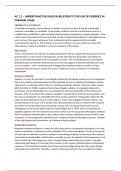
CRIMINAL CASES
EVIDENCE:
Evidence has a significant impact on the verdict from the jury, however, if there is no evidence
provided, the Crown Prosecution Service (CPS) will not take a case to court. The jury are not sure
whether the defendant is guilty or not, they have to come back with a guilty verdict as an individual
in a court of law is innocent until proven guilty (so in this sense, viable and admissible evidence can
be the determiner for a verdict making it a large influence). If the evidence is insufficient or
unreliable, there is a chance that the jury may pass a non-guilty verdict, but if there is any reason
that the jury is unsure whether the defendant is guilty, the defendant must come back with a guilty
verdict. For this reason, evidence can be the decider for a verdict, in the case of the prosecution who
must use it to prove their guilt, and for the defence who must use it to prove their innocence. The
impacts of evidence (or the omission of) varies, for example, without evidence, the case at hand
cannot be taken to court, therefore reaching no verdict at all. There are also different types of
evidence that are more convincing and reliable than another, such as eyewitness testimonies verses
DNA evidence (or any other physical types of evidence), which impact the verdict as one party may
only have one or the other. An example where the verdict had been swayed by the evidence at hand
was the case of Peter Connelly (or ‘Baby P’), a 17-month-old British boy who was murdered in
London from over 50 injuries within an eight-month period (2007). During this time frame, Connelly
was being visited frequently by the London Borough of Haringey Children’s services and the NHS.
When 36-year-old Owen and 32-year-old Barker were put on trial in 2008 for the death of Baby P,
they had only been charged with allowing the death of a child or vulnerable person and not murder
due to lack of sufficient evidence. Because of the lack of evidence, the defendant was able to escape
half of the charged, impacting the verdict of the trial. In conclusion, the influence and effect that
evidence has on the outcome of a criminal case is significant and important as it can be the different
between a guilty verdict and a non-guilty verdict.
MEDIA:
Article of the Human Rights Convention and the Human Rights Act states that everyone has the right
to a fair trial meaning the jury must be impartial (they must not be influences by anything but the
evidence within the court room) with the idea that the defendant is innocent until proven guilty.
Through newspapers, TV, or the radio, the media can negatively impact the fairness of the trial and
impact the outcome as they are able to report and provide opinions on the case that can affect the
juror's bias. Media often sensationalise, dramatize, and often emphasis certain characteristics of the
defendant. Media and social media can also lie about the case, affecting public opinion and
spreading rumours. The news and reporters can also interview individuals and capture certain
recordings that may be confidential, affecting the outcome of the trial by giving everyone a bias.
According to the Criminal Justice and Courts Act of 2015, members of the jury must not ‘research
intentionally’ or ‘intentionally disclose’ information about the case to other members, but with mass
media reporting, it may be hard to avoid certain biases with the news. An example of an individual
reading on the media reports of the case she was part of the jury of was the Dallas 2012 case where
a member of the jury researched the defendants past on the internet and shared the information
she found with other members of the jury. The case was against a man who was accused of grievous
bodily harm (with intent) and Dallas had found that the man had previously been accused but
acquitted of rape and disclosed such to the rest of the jury. She ended up spending six months in
prison as she broke the judge’s instructions and her oath; This also halted the case due to an unfair
trail. In conclusion, the media can impact a trial, especially in inciting a moral panic to scare the