🧬
Week 1: Genetics
Date @19/09/2022 → 25/09/2022
Week Lead Prof Edward Tobias
Additional Notes
Application of Genetic Principles
Typical Mendelian Inheritance
Atypical Mendelian Inheritance
Genome Analysis in Practice for Patients
📚 Resources
with Inherited Conditions EuroGEMS.org Home page
The Commoner Non-Cancer Genetic
Quick links to a huge range of
Conditions
useful, free, genetic & genomic
Inherited Predisposition to Cancer information sources &
Clinical Assessment and Dysmorphology https://www.eurogems.org/i
New Treatments for Inherited Conditions ndex.html
and Future Developments in Genomics
Ethical Dilemmas
University of Glasgow :: Library / All Format
FAQs
Description xi, 332 p. : ill. (some col.). ISBN
9781118293713 (e-book) 9781405169745 (pbk.)
Note Electronic book available via the
https://eleanor.lib.gla.ac.uk/record=b2987378
,Application of Genetic Principles
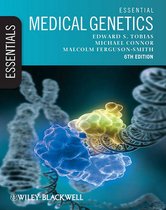
📚 Essential Medical
Genetics
Typical Mendelian Inheritance
Express
Chapters 8 and 9 Varia
serie
✅
can
Learning sam
Outcomes Com
Revise pedigree A
drawing and g
interpretation o
Understand H
autosomal Mutations = pathogenic variants
d
dominant Single gene (Mendelian disorders) are due to i
inheritance, new mutations in one or both memebrs of a pair of d
mutations and autosomal genes or to mutations in genes on l
modifier gene the X or Y chromosome (sex-linked o
variants inheritance). i
Understand the These disorders show characteristic patterns N
concepts of of inheritance in family pedigrees. s
variable
A single condition may result from: Inco
expression,
incomplete genetic heterogeneity - different modes T
penetrance and of inheritance o
gonadal
locus heterogeneity - mutations in S
mosaicism
different genes p
Understand a
allelic heterogeneity - different mutations
autosomal n
in the same gene
recessive
Clinical heterogeneity refers to the situation The
inheritance
in which different mutations at a single locus also
including
result in different clinical conditions of a
pseudo-
dominant
inheritance
Learn about X-
linked recessive
and X-linked
dominant
inheritance
, severity between males Adult polycystic Both parents of an affected child ne
and females kidney disease be atleast carriers, if not affected.
(APKD)
Male-to-male If both parents are unaffected, their
transmission Neurofibromatosis offspring has a:
type 1 (NF1)
Complete or incomplete 25% chance of being affected,
penetrance, variable Huntington’s
50% chance of carrying
expressivity, modifier disease (HD)
genes or genetic 25% chance of completely
Von Willebrand
anticipation unaffected
disease (bleeding
Only one parent needs disorder) Horizontal pattern of inheritance - th
to be affected condition skips generations but
heterozygously for a possibility of multiple siblings of the
child to be affected. same parents being affected.
In such a case, 50% A generally equal disease frequenc
chance of offspring and severity between males and
inheriting the gene females
and be affected. Consanguinity in the family
Modifier variants affect More constant expressivity in a fam
severity and penetrance,
such as FGFR2 variants
in BRCA2 mutation
carriers
X-Linked Recessive X-Linked Dom
Features Conditions Features
“Knight’s move pattern” Duchenne Pattern is l
muscular autosomal
No male-to-male transmission
dystrophy but no mal
Mostly or only males affected - Sex ratio M>>F transmissio
Becker
Male children cannot carry, will only be affected or muscular Vertical tra
unaffected dystrophy
Male-to-fem
Occasional “manifesting carriers”, women who are Haemophilia transmissio
mildly affected, due to skewed X-inactivation A and B daughters
Mother must be a carrier for a male child to be affected. Female-to-
50% chance of a male child to be affected. transmissio
daughters
50% chance of a female child (with an unaffected
father) to be a carrier. No male-m
transmissio
If father is affected with an unaffected (not carrying)
Week 1: Genetics
Date @19/09/2022 → 25/09/2022
Week Lead Prof Edward Tobias
Additional Notes
Application of Genetic Principles
Typical Mendelian Inheritance
Atypical Mendelian Inheritance
Genome Analysis in Practice for Patients
📚 Resources
with Inherited Conditions EuroGEMS.org Home page
The Commoner Non-Cancer Genetic
Quick links to a huge range of
Conditions
useful, free, genetic & genomic
Inherited Predisposition to Cancer information sources &
Clinical Assessment and Dysmorphology https://www.eurogems.org/i
New Treatments for Inherited Conditions ndex.html
and Future Developments in Genomics
Ethical Dilemmas
University of Glasgow :: Library / All Format
FAQs
Description xi, 332 p. : ill. (some col.). ISBN
9781118293713 (e-book) 9781405169745 (pbk.)
Note Electronic book available via the
https://eleanor.lib.gla.ac.uk/record=b2987378
,Application of Genetic Principles
📚 Essential Medical
Genetics
Typical Mendelian Inheritance
Express
Chapters 8 and 9 Varia
serie
✅
can
Learning sam
Outcomes Com
Revise pedigree A
drawing and g
interpretation o
Understand H
autosomal Mutations = pathogenic variants
d
dominant Single gene (Mendelian disorders) are due to i
inheritance, new mutations in one or both memebrs of a pair of d
mutations and autosomal genes or to mutations in genes on l
modifier gene the X or Y chromosome (sex-linked o
variants inheritance). i
Understand the These disorders show characteristic patterns N
concepts of of inheritance in family pedigrees. s
variable
A single condition may result from: Inco
expression,
incomplete genetic heterogeneity - different modes T
penetrance and of inheritance o
gonadal
locus heterogeneity - mutations in S
mosaicism
different genes p
Understand a
allelic heterogeneity - different mutations
autosomal n
in the same gene
recessive
Clinical heterogeneity refers to the situation The
inheritance
in which different mutations at a single locus also
including
result in different clinical conditions of a
pseudo-
dominant
inheritance
Learn about X-
linked recessive
and X-linked
dominant
inheritance
, severity between males Adult polycystic Both parents of an affected child ne
and females kidney disease be atleast carriers, if not affected.
(APKD)
Male-to-male If both parents are unaffected, their
transmission Neurofibromatosis offspring has a:
type 1 (NF1)
Complete or incomplete 25% chance of being affected,
penetrance, variable Huntington’s
50% chance of carrying
expressivity, modifier disease (HD)
genes or genetic 25% chance of completely
Von Willebrand
anticipation unaffected
disease (bleeding
Only one parent needs disorder) Horizontal pattern of inheritance - th
to be affected condition skips generations but
heterozygously for a possibility of multiple siblings of the
child to be affected. same parents being affected.
In such a case, 50% A generally equal disease frequenc
chance of offspring and severity between males and
inheriting the gene females
and be affected. Consanguinity in the family
Modifier variants affect More constant expressivity in a fam
severity and penetrance,
such as FGFR2 variants
in BRCA2 mutation
carriers
X-Linked Recessive X-Linked Dom
Features Conditions Features
“Knight’s move pattern” Duchenne Pattern is l
muscular autosomal
No male-to-male transmission
dystrophy but no mal
Mostly or only males affected - Sex ratio M>>F transmissio
Becker
Male children cannot carry, will only be affected or muscular Vertical tra
unaffected dystrophy
Male-to-fem
Occasional “manifesting carriers”, women who are Haemophilia transmissio
mildly affected, due to skewed X-inactivation A and B daughters
Mother must be a carrier for a male child to be affected. Female-to-
50% chance of a male child to be affected. transmissio
daughters
50% chance of a female child (with an unaffected
father) to be a carrier. No male-m
transmissio
If father is affected with an unaffected (not carrying)