University of Surrey | English Literature
Understanding The Novel 20/21
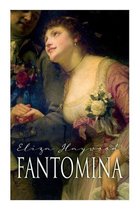
WEEK TWO – FANTOMINA
CW: Sexual Assault
Eliza Haywood
Born around 1693 and died in 1756.
Little is known about her life, but she may have had an early career as an actress and an
unhappy marriage.
Her fiction encompasses various genres, including amatory fiction and political satire.
Haywood launched The Female Spectator in 1744-1746.
Her writing often blurs or works across genres.
Her fiction is considered the more disreputable side of women's fiction compared to authors like
Penelope Aubin, who wrote moral tales. She was satirised as "Mrs. Novel" by Henry Fielding in 1730.
Despite this, Haywood was a significant contributor to the early 18th-century "rise of the novel" in
Britain.
Amatory fiction
Popular genre in British literature prior to the rise of the romance novel in the 1740s.
Focuses on themes of sex, love, romance, and affairs of the heart.
Specifically refers to a body of narrative fiction by women that explicitly explores erotic
representations of sentimental love.
Ros Ballaster on amatory fiction
“a particular body of narrative fiction by women which was explicitly erotic in its
concentration on the representation of sentimental love”
Ballaster argues that amatory fiction differs from male pornography, which primarily focuses on
anatomy, procreation, and instruction.
Amatory fiction, as exemplified by Eliza Haywood's works, emphasises the erotic and emotional
aspects of seduction and betrayal narratives.
Haywood's novels and their characteristics
Haywood's writings blur the boundaries between sentimental and erotic literature.
Her narratives combine racy storytelling with social critique.
They are characterised by their erotic, emotional, and physical elements.
Paula Backscheider and John Richetti on amatory fiction as a revision of feminine identity
“a powerful articulation of female identity & self-consciousness [...] this writing revises and
subverts traditional masculinist constructions of the feminine”
Understanding The Novel 20/21
WEEK TWO – FANTOMINA
CW: Sexual Assault
Eliza Haywood
Born around 1693 and died in 1756.
Little is known about her life, but she may have had an early career as an actress and an
unhappy marriage.
Her fiction encompasses various genres, including amatory fiction and political satire.
Haywood launched The Female Spectator in 1744-1746.
Her writing often blurs or works across genres.
Her fiction is considered the more disreputable side of women's fiction compared to authors like
Penelope Aubin, who wrote moral tales. She was satirised as "Mrs. Novel" by Henry Fielding in 1730.
Despite this, Haywood was a significant contributor to the early 18th-century "rise of the novel" in
Britain.
Amatory fiction
Popular genre in British literature prior to the rise of the romance novel in the 1740s.
Focuses on themes of sex, love, romance, and affairs of the heart.
Specifically refers to a body of narrative fiction by women that explicitly explores erotic
representations of sentimental love.
Ros Ballaster on amatory fiction
“a particular body of narrative fiction by women which was explicitly erotic in its
concentration on the representation of sentimental love”
Ballaster argues that amatory fiction differs from male pornography, which primarily focuses on
anatomy, procreation, and instruction.
Amatory fiction, as exemplified by Eliza Haywood's works, emphasises the erotic and emotional
aspects of seduction and betrayal narratives.
Haywood's novels and their characteristics
Haywood's writings blur the boundaries between sentimental and erotic literature.
Her narratives combine racy storytelling with social critique.
They are characterised by their erotic, emotional, and physical elements.
Paula Backscheider and John Richetti on amatory fiction as a revision of feminine identity
“a powerful articulation of female identity & self-consciousness [...] this writing revises and
subverts traditional masculinist constructions of the feminine”