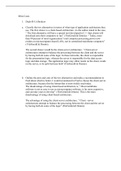
Week 2: Immunology and autoimmunity
The immune system
Cells of the immune system:
>> The adaptive immune system consists of B and T cells, becoming plasma cells and
effector T cells.
>> The innate immune system consists of NK cells, macrophages, DC, mast cells,
neutrophils, eosinophils and basophils. Their response to pathogens is engulfment and
degradation & synthesis of inflammatory cytokines.
Both effector mechanisms are for the destruction of pathogens.
Activation of the innate and adaptive immune system:
● Macrophages in the tissue secrete cytokines.
● Immature DC cells (good at phagocytosis) take up antigens and move to lymph
nodes (antigen processing) → mature DC cells (good at presenting) present antigens
to T cells.
Complement:
● Complement factors are synthesized in the liver.
● There are three complement pathways: Alternative, lectin and classical.
● There are 3 working mechanisms:
○ Opsonisation of pathogens, facilitating uptake and killing by phagocytosis.
○ Perforation of pathogen cell membranes.
○ Recruitment of inflammatory cells.
B- and T cell receptors:
● Each lymphocyte has a different specific antigen receptor, but the receptors on
individual lymphocytes are identical.
● B lymphocytes have antigen receptors and effector molecules.
● T lymphocytes have other effector molecules like cytokines and enzymes.
● RAG-enzyme is expressed in lymphocytes and causes the rearrangement of
immunoglobulin genes.
○ Gene rearrangement gives diversity.
○ More diversity during somatic hypermutation
○ High-affinity antibodies are selected → during the maturation germinal centre
for B cells.
● T cells recognize antigen peptides and HLA (MHC)
MHC class I and II presentation:
● MHC-I: cytosol (so viral mostly) → loading in ER → on MHC-I to CD8 mainly.
● MHC-II: phagosome → lysosome → loading in ER → on MHC-II to CD4 mainly.
T & B cell activation:
● Naive T cells circulate through secondary lymphoid organs. There are two signals
needed from the DC to the T cell: Antigen presentation signal via the MHC-II-TLR
and co-stimulation of the B7 and CD28.
● T cells that recognize self-antigen in absence of co-stimulation → anergic.
● Signal 3: Cytokines to determine Th subset specification.
● This co-stimulation is only required during the activation of naive T cells.
, ● CD8 = kill virus-infected cells.
● CD4: Th1 = help macrophages. Th2 = eosinophil against parasite infection. Tfh =
help in B cell activation. Th17 = neutrophil response. Treg = suppress immune cells.
● DiGeorge syndrome or inadequate antibody production → not good specific
response → opportunistic infections
● Two waves in plasma cell formation at two different sites:
○ 1: expansion of B and Tth cells in medulla → IgM.
○ 2: expansion in follicle → germinal centre reaction → affinity maturation and
isotype switching.
● Different isotypes fulfil different functions. Cytokines regulate which isotype switch
occurs.
Antibody effector functions:
● IgG: internal organs are protected by IgG via FcRn transport: move from endothelial
space to extracellular space via endocytosis.
● IgA: dimer IgA binds and moves to the lumen and binds to the mucus
● IgE: protect against parasitic infection by activating mast cells and thereby releasing
the granule content.
● Antibodies against a virus prevent the virus from entering the cell and thereby
neutralizing the virus.
Mucosal immunity
Benefical role for gut microbiota:
● Synthesize essential metabolites: cofactor for the synthesis of clotting factors in the
liver (vitamin K).
● Breakdown of plant fibres in food: release of small molecules that can be used in
metabolism and biosynthesis (short-chain fatty acids).
● Inactivate toxic substances in food or made by pathogens: degradation of toxins into
harmless compounds that can be used by human cells.
● Prevent pathogens from benefiting from the resources of the human gut: limitation of
pathogen species to small numbers that are not harmful.
● Interact with epithelium to trigger the development of secondary lymphoid tissue:
establishment of the gut-associated lymphoid tissue.
Mucus layers:
>> Small intestine: got vili, a lot of mucus and space for diffusion.
>> Colon: mucus more intense, less diffusion into tissue. The function is to generate feases
more than the take up of nutrients.
Systemic and mucosal immune defence differs:
● After the entering of bacteria, there is no inflammation only activation of immune
cells.
● Local effector cells respond only to limit the infection. DC cells move to the lymph
nodes to activate adaptive immunity.
● Effector B and T cells are highly specific for the invading bacteria.
● Infection is terminated with little tissue damage and there is no need for repair.
● The epithelial cells: NOD2 and TLR to produce cytokines.
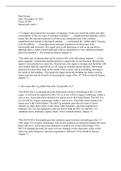
The immune system
Cells of the immune system:
>> The adaptive immune system consists of B and T cells, becoming plasma cells and
effector T cells.
>> The innate immune system consists of NK cells, macrophages, DC, mast cells,
neutrophils, eosinophils and basophils. Their response to pathogens is engulfment and
degradation & synthesis of inflammatory cytokines.
Both effector mechanisms are for the destruction of pathogens.
Activation of the innate and adaptive immune system:
● Macrophages in the tissue secrete cytokines.
● Immature DC cells (good at phagocytosis) take up antigens and move to lymph
nodes (antigen processing) → mature DC cells (good at presenting) present antigens
to T cells.
Complement:
● Complement factors are synthesized in the liver.
● There are three complement pathways: Alternative, lectin and classical.
● There are 3 working mechanisms:
○ Opsonisation of pathogens, facilitating uptake and killing by phagocytosis.
○ Perforation of pathogen cell membranes.
○ Recruitment of inflammatory cells.
B- and T cell receptors:
● Each lymphocyte has a different specific antigen receptor, but the receptors on
individual lymphocytes are identical.
● B lymphocytes have antigen receptors and effector molecules.
● T lymphocytes have other effector molecules like cytokines and enzymes.
● RAG-enzyme is expressed in lymphocytes and causes the rearrangement of
immunoglobulin genes.
○ Gene rearrangement gives diversity.
○ More diversity during somatic hypermutation
○ High-affinity antibodies are selected → during the maturation germinal centre
for B cells.
● T cells recognize antigen peptides and HLA (MHC)
MHC class I and II presentation:
● MHC-I: cytosol (so viral mostly) → loading in ER → on MHC-I to CD8 mainly.
● MHC-II: phagosome → lysosome → loading in ER → on MHC-II to CD4 mainly.
T & B cell activation:
● Naive T cells circulate through secondary lymphoid organs. There are two signals
needed from the DC to the T cell: Antigen presentation signal via the MHC-II-TLR
and co-stimulation of the B7 and CD28.
● T cells that recognize self-antigen in absence of co-stimulation → anergic.
● Signal 3: Cytokines to determine Th subset specification.
● This co-stimulation is only required during the activation of naive T cells.
, ● CD8 = kill virus-infected cells.
● CD4: Th1 = help macrophages. Th2 = eosinophil against parasite infection. Tfh =
help in B cell activation. Th17 = neutrophil response. Treg = suppress immune cells.
● DiGeorge syndrome or inadequate antibody production → not good specific
response → opportunistic infections
● Two waves in plasma cell formation at two different sites:
○ 1: expansion of B and Tth cells in medulla → IgM.
○ 2: expansion in follicle → germinal centre reaction → affinity maturation and
isotype switching.
● Different isotypes fulfil different functions. Cytokines regulate which isotype switch
occurs.
Antibody effector functions:
● IgG: internal organs are protected by IgG via FcRn transport: move from endothelial
space to extracellular space via endocytosis.
● IgA: dimer IgA binds and moves to the lumen and binds to the mucus
● IgE: protect against parasitic infection by activating mast cells and thereby releasing
the granule content.
● Antibodies against a virus prevent the virus from entering the cell and thereby
neutralizing the virus.
Mucosal immunity
Benefical role for gut microbiota:
● Synthesize essential metabolites: cofactor for the synthesis of clotting factors in the
liver (vitamin K).
● Breakdown of plant fibres in food: release of small molecules that can be used in
metabolism and biosynthesis (short-chain fatty acids).
● Inactivate toxic substances in food or made by pathogens: degradation of toxins into
harmless compounds that can be used by human cells.
● Prevent pathogens from benefiting from the resources of the human gut: limitation of
pathogen species to small numbers that are not harmful.
● Interact with epithelium to trigger the development of secondary lymphoid tissue:
establishment of the gut-associated lymphoid tissue.
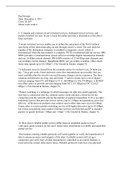
Mucus layers:
>> Small intestine: got vili, a lot of mucus and space for diffusion.
>> Colon: mucus more intense, less diffusion into tissue. The function is to generate feases
more than the take up of nutrients.
Systemic and mucosal immune defence differs:
● After the entering of bacteria, there is no inflammation only activation of immune
cells.
● Local effector cells respond only to limit the infection. DC cells move to the lymph
nodes to activate adaptive immunity.
● Effector B and T cells are highly specific for the invading bacteria.
● Infection is terminated with little tissue damage and there is no need for repair.
● The epithelial cells: NOD2 and TLR to produce cytokines.