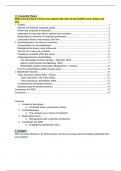
11. Corporate Theory
Make sure you have a theory you support: Be clear on your belief in your theory and
why.
1. Context.................................................................................................................................... 1
Internal and External corporate power.....................................................................................2
Power and corporate architecture...........................................................................................2
Implication of corporate theory: positive and normative...........................................................3
Responding to concerns of corporate governance..................................................................3
Concession theory: early theory of the firm.............................................................................3
2. Contractarianism: the nexus of contracts.................................................................................4
3 broad pillars of contractarianism...........................................................................................4
Developing the theory: early influences...................................................................................5
The firm as a ‘nexus of contracts’............................................................................................5
Classifying contracts within the nexus.....................................................................................6
Challenges faced by shareholders..........................................................................................6
The shareholder monitor (Alchian + Demsetz 1972)...........................................................7
Agency costs (Jensen and Meckling 1976).........................................................................7
Shareholder wealth maximisation (Easterbrook + Fischel).................................................8
How do contractarians justify company law?...........................................................................9
3. Stakeholder theories.............................................................................................................. 10
Team production theory (Blair + Stout)..................................................................................12
Team production: role of the board...................................................................................13
Team production: shareholder rights................................................................................13
Consequences of pluralist theories........................................................................................14
Business case for pluralist theories.......................................................................................14
Companies Act 2006.................................................................................................................. 14
Conclusion:................................................................................................................................ 15
Overview
1. Context to the debate
a. Corporate power, governance, theory
2. Contractarianism
a. The company as a “nexus of contracts”
3. Stakeholder theory
a. Recognising wider corporate constituents
4. Companies Act 2006
a. Enlightened shareholder value
1. Context
Who can make decisions, for what purpose, and how are those decisionmaking individuals held
accountable?
, Power: the ability for some person/group to impose their ‘will and purpose on others, including
on those who are reluctant or adverse.’ (Kenneth Galbraith, The Anatomy of Power [1])
● The power wielded by companies can be a LOT
● Corporate theory helps us understand the discretionary right of a few people (Board) to
make decisions that bind a significant range of third parties
○ Note average board size 8-12 people setting the strategy which will impact
creditors, employees, the environment, stakeholders, shareholder bodies
● Concerned about the intensity of power that sits within an undemocratically elected,
small body of people
Internal and External corporate power
External corporate power (Parkinson)
● Companies are able to make choices which have important social consequences: they
make private decisions which have public results’
○ Public impact
○ E.g. The decision to employ people, remove employment, mass redundancies
without expectation, research and development, environmental impact
● Controlling external power: Anything that risks challenging that power from a social
standpoint - what can regulate external power?
○ External state regulation
○ Markets
Internal corporate power
● Directors’ discretion to allocate the resources of others in the pursuit of decisions they
have unilaterally made
● Not always (rarely?) with prior approval
● Shareholders… other constituents?
○ Directors control employee time, supplier processes, much larger body of
constituents that we need to think about
2 key consequences arising from internal power:
● Shareholders seen to need additional protection bc they are at risk from exercise and
discretion
● Directors must be held accountable in some way to legitimize the power that they hold
○ E.g. next lecture, Directors’ duties enforceable by the shareholder body
■ What is the right approach to governing power? Are shareholders the
best constituent to hold the directors to account (w the right to remove the
board)?
Power and corporate architecture
Questions corporate theory tries to answer:
● What is the nature of the firm? (Coase)
● For whom are corporate managers trustees? (Dodd; Berle (1932))
○ What is this power for?
Make sure you have a theory you support: Be clear on your belief in your theory and
why.
1. Context.................................................................................................................................... 1
Internal and External corporate power.....................................................................................2
Power and corporate architecture...........................................................................................2
Implication of corporate theory: positive and normative...........................................................3
Responding to concerns of corporate governance..................................................................3
Concession theory: early theory of the firm.............................................................................3
2. Contractarianism: the nexus of contracts.................................................................................4
3 broad pillars of contractarianism...........................................................................................4
Developing the theory: early influences...................................................................................5
The firm as a ‘nexus of contracts’............................................................................................5
Classifying contracts within the nexus.....................................................................................6
Challenges faced by shareholders..........................................................................................6
The shareholder monitor (Alchian + Demsetz 1972)...........................................................7
Agency costs (Jensen and Meckling 1976).........................................................................7
Shareholder wealth maximisation (Easterbrook + Fischel).................................................8
How do contractarians justify company law?...........................................................................9
3. Stakeholder theories.............................................................................................................. 10
Team production theory (Blair + Stout)..................................................................................12
Team production: role of the board...................................................................................13
Team production: shareholder rights................................................................................13
Consequences of pluralist theories........................................................................................14
Business case for pluralist theories.......................................................................................14
Companies Act 2006.................................................................................................................. 14
Conclusion:................................................................................................................................ 15
Overview
1. Context to the debate
a. Corporate power, governance, theory
2. Contractarianism
a. The company as a “nexus of contracts”
3. Stakeholder theory
a. Recognising wider corporate constituents
4. Companies Act 2006
a. Enlightened shareholder value
1. Context
Who can make decisions, for what purpose, and how are those decisionmaking individuals held
accountable?
, Power: the ability for some person/group to impose their ‘will and purpose on others, including
on those who are reluctant or adverse.’ (Kenneth Galbraith, The Anatomy of Power [1])
● The power wielded by companies can be a LOT
● Corporate theory helps us understand the discretionary right of a few people (Board) to
make decisions that bind a significant range of third parties
○ Note average board size 8-12 people setting the strategy which will impact
creditors, employees, the environment, stakeholders, shareholder bodies
● Concerned about the intensity of power that sits within an undemocratically elected,
small body of people
Internal and External corporate power
External corporate power (Parkinson)
● Companies are able to make choices which have important social consequences: they
make private decisions which have public results’
○ Public impact
○ E.g. The decision to employ people, remove employment, mass redundancies
without expectation, research and development, environmental impact
● Controlling external power: Anything that risks challenging that power from a social
standpoint - what can regulate external power?
○ External state regulation
○ Markets
Internal corporate power
● Directors’ discretion to allocate the resources of others in the pursuit of decisions they
have unilaterally made
● Not always (rarely?) with prior approval
● Shareholders… other constituents?
○ Directors control employee time, supplier processes, much larger body of
constituents that we need to think about
2 key consequences arising from internal power:
● Shareholders seen to need additional protection bc they are at risk from exercise and
discretion
● Directors must be held accountable in some way to legitimize the power that they hold
○ E.g. next lecture, Directors’ duties enforceable by the shareholder body
■ What is the right approach to governing power? Are shareholders the
best constituent to hold the directors to account (w the right to remove the
board)?
Power and corporate architecture
Questions corporate theory tries to answer:
● What is the nature of the firm? (Coase)
● For whom are corporate managers trustees? (Dodd; Berle (1932))
○ What is this power for?