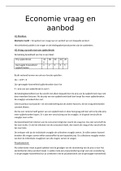
1-1 QUESTIONS Financial and Managerial Accounting for MBAs 6th Edition Easton Solutions Manual Financial Accounting for MBAs Q1-1. Organizations undertake four major activities: planning, financing, investing, and operating. Financing is the means a company uses to pay for resources. Investing refers to the buying and selling of resources necessary to carry out the organization’s plans. Operating activities are the actual carrying out of these plans. Planning is the glue that connects these activities, including the organization’s ideas, goals and strategies. Finan cial accounting information provides valuable input into the planning process, and, subsequently, reports on the results of plans so that corrective action can be taken, if necessary. Q1-2. An organization’s financing activities (liabilities and equity = sources of funds) pay for investing activities (assets = uses of funds). An organization’s assets cannot be more or less than its liabilities and equity combined. This means: assets = liabilities + equity. This relation is called the accounting equation ( sometimes called the balance sheet equation ), and it applies to all organizations at all times. Q1-3. The four main financial statements are: income statement, balance sheet, statement of stockholders’ equity, and statement of cash flows. The income sta tement provides information about the company’s revenues, expenses and profitability over a period of time. The balance sheet lists the company’s assets (what it owns), liabilities (what it owes), and stockholders’ equity (the residual claims of its owners ) as of a point in time. The statement of stockholders’ equity reports on the changes to each stockholders’ equity account during the period. The statement of cash flows identifies the sources (inflows) and uses (outflows) of cash, that is, where the compa ny got its cash from and what it did with it. Together, the four statements provide a complete picture of the financial condition of the company. Q1-4. The balance sheet provides information that helps users understand a company’s resources (assets) and claims to those resources (liabilities and stockholders’ equity) as of a given point in time . © Cambridge Business Publishers, 2021 1-2 Q1-5. The income statement covers a period of time . An income statement reports whether the business has earned a net income (also called profit or earnings) o r incurred a net loss. Importantly, the income statement lists the types and amounts of revenues and expenses making up net income or net loss. Q1-6. The statement of cash flows reports on the cash inflows and outflows relating to a company’s operating, investing, and financing activities over a period of time . The sum of these three activities yields the net change in cash for the period. This statement is a useful complement to the income statement, which reports on revenues and expenses, but which conv eys relatively little information about cash flows. Q1-7. Retained earnings (reported on the balance sheet) is increased each period by any net income earned during the period (as reported in the income statement) and decreased each period by the paymen t of dividends (as reported in the statement of cash flows and the statement of stockholders’ equity). Transactions reflected on the statement of cash flows link the previous period’s balance sheet to the current period’s balance sheet. The ending cash bal ance appears on both the balance sheet and the statement of cash flows. Q1-8. External users and their uses of accounting information include: (a) lenders for measuring the risk and return of loans; (b) shareholders for assessing the return and risk in a cquiring shares; and (c) analysts for assessing investment potential. Other users are auditors, consultants, officers, directors for overseeing management, employees for judging employment opportunities, regulators, unions, suppliers, and appraisers. Q1-9. Managers deal with a variety of information about their employers and customers that is not generally available to the public. Ethical issues arise concerning the possibility that managers might personally benefit by using confidential information. There is also the possibility that their employers and/or customers might be harmed if certain information is not kept confidential. Q1-10. The five forces (according to Professor Michael Porter) are (A) industry competition, (B) buyer power, (C) supplier power, (D) product substitutes, and (E) threat of entry. Q1-11. W SWOT stands for Strengths and Weaknesses (both are internal factors) Opportunities and Threats (both external factors). Q1-12. Seagate’s independent auditor is EY LLP. The auditor expressly states that “our responsibility is to express an opinion on these financial statements based on our audits.” The auditor also states that “these financial statements are the responsibility of the company’s management.” Thus, the auditor does not assume responsibility for the financial statements. 1-3 Q1-13. While firms acknowledge the increasing need for more complete disclosure of financial and nonfinancial information, they have resisted these demands to protect their competitive position. Corporate executi ves must weigh the benefits they receive from the financial markets as a result of more transparent and revealing financial reporting against the costs of divulging proprietary information to competitors and others. Q1-14. Generally Accepted Accounting Pr inciples (GAAP) are the various methods, rules, practices, and other procedures that have evolved over time in response to the need to regulate the preparation of financial statements. They are primarily set by the Financial Accounting Standards Board (FAS B), a private sector entity with representatives from companies that issue financial statements, accounting firms that audit those statements, and users of financial information. Other bodies that contribute to GAAP are the AICPA, the EITF, and the SEC. Q1-15. Corporate governance is the system of policies, procedures and mechanisms that protect the interests of stakeholders in the business. These stakeholders include investors, creditors, regulatory bodies, and employees, to name a few. Sound corporate go vernance involves the maintenance of an effective internal auditing function, an independent and effective external auditing function, an informed and impartial board of directors, governmental oversight (such as from the SEC), and the oversight of the cou rts. Q1-16. The auditor’s primary function is to express an opinion as to whether the financial statements fairly present the financial condition of the company and are free from material misstatements. Auditors do not prepare the financial statements; th ey only audit them and issue their opinion on them. The auditors provide no guarantees about the financial statements or about the company’s continued performance. Q1-17. Financial accounting information is frequently used in order to evaluate management performance. The return on equity (ROE) and return on assets (ROA) provide useful measures of financial performance as they combine elements from both the income statement and the balance sheet. Financial accounting information is also frequently used to monitor compliance with external contract terms. Banks often set limits on such items as the amount of total liabilities in relation to stockholders’ equity or the amount of dividends that a company may pay. Audited financial statements provide information that can be used to monitor compliance with these limits (often called covenants ). Regulators and taxing authorities also utilize financial information to monitor items of interest. Q1-18. Managers are vitally concerned about disclosing proprietary infor mation that might benefit the company’s competitors. Of most concern, is the “cost” of losing some competitive advantage. There traditionally has been tension between companies and the financial professionals (especially investment analysts) who press firm s for more and more financial and nonfinancial information. © Cambridge Business Publishers, 2021 1-4 Q1-19. Net income is an important measure of financial performance. It indicates that the market values the company’s products or services, that is, it is willing to pay a price for the products or services enough to cover the costs to bring them to market and to provide the company’s investors with a profit. Net income does not tell the whole story, however. A company can always increase its net income with additional investment in something as simple as a bank savings account. A more meaningful measure of financial performance comes from measuring the level of net income relative to the investment made. One investment measure is the balance of stockholders’ equity, and the comparison of net inco me to average stockholders’ equity (ROE) is a fundamental measure of financial performance. Q1-20. Borrowed money must be repaid, both the principal amount borrowed, as well as interest on the borrowed funds. These payments have contractual due dates. If payments are not prompt, creditors have powerful legal remedies, including forcing the company into bankruptcy. Consequently, when comparing two companies with the same return on equity, the one using less debt would generally be viewed as a safer (less r isky) investment.
Exam (elaborations)
Solution Manual for Financial and Managerial Accounting for MBAs 6th Edition Easton / All Chapters 1 - 25 / Full Complete 2023
Solution Manual for Financial and Managerial Accounting for MBAs 6th Edition Easton / All Chapters 1 - 25 / Full Complete 2023
Institution
Financial And Managerial Accounting For MBAs
Module
Financial and Managerial Accounting for MBAs
Content preview
Written for
- Institution
- Financial and Managerial Accounting for MBAs
- Module
- Financial and Managerial Accounting for MBAs
Document information
- Uploaded on
- May 27, 2023
- Number of pages
- 865
- Written in
- 2022/2023
- Type
- Exam (elaborations)
- Contains
- Questions & answers
Subjects
-
solutions
-
financial and managerial accounting for mbas 6th edition easton solutions manual
-
financial and managerial accounting for mbas 6th edition easton
-
financial and managerial accounting for mbas
£10.35
Get access to the full document:
Wrong document? Swap it for free
Within 14 days of purchase and before downloading, you can choose a different document. You can simply spend the amount again.
Written by students who passed
Immediately available after payment
Read online or as PDF

Also available in package deal
Package deal
Solutions Manuals for Finance | 7 Full Solution Manual | 9000+ Qs & As All Chapters, All Pages Full Complete 2023
7
2023
£ 104.24
More info