

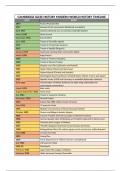
CAMBRIDGE IGCSE HISTORY MODERN WORLD HISTORY TIMELINE
DATE EVENT
1870 Franco-Prussian War
1917 Russian fell to communism (Bolshevik revolution)
April 1917 America declared war on Germany (100,000 deaths)
March 1918 Brest-Litovsk
November 1918 End of WW1
June 1919 Treaty of Versailles signed
1919 Treaty of St-Germain (Austria)
1919 Treaty of Neuilly (Bulgaria)
January 1919 Spartacist Uprising (600 communists killed)
March 1920 Kapp Putsch
1920 Treaty of Trianon (Hungary)
1920 Treaty of Sèvres (Turkey)
1920 Dispute over Vilna (Lithuania and Poland)
1921 Upper Silesia (Poland and Germany)
1921 Aaland Islands (Finland and Sweden)
1921 Washington Naval Conference (United States, Britain, France and Japan)
1922 Rapallo Treaty (USSR and Germany re-establish diplomatic relations)
June 1922 Assassination of Walter Rathenau by right-wing nationalists (he
encouraged communism)
March 1923 Ruhr crisis
August-September 1923 Corfu crisis
July 1923 Treaty of Lausanne (Turkey)
November 1923 Munich Putsch
1924 Dawes Plan (800 million marks US loans)
May 1924 32 seats for Nazis
1924 Dispute over province of Mosul (Iraq and Turkey)
October 1925 Greece and Bulgaria border dispute
1925 Locarno Treaties (Germany accepts its Western borders)
1926 German people elect Hindenburg as President (opposed to democracy)
1926 Germany joins League of Nations
1927 750,000 refugees freed from former Russian territories
1928 Kellogg-Briand Pact (65 nations agree not to use force to settle disputes)
May 1928 12 seats for Nazis
1929 Young Plan
1929 Great Depression (6 million Germans unemployed)
July 1932 230 seats for Nazis
1931-33 Manchuria
February 1933 Japan leave the League of Nations
February 1933 Hitler becomes German Chancellor
DATE EVENT
1870 Franco-Prussian War
1917 Russian fell to communism (Bolshevik revolution)
April 1917 America declared war on Germany (100,000 deaths)
March 1918 Brest-Litovsk
November 1918 End of WW1
June 1919 Treaty of Versailles signed
1919 Treaty of St-Germain (Austria)
1919 Treaty of Neuilly (Bulgaria)
January 1919 Spartacist Uprising (600 communists killed)
March 1920 Kapp Putsch
1920 Treaty of Trianon (Hungary)
1920 Treaty of Sèvres (Turkey)
1920 Dispute over Vilna (Lithuania and Poland)
1921 Upper Silesia (Poland and Germany)
1921 Aaland Islands (Finland and Sweden)
1921 Washington Naval Conference (United States, Britain, France and Japan)
1922 Rapallo Treaty (USSR and Germany re-establish diplomatic relations)
June 1922 Assassination of Walter Rathenau by right-wing nationalists (he
encouraged communism)
March 1923 Ruhr crisis
August-September 1923 Corfu crisis
July 1923 Treaty of Lausanne (Turkey)
November 1923 Munich Putsch
1924 Dawes Plan (800 million marks US loans)
May 1924 32 seats for Nazis
1924 Dispute over province of Mosul (Iraq and Turkey)
October 1925 Greece and Bulgaria border dispute
1925 Locarno Treaties (Germany accepts its Western borders)
1926 German people elect Hindenburg as President (opposed to democracy)
1926 Germany joins League of Nations
1927 750,000 refugees freed from former Russian territories
1928 Kellogg-Briand Pact (65 nations agree not to use force to settle disputes)
May 1928 12 seats for Nazis
1929 Young Plan
1929 Great Depression (6 million Germans unemployed)
July 1932 230 seats for Nazis
1931-33 Manchuria
February 1933 Japan leave the League of Nations
February 1933 Hitler becomes German Chancellor


