Leases
Tuesday, 9 November 2021 12:46
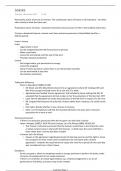
Historically, leases arose out of contract. The contractual nature of leases is still important - we often
refer closely to what the lease says.
Proprietary nature of leases - leasehold covenants bind successors in title to the landlord and tenant.
To have a leasehold interest a tenant must have exclusive possession of identifiable land for a
definite period.
Lease v license
Lease
- Legal estate in land
- Can be assigned (transferred from person to person)
- Binds a purchaser
- Cannot be terminated until the end of the term
- Provides statutory protection
License
- Not a legal estate, just permission to occupy
- Cannot be assigned
- Doesn’t bind a purchaser unless there is an interest that overrides
- Can be terminated at any time
- No statutory protection
Telling the difference
- Street v Mountford [1985] AC 809
○ Mr Street and Mrs Mountford entered into an agreement where Mr S allowed Mr and
Mrs M to occupy furnished rooms for a rent of £37 a week
○ Agreement was headed 'license agreement' and included a clause stating that Mrs M
accepted that the agreement did not conder on her the protection of the Rent Act 1977
○ Later, Mrs M attempted to invoke the protection of the RA 1977 in respect of a fair rent
○ Mr S argued that because she only had a license rather than a tenancy, she could not do
this
○ HoL had to decide whether it was a license or tenancy
○ Held - Lord Templeman said that the essential elements of a lease were 'exclusive
possession for a term at rent'
Exclusive possession
- If there is no exclusive possession then the occupier can only have a license
- Aslan v Murphy [1990] 1 WLR 766 and Crancour Lts v Da Silvesa (1986) 18 HLR 265
○ The 'license' contained a provision that the licensor could move in and share the room
or allow someone else to share with the licensee - in both cases the court held that a
lease rather than a license had been created
- Crancour Ltd v Da Silvesa
○ Clauses in the agreement regarding provision of cleaning services and the right to move
the occupants to other rooms were considered to be consistent with a license
agreement - however the requirement to vacate the room for a period of time each day
was considered to be a 'sham' clause
Exceptions
- Service occupiers, where an employee needs to occupy premises to perform his duties under
his terms of employment do not create tenancies
- If there is no intention to create legal relations e.g. a family arrangement or an act of
generosity or friendship, a tenancy may not be created
- Lodgers - Lord Templeman said in Street v Mountford that a 'lodger is entitled to live in the
Land Law Page 1
, - Lodgers - Lord Templeman said in Street v Mountford that a 'lodger is entitled to live in the
premises but cannot call the place his own'
Multiple occupiers
Several possibilities
- The occupiers may be joint tenants of the whole property
○ Requires four unities
▪ Possession - each occupier is as much entitled to any part of the land as the others
▪ Interest - the interest must be the same in extent, interest and duration
▪ Title - each tenant must claim title under the same document
▪ Time - the interest of each tenant must be at the same time
○ AG Securities v Vaughan [1990]
▪ 4 individuals each had rights to rooms in a flat
▪ The agreement did not give any right to a specific room so they could not be
tenants of their own rooms - instead their rights to the flat as a whole had to be
assessed
▪ Each agreement was for 6 months though they started at different times
▪ Looking at it from the possession of each individual there was no exclusive
possession - three others shared the flat as a whole
▪ Held - the agreement was a license
▪ 4 unities are required for there to be a joint tenancy - there was no unity of
interest (the agreements were separate and involved different rents), no unity of
time (began at different times) and no unity of title (separate agreements)
○ Antoniades v Villiers [1990]
▪ Decided at the same time as AG Securities
▪ A couple took a flat together but each signed a separate 'license' agreement and
had each agreed to pay half the rent
▪ The agreement provided that the owner could move into the accommodation at
any time or arrange for someone else to
▪ Held - HOL said this was a lease and that the couple had a joint tenancy of the flat
▪ The agreements were separate but interdependent - neither would have signed
without the other
- The occupiers might be tenants of a particular part of the property such as their own room
- The occupiers may simply be licensees
Certain term
- Where there is no term stated an implied periodic tenancy may arise
- Where this is the case, the term is the period for which the rent is reserved - in most instances
therefore it is relatively straightforward to ascertain that the lease has a certain term
- However there are instances where this may not be the case - Lace v Chantler [1944] KB 368 a
lease whose term was expressed to be for the duration of the war was held to be too
uncertain to create a lease
- Prudential Assurance v London Residuary Body [1991] UKHL 10
○ London CC let a strip of land to Nathan
○ With regard to duration the lease stated 'The tenancy shall continue until the said land is
required by the council for the purposes of the widening of Walworth Road and the
street paving works rendered necessary thereby and the council shall give two months'
notice to the tenant at least prior to the day of determination when the said land is so
required and thereupon the tenant shall give vacant possession to the council of the said
land…'
○ 60 years later both the landlord and tenant were successors in title and the freeholder
had no powers with regard to road widening
○ This meant that if the lease were valid, the tenant had the benefit of the land for a rent
of £30 per annum indefinitely whereas the market rent would have been more than
£10,000 per annum
○ On the other hand, if the lease were found to be invalid for uncertainty, as was the case,
the tenant was left with a row of shops with no frontage to the road
Held - while the court found that the uncertain term rendered the lease invalid, Lord
Land Law Page 2
Tuesday, 9 November 2021 12:46
Historically, leases arose out of contract. The contractual nature of leases is still important - we often
refer closely to what the lease says.
Proprietary nature of leases - leasehold covenants bind successors in title to the landlord and tenant.
To have a leasehold interest a tenant must have exclusive possession of identifiable land for a
definite period.
Lease v license
Lease
- Legal estate in land
- Can be assigned (transferred from person to person)
- Binds a purchaser
- Cannot be terminated until the end of the term
- Provides statutory protection
License
- Not a legal estate, just permission to occupy
- Cannot be assigned
- Doesn’t bind a purchaser unless there is an interest that overrides
- Can be terminated at any time
- No statutory protection
Telling the difference
- Street v Mountford [1985] AC 809
○ Mr Street and Mrs Mountford entered into an agreement where Mr S allowed Mr and
Mrs M to occupy furnished rooms for a rent of £37 a week
○ Agreement was headed 'license agreement' and included a clause stating that Mrs M
accepted that the agreement did not conder on her the protection of the Rent Act 1977
○ Later, Mrs M attempted to invoke the protection of the RA 1977 in respect of a fair rent
○ Mr S argued that because she only had a license rather than a tenancy, she could not do
this
○ HoL had to decide whether it was a license or tenancy
○ Held - Lord Templeman said that the essential elements of a lease were 'exclusive
possession for a term at rent'
Exclusive possession
- If there is no exclusive possession then the occupier can only have a license
- Aslan v Murphy [1990] 1 WLR 766 and Crancour Lts v Da Silvesa (1986) 18 HLR 265
○ The 'license' contained a provision that the licensor could move in and share the room
or allow someone else to share with the licensee - in both cases the court held that a
lease rather than a license had been created
- Crancour Ltd v Da Silvesa
○ Clauses in the agreement regarding provision of cleaning services and the right to move
the occupants to other rooms were considered to be consistent with a license
agreement - however the requirement to vacate the room for a period of time each day
was considered to be a 'sham' clause
Exceptions
- Service occupiers, where an employee needs to occupy premises to perform his duties under
his terms of employment do not create tenancies
- If there is no intention to create legal relations e.g. a family arrangement or an act of
generosity or friendship, a tenancy may not be created
- Lodgers - Lord Templeman said in Street v Mountford that a 'lodger is entitled to live in the
Land Law Page 1
, - Lodgers - Lord Templeman said in Street v Mountford that a 'lodger is entitled to live in the
premises but cannot call the place his own'
Multiple occupiers
Several possibilities
- The occupiers may be joint tenants of the whole property
○ Requires four unities
▪ Possession - each occupier is as much entitled to any part of the land as the others
▪ Interest - the interest must be the same in extent, interest and duration
▪ Title - each tenant must claim title under the same document
▪ Time - the interest of each tenant must be at the same time
○ AG Securities v Vaughan [1990]
▪ 4 individuals each had rights to rooms in a flat
▪ The agreement did not give any right to a specific room so they could not be
tenants of their own rooms - instead their rights to the flat as a whole had to be
assessed
▪ Each agreement was for 6 months though they started at different times
▪ Looking at it from the possession of each individual there was no exclusive
possession - three others shared the flat as a whole
▪ Held - the agreement was a license
▪ 4 unities are required for there to be a joint tenancy - there was no unity of
interest (the agreements were separate and involved different rents), no unity of
time (began at different times) and no unity of title (separate agreements)
○ Antoniades v Villiers [1990]
▪ Decided at the same time as AG Securities
▪ A couple took a flat together but each signed a separate 'license' agreement and
had each agreed to pay half the rent
▪ The agreement provided that the owner could move into the accommodation at
any time or arrange for someone else to
▪ Held - HOL said this was a lease and that the couple had a joint tenancy of the flat
▪ The agreements were separate but interdependent - neither would have signed
without the other
- The occupiers might be tenants of a particular part of the property such as their own room
- The occupiers may simply be licensees
Certain term
- Where there is no term stated an implied periodic tenancy may arise
- Where this is the case, the term is the period for which the rent is reserved - in most instances
therefore it is relatively straightforward to ascertain that the lease has a certain term
- However there are instances where this may not be the case - Lace v Chantler [1944] KB 368 a
lease whose term was expressed to be for the duration of the war was held to be too
uncertain to create a lease
- Prudential Assurance v London Residuary Body [1991] UKHL 10
○ London CC let a strip of land to Nathan
○ With regard to duration the lease stated 'The tenancy shall continue until the said land is
required by the council for the purposes of the widening of Walworth Road and the
street paving works rendered necessary thereby and the council shall give two months'
notice to the tenant at least prior to the day of determination when the said land is so
required and thereupon the tenant shall give vacant possession to the council of the said
land…'
○ 60 years later both the landlord and tenant were successors in title and the freeholder
had no powers with regard to road widening
○ This meant that if the lease were valid, the tenant had the benefit of the land for a rent
of £30 per annum indefinitely whereas the market rent would have been more than
£10,000 per annum
○ On the other hand, if the lease were found to be invalid for uncertainty, as was the case,
the tenant was left with a row of shops with no frontage to the road
Held - while the court found that the uncertain term rendered the lease invalid, Lord
Land Law Page 2