Spermatogenesis
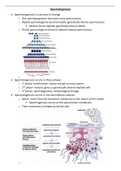
• Spermatogenesis is a process of change
o One spermatogonium becomes many spermatozoa
o Diploid spermatogonia become haloid, genetically diverse spermatozoa
▪ Meiosis forms haploid, genetically diverse sperm
o Round spermatogonia become tadpole shaped spermatozoa
o
• Spermatogenesis occurs in three phases
o 1st phase- proliferative, reason we get so many sperm
o 2nd phase- meiosis, gives us genetically diverse haploid cells
o 3rd phase- spermiogenesis, morphological change
• Spermatogenesis occurs in the seminiferous tubules
o Sperm move from the basement membrane to the lumen of the tubule
▪ Spermiogenesis occurs at the apical lumen membrane
o Their movement is helped by Sertoli cells
o
, • Phase 1- proliferation of spermatogonia
o In this stage, one spermatogonium becomes many spermatozoa
o Spermatogonia undergo mitosis to provide lots of cells for meiosis
o Spermatogonial stem cells either self-renew or commit to differentiation
▪ Different nomenclature is found in different species
▪
▪ “A” type spermatogonia are found in mice and other species
• In mice differentiated spermatogonia are still A type
o “As” cell is a single spermatogonia
o “Apr” is a paired spermatogonia
o “Aal” are 4, 8 or 16 cells that are chained together
• In humans and other primates, differentiated spermatogonia are
“B” type
o “Ad” is a true stem cell- it doesn’t divide unless cells are
damaged
• The spermatogonial stem cell niche is a specialised physical and chemical
environment
o The niche receives chemical signals from many areas such as Leydig cells,
Sertoli cells, lymphatics and others
▪ Signals work to maintain the niche
o The stem cell niche is always in contact with the basement membrane
o Spermatogonium are a type of physical signal the niche receives
o
• Spermatogenesis is a process of change
o One spermatogonium becomes many spermatozoa
o Diploid spermatogonia become haloid, genetically diverse spermatozoa
▪ Meiosis forms haploid, genetically diverse sperm
o Round spermatogonia become tadpole shaped spermatozoa
o
• Spermatogenesis occurs in three phases
o 1st phase- proliferative, reason we get so many sperm
o 2nd phase- meiosis, gives us genetically diverse haploid cells
o 3rd phase- spermiogenesis, morphological change
• Spermatogenesis occurs in the seminiferous tubules
o Sperm move from the basement membrane to the lumen of the tubule
▪ Spermiogenesis occurs at the apical lumen membrane
o Their movement is helped by Sertoli cells
o
, • Phase 1- proliferation of spermatogonia
o In this stage, one spermatogonium becomes many spermatozoa
o Spermatogonia undergo mitosis to provide lots of cells for meiosis
o Spermatogonial stem cells either self-renew or commit to differentiation
▪ Different nomenclature is found in different species
▪
▪ “A” type spermatogonia are found in mice and other species
• In mice differentiated spermatogonia are still A type
o “As” cell is a single spermatogonia
o “Apr” is a paired spermatogonia
o “Aal” are 4, 8 or 16 cells that are chained together
• In humans and other primates, differentiated spermatogonia are
“B” type
o “Ad” is a true stem cell- it doesn’t divide unless cells are
damaged
• The spermatogonial stem cell niche is a specialised physical and chemical
environment
o The niche receives chemical signals from many areas such as Leydig cells,
Sertoli cells, lymphatics and others
▪ Signals work to maintain the niche
o The stem cell niche is always in contact with the basement membrane
o Spermatogonium are a type of physical signal the niche receives
o