ACAM 250 NOTES
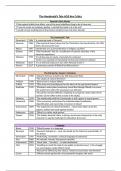
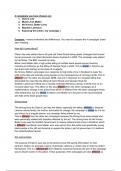
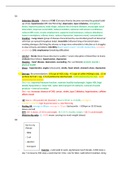
ACAM 250 September 11, 2018 2 stage activity 1. What is Asian? a. Being “Asian” in my opinion refers to the racial and ethnic identity of an individual identifying as Asian. The history, culture, and background of a group collectively supports the identification of these individuals. 2. How does it relate to Canadian? a. Canadians are diverse and this is including and not limited to Asian identifying Canadians. 3. How do you relate to these categories? a. I am both Asian and a citizen of Canada so I relate to both categories of identification. Asianness as… Identification: Self-identification (act of agency, one to present self) vs. imposed label (know individually we are Asian, because it is something we learn from others) Appearance: seeing Asianness, reading Asianness on the body e.g. colour of skin, eyes, dresses... State of being: a genetic or biological state? Cultural identification: Asianness as affinity to particular cultural forms e.g. music, dance Location: white person in Asia? Asian North Americans? Consequential or material: has effects on people’s lives Historically situated: ideas of Asianness shift over time Relational: linked to other racial categories (particularly whiteness) Fraught category: Asian vs. Asian Canadian Performance: of expectations and norms (how we present ourselves to the world and how the world expects us to behave in certain ways) Means of gathering: brings people together in community September 13, 2018 There is no singular definition of the category “Asian” Continental? Parents born outside of a continent, those who are born outside of a contintent o What happens to those outside? E.g. Richard Fung, 4th gen. Chinese Trinidadian Ethnic? o What about internal differences and conflicts? What about racial mixing? Cultural? o Defined by? How? When? Where? Racialization Defined as the “extension of racial meaning to a previously racially classified relationship, social practice or group” - I.e., racialization as a process of social classification o Premised on the existence of particular criteria - I.e., racialization is about power: system of hierarchicalization o Not innocent! Arrages the world and our place in it, shapes how we are supposed to relate to each other e.g. Chinatown imposed to keep Chinese out of other areas e.g. pencil test Racialization as political process o How is the category mobilized? By whom? o For what purposes? o With what consequences? Racialization as critique of essentialism o Notion that identities, differences, boundaries are innate, and there is an essence to things or groups that differentiate them from others. Ahistorical, unchanging, always have been that way ACAM 250 NOTES Difference as natural or biological Difference as destined and immutable - Racialization as a social constructionist approach o The approach to social difference that emphasizes the role of social processes and power in producing difference (including the idea of its innateness) Includes: categorization, boundary making, creation and enforcement of norms, and social differentiation Repetition as a way of making ideas “stick” Enables the reperformance of ideas of social norm e.g. this is what it means to be “x” - The “-tion” in racialization spotlights the importance of examining how race as an idea comes to be and gains footing o Through what institution and structures? E.g. media, law, education - Race as a signifier: attaches meanings to certain places and people o Per RS Coloma: Fluid and negotiated, as opposed to immutable o Mobilized for political reasons e.g. belonging, exclusion Including by those who claim membership into the category E.g. Maira, Desi identity, comes to being through Desi youth’s alignments with pop culture e.g. remixing hip hop and complex relationship to Indo-chic Making sense of their place September 18, 2018 Collectivization and its Limits Racialization lumps people together o E.g. “Asian” brings people of different regions, nations, cultures, religions, languages, residences together under the same category Demographically, the definition of “Asian” is complicated o Canada’s 2016 “visible minority” census categories includes: South Asian, Chinese, Filipino, SE Asian, WA, Korean, Japanese Visible Minority: an official Canadian demographic category that pertains to those who are not Caucasian or Aboriginal Defined under Employment Equity Act o Here, “Asian” is disaggregated to some degree, but lumping does continue As in “SE Asian”, which does not include “Filipino” Bringing “Asian” together can be a political tactic o “… many Asians in Canada have self-ascribed as a collective identity for cultural solidarity and political mobilizations” (Coloma, 122) Why come together? o A pan-ethnic framework can bring groups together based on “shared and converging racialization” o A way to recognize shared histories, shared experiences, and to do something about it Strategically foregrounding similarities in migrant and ethno-racial experiences Toward collective critique and visibility “Some communities consider themselves a part of, yet apart from, the entity that coheres under the Asian Canadian category” o Category “Asian” can mask important internal hierarchies and conflicts o E.g. uneven socio-economic and political positionings among migrant communities In public imagination, who is “Asian”? Lee and Kim (2017): A focus on our multiple origins, mobilities, and iterneraries, enables us to consider the diversity of global processes that shape our being here o Immigrants o International students o Temporary labour migrants o Undocumented o Migrants Recall Richard Fung’s example as a gay Chinese Trinidadian Canadian in Toronto September 20, 2018 Orientalism: a concept that emerges out of the work of Edward Said () Professor of Literature (Columbia U.) Continues to be a foundational thinker in the field of postcolonial studies Said was interested in representations of the “Orient” and the role that these representations play in geopolitical relations Orientalism is a kind of map of the world in which negativity, lack and perversity are located outside of the West (Europe) Orientalism, as a practice of knowledge production, has created a pantheon of ideas that might be described as “Europe’s collective day-dream of the Orient” Exists through stories, mythologies, and other texts about the Orient Traffics especially in stereotypes about the mystical, mysterious and abnormal qualities of Oriental spaces and places Orient is not “real” but its invocation is productive (i.e. has material effects, does things in the world) In popular culture, material consequences Orientalism as a regime of truth: a durable set of ideas (produced especially thorugh arts, media, and other vehicles for discourse) about a singularly imagined place or culture Sunaina Maira: The “Orient” (or at least commodities associated with it) has increasingly become desirable in the West OR at least certain aspects of it Part of a long history of simultaneous desire and disgust Henna, bindis, and fabrics as examples of “Indo-chic” in the West Consumption of Indo-chic as a practice of self-making The “Orient” treated as a mystical gateway to a world of magic, passion and romance” o Endows consumer with these qualities Premised on romanticized ideas about a place and culture as an exciting source of exotic difference According to Maira , the rise of Indo-chic must be understood within particular economies of desire: Desire by South Asian American and South Asian women to “enact representations of national culture or ethnic ancestry for a non-South Asian audience” Finally being seen in a context of relative invisibility Desire for the mainstreaming of difference and the celebration of diversity o A liberal politics Consumption of Indo-chic (along with other markers of Asianness) can “domesticate difference” o The visual signs of this ethnic difference, clothing and adornment, are recreated as signifiers not of South Asian bodies but of American “cool” Markers of difference becomes a form of symbolic and cultural capital (for some), while it has historically been a source of exclusion and violence (for others) o MAira: Also financial capital (i.e., a way to make money) E.g. Lee’s Ghee, in the way she markets it she can charge more, b/c it has a cosmopolitan feel Oriental[ized] difference is certainly racial, and/but is also articulated through gender and sexuality Markers of Asianness communicate an idea of mystical and alluring femininity o Sexy and exotic The Razr 2 ad sells via the use of martial and militant Asian masculinity o Here, a particular kind of dangerousness is sold as desirable Feminization and sexualization of Asianness The racialized Other (and foreign lands) represented through the sexualized figure of the alluring and welcoming woman (who is either hypersexual and beguiling or is weak) The White man represented as strapping and courageous who braves the unknown and is seduced by an improper woman Racial encounter is figured as (hetero)sexual encounter Romanticizes the encounter by downplaying centrality of racial and imperial violence INTERSECTIONALITY Often credited to Kimberley Crenshaw, a Black feminist and critical legal scholar o Analysis of difference oppression won’t be complete if it si based on a singularazes of difference only o Different axes of difference are simultaneous, come together, shape, and reinforce each other We need to attend to how racialization, gendering, sexualization and other processes of differentiation work together to produce “Asian” o There is no singular construction of Asianness (and thus no singular subject for Asian Canadian studies) Claims of a singular Asian Canadian subject or history must be taken with suspicion and critical engagement o Whose narratives get centered? Who is lost? An intersectional approach “questions claims of a universal experience or perspective about and by a community, and foregrounds how unique specificities shed light on multidimensional conditions and broader issues” o An intersectional approach demands that the study of filipino-ness in Canada cannot ignore the specifically gendered and classed experiences of Filipina Live in Caregivers Intersectionality as methodology The term “Asian” corrals together people with heterogenous, even violently antagonistic, histories” o Not only ethno-national differences, but also in terms of sexuality and health Example of gay Asian-Canadians with HIV/AIDS o Racially excluded from mainstream gay and HIV/AIDS community activisms Coloma: “Asian Canadian subjectivities, material conditions and psyches” are “indelibly shaped by global migrations, politics, and dynamics” Critical of the nation-state as a container of subjectivity and as “main unit of analysis” Instead, insists on more complicated and multiple geographies of Asian Canadianness that do not begin or end or stay in Canada Also, Asiannness in other elsewhere (e.g. Asian and Asian American popular culture as factor in identity formation) o E.g. crazy rich Asians in the Vancouver context Long and multiple histories of global mobility means that there are multiple pathways towards Asian Canadianness For Richard Fung, Asian Canada is not produced through a one0way transpacific crossing from Asia to Canada o Routed through the Trinidad in the Caribbean which have long histories of Chinese and South Asian labour migration (indentured servitude) o Richard’s Asianness produces an Asianness broader than the common restriction of the term to Easy and Southeast Asian 4th approach: the study of racialization must begin with the idea that racial categories cannot be understood apart from each other Not only in terms of a dominant category against which everyone else is measured But also in terms of racially marginalized groups in relation to each other In the NA context, the success of some Asian migrant communities habe been used to further dehumanize other Asians and other racialized communities Premised on a liberal ideology where individual hard work = success, without accounting for historical and structural conditions September 24, 2018 Shifting Asian diasporic images, representations and terrains of belonging Comparative racialization Comparative not only between different groups, but also across different contexts o E.g. Asian Canadianness in Vancouver vs. in Winnipeg vs. in Montreal o E.g. Asian Canadianness vs. Asian Americanness Forces us to account for different geographical, political, and historical conditions, processes, and contexts o E.g. Filipino migration influenced by history of garment manufacturing in Winnipeg; Chinese migration influenced by gold mining and railway construction in BC Different relationships to economy and capital? o E.g. Sotuh Asia as historically part of the British empire o E.g. histories of 1960s civil rights and Third World activism in the US as fertile context for Asian American studies (vs. multiculturalism in Canada) Lee and Kim (2017): A mean beyond a “nation-centered” (p. 11) framework that has traditionally defined Asian Canadian studies … where Canada, while critiqued, remains the horizon that defines the scholarship (through its failures: at, for example, inclusion) Within this frame, the “Asian” in Asian Canadian is a modifier of something already solid o Multiculturalism as an idea so strongly tethered into Canadian communities continuously But what if, instead of centering Canada as a nation-state that Asians are seeking belonging into, we center global and comparative issues? o The terrain of analysis expands beyond questions of Canadian citizenship, to include Towards a different geography of analysis Traditionally, Canadian studies and Canadian politics has looked to the Pacific and to Europe as a frame of reference (due to “founding nations” and European colonialism) Henry Yu: a turn to a Pacific Canada forces us to confront movements from and connections to the Pacific as central to the continuing formation of Canada as a nation o e.g. especially Asian migration to Canada, the role of Asians (e.g., as labourers) and the marks on the landscape that they have left behind (e.g. Chinatowns) Old and new… Towards an approach beyond national incorporation… If Asian Canadians seek inclusion into Canada (and into Canadian studies), then we reify (take as given) the power of the nation-state o Rather than analyzing how the nation-state itself has come to exist through processes of categorization, boundary making and exclusion of its making So if we desire inclusion, then the question becomes: What are the terms of inclusion? Who defines and reinforces these days? (what consequences?) o Citizenship as a legal category if recognition within the state premised on criteria delineating worthiness and value For many people of colour, including Asian Canadians, has historically been conditional to one’s usefulness in Canada E.g. workers, evidence of diversity (look how tolerant we are) Asians as useful to the nation The project of Canada as a nation was historically calibrated towards Europeanness (English and French as founding nations) o Migrants, including Asian migrants, had some utility as labourers Railway was structurally and symbolically important Facilitated trade, like lumber was able to move trans continentally Settlement was enabled, expansion of Euro-Canadians to this part of the world Late 1800s: Chinese railroad workers: many from Guandong province, arrived in part through California Asians as useful to the nation Heritage Minutes: Nitro Note: Dangerous work conditions Also: unequal treatment o $1 a day minus food, lodging and provisions (vs. 1.50-2.00 provisions and food paid for white workers) Men from South Asia, especially Sikh men from the Punjab, crucial to the development of the lumber industry in early British Columbia o By 1908: over 5000 Sikh men had come to BC to work o Like their Chinese counterparts they were also paid in dscriminatroy ways (1.50 vs. 2.50 for white workers) In the 1880s, Indian men were subjects of the British crown, as India was part of the British Empire o As we will find out – not a guarantee of acceptance or immunity from discrimination Asians as threats Legal restrictions on Asian migration were advocated heavily by the US American and Canadian group Asiatic Exclusion League (who organized the riots, with banners reading “Stand For a White Canada”) 1908 Amendment to Immigrant Act (also continuous journey/passage act) Required that all prospective migrants journey directly from their country of residence / citizen to Canada o Targets geography, at this time was not possible for oceanic travels from India to Canada without stopping anywhere for fuel or food A work-around, given that Indians were subjects of the British Crown Technologically impossible at the time from India o “Komogata Maru incident” – one manifestation of the policy of white-only citizens o Chinese head tax The importance of representation “To be invisible in visual culture is to not have power in society” - Kim Also limiting images and representations o i.e., hypervisibility in the form of caricatures and stereotypes drawn from long Orientalist histories of image-making Kim “… has taken delimiting and disempowered forms” Fear of “others” taking over an otherwise “righteous country” October 2, 2018 Utility: Desired as cheap labour Due to racial and class differences Threat: Demonized for threatening purity of emergent (white) Canada Imaged as monstrous and thus not quite human Representation as racial threat Neutralizing Asians as threats Some restrictions were already in existence since late 1880s: o Chinese Exclusion Act 1885, implemented auspiciously after completion of CPR o Chinese Head Tax: Restriction via financial restriction ($50 at first, then $300 in 1903) Chinese Exclusion Act, passed July 1, 1923, almost complete ban on Chinese migration to Canada o Only acceptable migrants: diplomats; returning children born in Canada; merchants; students o In effect until 1946 Neutralization via formal policy Multiculturalism: official Canadian national policy, adopted in 1971 o Exists in parallel with a bilingualism policy and the pervasive narrative of founding nations (English and French) Multiculturalism was designed to assist members of all cultural groups to overcome cultural barriers to full participation in Canadian society ADditionallly, through multiculturalism Canada would promote creative encounters Accoriding to Himani Bannerji, multiculturalism might be understood as a device for producing Canadian national unity (And thus neutralizing threats to a singular Canada) How? By mediating fissures: between Canada as white settler society and as demographically multicultural nation; between POCs and founding nations; between Quebecois’ claims to distinctness and English Canada Invites people of colour, including Asians, to see themselves as belonging to Canada o i.e., to seek formal recognition from Canada under the banner of multicultural policy It does so by producing the category of visible minorities o Formal government term for national ethnic Others, i.e., those who are non-white o Marks certain subjects as visible while others remain unmarked: visibility as deviation from the norm Multiculturalism is useful for the Canadian nation-state o As negative nationalism, differentiated from the USA Multiculturalism is useful for the Canadian nation-state o As negative nationalism, differentiated from the USA Multicultural “inclusion” as an economic asset Multiculturalism can function to enroll Asians and other people of colour into the fold of capitalist profit making Katharyne Mitchell (1993): this hopeful, shining concept has been politically appropriated by individuals nad institutions to facilitate international investment and capitalist development History of Asian pop culture represetnations (Kim) - 1960s and 1970s: Asian difference marked for the audience through cues of Otherness (accents, dress + behavioural miscues) - Sometimes foreign Asianness (e.g. shows set in Asia) - Often servant roles - 1980s: rise of model minorities and token roles - 1990s: continued rise of token roles o Reproduces racialized gender and class tropes o E.g. Asian men as nerds or martial characters; Asian women as either dragon lady or lotus blossom, servants Nerd Streotype - The nerd stereotype is premised on the social ineptness of Asian men - Improperly and inadequately male and heterosexual - Calibrated against normative cool masculinity defined via white normalcy o Triangulates Asian male hyposexuality, Black hypersexuality and White as “perfect balance” - Where did such a stereotype come from? How does it link to other images of threat? o According to NBC news video, such images emerged to put Asian North Americans in their place as perpetual outsiders Again, with the assumption of white normativity Counter representation - Asian North Americans are not powerless against stereotypes, but can and do actively negotiate them through the production of counter representations o E.g. Asian Bachelor vide (Wong Fu productions, which showcases Asian narratives and actors) - Huynh and Woo : Negotations also take place in everyday life o If the category “Asian” carries with it a set of expectations, then how do Asians navigate these expectations? o Possibility of disavowal and distancing: working against the stereotype E.g. Dan’s performative self-representation as an atypical Asian man Outgoing / not quiet, jocular BUT working against stereotype can reiterate the stereotype through a process of exceptionalization Shifting representations - Rise of Asian hunk responds to longstanding stereotypes of uncool Asian male inadequacy - Discuss: What kind of norms are reiterated and/or left uncontested with the rise of the hunky Asian man as a form of CR October 9, 2018 Settler state remains crucial to Asian and other migrant diasporic and refugee communities - Proides social, political legal, and economic dividends - Migrant and refugee preople’s gratitutde to Canada, as a space of possibility and freedom – must be historicized - Canada’s benevolence remains contested by other agents… No ban on stolen land - Indigenous sovereignty recognized Undersatnding Cultural Production as politics - Sharon Fernandez:: Cultural production by marginalized communities, including South Asian communities is shaped by “a human desire to bridge isolation, interact with others and use creative expression to actively fight prejudice in its many guises and forms ACCA is a discourse on a social cultural movement created Culture jamming a strategy of rhetorical protest that deploys the tools of mass media and marketing in order to take advantage of the resources and venues they can’t afford Dual desire for visibility in more than a tokenistic fashion - Within SA families and communities, and in white gay and lesbian communities Historically, to be come AC, signified a political awakening - Emergence of political and cultural expressions from formerly silenced or displaced groups that reassert and reclaim suppressed identities and experiences by constructing counter hegemenoic narratives and social practices Wrapping up Major concepts/ themes - Social constriction vs. essentialism, especially in relation to “Asian” as category o Richard Fung, category did not make sense until he came to Canada - Interesctionality and differentiation within the category “Asian” - Orientalism as an “Idea” including the role of gender and sexuality - Collectivization as political tactic and its limits - Transnationalism and Asian Canadianness - Comparitive racialization - Multiculturalism and the limits of being included (esp. re: utility and conditional belonging) - Legal and policy controls on Asianness in Canada - Settler colonialism - Settler colonial definitions of belonging and citizenship - Asian Canadian cultural activism - Cultural instiutins as self-representation, and critique MIDTERM October 23, 2018 Screening “Asianness” in Canada and Beyond Bao, Domee Shi Martin Edralin What we see on screen changes the way we see ourselves and the way other people see us Film and elevision as spaces for (self) representation o Stereotypes about Asianness continue to proliferate Diasporic Asian creators and storytellers introduce new narratives, in part, to see their own narratives Intertextuality A rhetorical device and reading practice through which texts (broadly construed) gain meaning through deliberate or subconscious interaction with, citation of and linkage to other texts o Episode examines Indian actors’ industry experiences via reference to already circulating narratives of Indianness o Enables the episode the episode to comment on how representation translates to real life experience Immigration Nation : Exploring Immigrant Portrayals on TV - Examined 143 episodes of 47 tV shows from Some results - Fully 34 percent of immigrant characters were represented as crminals or close to criminal enterprises despite immigrants committing fewer crimes than those born in the US - Naturalized citizens were underrepresented on TV and Asian/Pacific Islander immigrants were the most likely racial group to be identified as naturalized citizens both on TV and in reality Accents - Continuation of cultural representation of otherness o Visual and sonic cues Critiques “minoritization of Asian AMeircan cinema studies” not just about filmic representations, but also academic knowledge production about Asian American and Asian diasporic cinema Asian American cinema “started as a movement to protest Asian Americans” representatational status as the butt of the joke in Hollywood films Critical of relegation by cinema studies of film produced by racialized communities as “race films” - Based on the assumption that films by Asian diasporic communities are solely for these communities Differentiated viewing and Asian American film as critique - Steretypes create a particular viewing experience o Insists that cinema studies pay attention to consumption of images (by differentiated audiences) matter as much as the production of images - Asian American and diasporic viewership demands more o Fueled by hunger for moving images that regard their lives as worth telling, they seek how the form can do justice to their lives o And also demands that non-Asian viewers eexamine how “other” stories can inform their lives and psyches through films’ ability to create intimacy and proximity in an increasingly global world - Requires critical reflexivity in consumption: viewing practice that appreciates historical and representational complexity, and awareness of self and positionality Slaying the Dragon Reloaded 1. How might we apply the frameworks of Orientalism and intersectionality to the documentary’s critiques? 2. “If anything you see a browning of faces but a contuining whitening of character” Discuss, and offer examples and counter-examples. 3. How does the documentary approach the relationship between gendered representations of Asianness on screen and the politics of gender, race, and Asianness off-screen? 4. Does this matter for Asian Canada? Discuss October 30, 2018 Orientalism, the production of Oriental difference (in negative light) as a process for the West to come to know itself as the opposite (i.e. positive) Intersectionality, the co-constitution and simultaneity of social difference STDR argues that specific tropes of femininity (E.g. femme fetale, subservient) comprise televisual representations of Asian racialization Token representation takes place when demographic diversity is valued, but no shifts in content or approach take place Diasporic Asianness becomes “a look” and marker of diversity, rather than a marker of shifting content, politics and representation in film On-screen representation meets norms beyond of the screen o Exoticization in real life connects to media representation: Media representations of Asian femininity as exotic and available translates to exoticization of Asian women in real life Representation of Asian Americans on film and TV affects Asian Canadians because of Hollywood’s geographical reach as an industry and as purveyor of representation Tied to US capitalist global power Though it is crucial to insist that, while representation travels all over the world, the reception of Hollywood representations meet localized terrains of representation o E.g. CRA in Vancouver Also the flow is not uni-directional o Asian Canadian representation possibly inluences on Asian American representation E.g., Bao, Sandra Oh, Kim’s Convenicene on Netlifx Asian Canadian film and video explore the long term effects of past discrimination as well as the myriad faets of the immigrant experience, past and present Like Asian Am. Film, deals with stereotypical tropes - Chinatown fiction, a genre reinforcing “chink” stereotypes as vicous, immoral, and deceitful - Fu Manchu stereotype, which emerged from historically anxious moment of a dangerous Asia The Fu Manchu relies on a racial representation of dangerous masculinity - Other televisual and cinematic tropes of Asianness also require intersectional analysis o Dragon Lady, seductive, treacherous and scheming, uses sexual wiles and backstabbing to achieve her goals VS. o Lotus Blossom: quiet, demure, innocent, loyal and submissive White Rescue Fantasies - Asian themed films made by non-Asians performed a certain kind of political and ideological function o Racial rescue fantasy: These films by non-Asians tended to have Caucasian heroes who emerged as the Asians’ great white saviours to whom the benighted Asians would be forever indebted and grateful - Orientalism: In order for the White rescuer to emerge, the needy Asian subject needing rescue is required Actors, directors, and others are using the very media they work in to take to task the film and TV industries investments in and histories of stereotypical representations E.g. Master of None’s Indians on TV episode, the documentary the problem with apu November 1, 2018 - The sound of Asian difference: transnationalism o They do so to produce forms of representation that mirror their multiple locations across different cultural, national, ethnic, and aesthetic milieus - Creative influences from multiple diasporic locations: o Kulingtang gong sounds nad lyrics in multiple languages used in combination with Western muscilal forms (pop and rap music) o Traditional Philippine dance (fan dancing, singkil) - These elements are re-worked in diasporic cultural production - Using one’s back home HERE Nov 6, 2018 Art as shifting practice E.g. change in aesthetic and content of line drawing to reflect racial critique E.g. 2 addition of verses about settler colonialism to an older song as part of the practice of un/learning Creative practice as an outlet for processing one’s histories and entanglements Themes: colonialism, migration, deskilling, displacement/disconnection, etc Casey Mecija Ohbijou felt burdened with the task of responding to what others demanded of us - Canadian racial schemas produced a particular reading of Ohbijou and Casey Mecija as Others who represent the Canadian multicultural music scene - Burden of multiculturalism for people of colour is that we are rendered different so we evidence multiculturalism In the article, Mecija challenges us to “listen against the demands of Canadian multiculturalism” - To refuse expectations of racial difference and authenticity - To pay attention to how diasporic experiences are complexly enunciated to create new meanings Mecija continues to be frustrated by the ways that my Asianness is often conflated with notions of an inclusive Canadian multiculturalism Her representation as a Canadian musician is tinged by institutional and listeners’ expectations of her music Canadian funding structures to support music and performance create particular racialized grids of legibility to which artists must place themselves Being a queer, Filipina performer in Canada is an act of disobedience - Through her music and performance, MEcija refuses what it means to be a musician and to be racialized and gendered (as Filipina) - Her mere presence confuses Filipinas are not often represented in the Canadian music scene (thus leading to listeners making use of available schemas to make sense of her presence) Major lessons from “Goodbye Ohbijou” reading Migration as a desire for a better life, symbolized by the balikbayan box. - But this desire is freighted (heavy) - Heaviness of migration felt as loneliness and as family separation and as labour Informal logics of citizenship - Especially though popular culture, artistic expression and everdya social worlds are important sites thorigh which Sikh youth articulate their political subjectives - Mediuns such as spoken word enable Sikh youth to articulate affirtmative mdoes of belnongin, and to launh crituques of racial and class violence in the diaspora o Eg.g Rupi Kaur’s swpoken word o Racial stereotypes, - In part through their cultural production (e.g. spoken word), Sikh youth create dissenting performances through which they express discontent with the regulatory effects of public discourse and policies on their bodies and religious identities o Sikh youth’s social and cultural spaces are the sites of negotiating political legal and economic rights too - Including the ways that the Sikh body functions as a potential radical, gendered, dangerous and subversive sign in the post 9/11 world” Sikh youth cultural narratives often deal with salient issues of socioeconomic inequality and injustice - Performance as vehicles through which critique is articulated of racial, class and gender differentiation Who cares about comedy? 1. Long history of diasporic Asians as laughingstocks a. Difference as source of marginalizing comedic representations b. Humour as effect of social difference – who is the laughingstock for? Not for Asians. 2. Asian Canadian and diasporic Asian comedians as commentators on social issues a. Comedy as a vehicle of critique of social differentiation b. Humour as effect of critical engagement But context matters: Comedy and its reception shaped by larger political conditions and forces - Humour within the context of nation0state and the capitalist market Othering of Asians have historically been source material for humour for assumed white viewership, audience Laughter emerges from white recognition of tropes of Otherness - Relies on fmailar portrayals of Asianness as flat and singular and as different from the norm (norm being whiteness in the North American context) The character’s racial and cultural out of placeness is the source of humour - Played up in the sonic and visual composition of the comedic scene How so? - Juxtaposition: Scene epxlicityl codes NA suburban family as white - Sonic Otherness palyed up for humour effect o Stereotypical sounds (gong and strings) follow LDD throughout the film o Strong accent and language issues (e..g hyena vs. hernia) o Unfamiliarity with social mores as market of otherness Using two forks as chopsticks
Written for
- Institution
- ACAM
- Module
- ACAM
Document information
- Uploaded on
- April 28, 2023
- Number of pages
- 13
- Written in
- 2022/2023
- Type
- Exam (elaborations)
- Contains
- Questions & answers
Subjects
-
acam 250 notes
-
acam 250 september 11
-
2018 2 stage activity 1 what is asian a being “asian” in my opinion refers to the racial and ethnic identity of an individual identifying as asian the history