IB SL BIOLOGY TOPIC 4 ECOLOGY COMPLETE STUDY GUIDE 2023
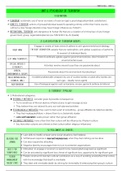
IB BIOLOGY TOPIC 4 ECOLOGY COMPLETE STUDY GUIDE 2023 Topic 4.1: Ecology – Species, communities and ecosystem The continued survival of living organisms including humans depends on sustainable communities. • Understanding: Species are groups of organisms that can potentially interbreed to produce fertile offspring. Species: groups of organisms that can potentially interbreed to produce fertile off-springs Crossbreeding: interbreeding between different species with off-springs almost always infertile • Understanding: Members of a species may be reproductively isolated in separate populations. Speciation: process in which one species is reproductively isolated into different populations they develop into different species where they are unable to produce viable off-springs Type of mechanism Description Example Geographical isolation Population is separated as the environment imposes a geographical barrier Natural disasters, continental shift Ecological isolation Population is separated by occupying different habitats (disruptive evolution) Tree and mud lizards Temporal isolation Population is separated through reproducing at a different season/time Winter and summer plants Behavioural isolation Population is separated through differing in their respective mating rituals Birds of paradise • Understanding: Species have either an autotrophic or heterotrophic method of nutrition (a few species have both methods). Autotrophs: organisms that synthesize their won organic molecules from simple inorganic substances Heterotrophs: organisms that obtain organic molecules from other organic organisms Mixotrophs: organisms that has both autotrophic and heterotrophic means of nutrition (e.g. Chlamodomonas or Euglena) • Understanding: Consumers are heterotrophs that feed on living organisms by ingestion. Consumers: heterotrophic organisms that feed on living organisms by ingestion • Understanding: Detritivores are heterotrophs that obtain organic nutrients from detritus by internal digestion. Detritivores: heterotrophic organisms that feed on organic nutrients from detritus (dead organic matter) by internal digestion • Understanding: Saprotrophs are heterotrophs that obtain organic nutrients from dead organisms by external digestion. Saprotrophs: heterotrophic organisms that feed on organic nutrients from detritus (dead organic matter) by external digestion • Understanding: A community is formed by populations of different species living together and interacting with each other. Community: populations of different species living and interaction with each other Examples of community interactions: symbiosis (mutualism, parasitism), predation, disease agents • Understanding: A community forms an ecosystem by its interactions with the abiotic environment. Ecosystem: interaction of the community with the abiotic environment Abiotic factors: non-living, physical components of an ecosystem (e.g. light, wind, pH, salinity, temperature) Biotic factors: living components of an ecosystem (e.g. symbiosis, mutualism, predation) • Understanding: Autotrophs obtain inorganic nutrients from the abiotic environment. Autotrophs: obtain all nutrients from the abiotic environment (e.g. carbon, nitrogen, sodium etc.) Heterotrophs: obtain most nutrients from food, but they obtain many inorganic nutrients from the abiotic environment (e.g. sodium) • Understanding: The supply of inorganic nutrients is maintained by nutrient cycling. Nutrient cycles: cycle process in which organisms absorb, use and return elements from and to the abiotic environment (e.g. carbon) Nutrients and energy: energy is able to enter and leave ecosystems while nutrients can only be cycled • Understanding: Ecosystems have the potential to be sustainable over long periods of time. Requirements for ecosystem sustainability
Written for
- Institution
- Chamberlain College Of Nursing
- Module
- Biology
Document information
- Uploaded on
- April 21, 2023
- Number of pages
- 8
- Written in
- 2022/2023
- Type
- Exam (elaborations)
- Contains
- Questions & answers
Subjects
-
ib biology topic 4 ecology complete study guide 2023

Also available in package deal