Pediatric Advanced Life Support
Study online at
https://quizlet.com/_5kvvsm
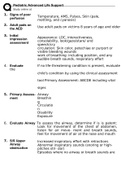
1. Signs of poor
Temperature, AMS, Pulses, Skin (pale,
perfusion
mottling, and cyanosis)
2. Adult pads on
Use adult pads on victims 8 years of age and older
the AED
3. Initial
Appearance: LOC, interactiveness,
impression
consolability, look/gaze/stare/ and
assessment
speech/cry
circulation: Skin color, petechiae or purport or
visible bleeding wounds
work of breathing: including position, and any
audible breath sounds, respiratory effort
4. Evaluate If no life-threatening condition is present, evaluate
the
child's condition by using the clinical assessment
tool Primary Assessment: ABCDE including vital
signs
5. Primary Assess- Airway
ment Breathin
g
Circulatio
n
Disability
Exposure
6. Evaluate Airway To assess the airway, determine if is is patent:
Look for movement of the chest of abdomen,
listen for air move- ment and breath sounds,
feel for movement of air at the nose and mouth
7. S/S Upper Increased inspiratory effort with retractions
Airway Abnormal inspiratory sounds (snoring or high-
obstruction pitches stri- dor)
Episodes where no airway or breath sounds are
1
, Pediatric Advanced Life Support
Study online at
https://quizlet.com/_5kvvsm
present despite tion*
respiratory effort
(Complete upper *If upper airway is obstructed, determine if you
airway obstruc- can open and maintain the airway with simple
measures or if you need advanced interventions
2
, Pediatric Advanced Life Support
Study online at
https://quizlet.com/_5kvvsm
8. Simple measures Positioning: For responsive child allow a position of
com-
to maintain the fort or elevate the head of the bed. For
airway unresponsive child turn on side or use a head told
chin lift
Suctioning
Relief techniques for foreign-body airway
obstruction
Airway Adjuncts: Oropharyngeal airway to
keep the tongue from falling back and
obstructing the airway
Relief techniques for foreign body airway
obstruction: Ab- dominal thrusts and back slaps
9. Advanced Airway Endotracheal intubation
Interventions
13.Increased respi- ratory effort
10.Assessment of
breathing
11.Normal respira-
tory rate
12.Causes of
bradypnea
3
Study online at
https://quizlet.com/_5kvvsm
1. Signs of poor
Temperature, AMS, Pulses, Skin (pale,
perfusion
mottling, and cyanosis)
2. Adult pads on
Use adult pads on victims 8 years of age and older
the AED
3. Initial
Appearance: LOC, interactiveness,
impression
consolability, look/gaze/stare/ and
assessment
speech/cry
circulation: Skin color, petechiae or purport or
visible bleeding wounds
work of breathing: including position, and any
audible breath sounds, respiratory effort
4. Evaluate If no life-threatening condition is present, evaluate
the
child's condition by using the clinical assessment
tool Primary Assessment: ABCDE including vital
signs
5. Primary Assess- Airway
ment Breathin
g
Circulatio
n
Disability
Exposure
6. Evaluate Airway To assess the airway, determine if is is patent:
Look for movement of the chest of abdomen,
listen for air move- ment and breath sounds,
feel for movement of air at the nose and mouth
7. S/S Upper Increased inspiratory effort with retractions
Airway Abnormal inspiratory sounds (snoring or high-
obstruction pitches stri- dor)
Episodes where no airway or breath sounds are
1
, Pediatric Advanced Life Support
Study online at
https://quizlet.com/_5kvvsm
present despite tion*
respiratory effort
(Complete upper *If upper airway is obstructed, determine if you
airway obstruc- can open and maintain the airway with simple
measures or if you need advanced interventions
2
, Pediatric Advanced Life Support
Study online at
https://quizlet.com/_5kvvsm
8. Simple measures Positioning: For responsive child allow a position of
com-
to maintain the fort or elevate the head of the bed. For
airway unresponsive child turn on side or use a head told
chin lift
Suctioning
Relief techniques for foreign-body airway
obstruction
Airway Adjuncts: Oropharyngeal airway to
keep the tongue from falling back and
obstructing the airway
Relief techniques for foreign body airway
obstruction: Ab- dominal thrusts and back slaps
9. Advanced Airway Endotracheal intubation
Interventions
13.Increased respi- ratory effort
10.Assessment of
breathing
11.Normal respira-
tory rate
12.Causes of
bradypnea
3