

Chapter 8 – Memory
Extraordinary memory – Rajan Mahadevan, memorised 31811 digits of pi. He was not able to
describe how exactly, the knowledge was just there
HM is the most famous case of amnesia after his hippocampus was effectively cut out to prevent
dangerous seizures – developed retrograde amnesia, where he can learn new skills and have short
term memory stores, but cannot recall events before the incident
HM had an uncle who died, and due to his recollection of him before the incident, he always asked
how we was, only to be shocked every time he was told his uncle had died
Memory: processes that allow us to record, store and later retrieve experiences and information
People are able to learn without consciously remembering the task at hand – HM’s performance on
a certain task would improve over time, but he could never remember that he had done the task
before
Memory as information processing
Encoding – getting information into the system by translating it into neural code that the brain
processes. Getting the information into the brain to make sense of it
Storage – retaining information over time; be it in the short or long term memory
Retrieval – accessing the stored information
Human memory is compared to a computer, but is still more complex, as many phenomena cannot
be explained, like remembering events that did not happen or recalling things differently due to
memories intercepting
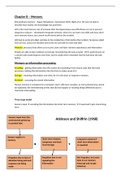
Three stage model
Sensory input encoding the information into short term memory if exercised it gets stored long
term
Sensory input from the
environment picked up Atkinson and Shiffrin (1968)
in parietal lobe
Sensory register in
Short term memory Long term memory if
memory
temporary and basic short term information
level storage is repeated
Forgotten due to lack of Forgotten due to not Not forgotten, but some
attention being paid and repeating the facts in our memory
response not being information intercept and we get
made mixed up
, Sensory memory briefly holds incoming sensory memory. Cannot remember every bit of sensory
input otherwise we would be constantly reacting to everything we feel, see (even in peripheral) and
touch – overwhelms the brain
Sensory registers are subsystems in the sensory memory; they pick up initial sensory information
Iconic store: visual sensory register fixating on one point and briefly being shown a grid of letters;
only a few letters will be remembered
Participants either had too little time to scan all the letters or simply saw everything and could not
recall everything in their memory letters were shown with a tone being heard, and the letters
that were recalled upon hearing the tone were the letters associated with the tone (high, medium or
low tone) iconic memory did not store everything, but was rather centred around the letters that
the tone corresponded with
Duration of iconic storage is 1 second – if the tone is delayed and heard just before the letters go
away, then remembering is much more difficult
The echoic store can store information for a few seconds longer
The next part of the multi-store model is the short term memory, where information is held for a
temporary amount of time
Memory codes: mental representations of some type of information or stimulus – phonological,
visual, motor or semantic codes
We do not store the visual letters, we store the semantic code of their meaning and their recital
through phonological codes
People make phonetic errors due to similarity in words or letters
Capacity and duration:
Limited number of meaningful items can be stored; in a list of random numbers, only sequences with
5-9 digits can be recalled once recited aloud
Chunking: combining individual items into longer units of meaning
Rehearsal is essential to bump short term memories to the long term store
THE ABOVE MODEL WAS CONSIDERED TOO PASSIVE AND DID NOT TAKE INTO ACCOUNT COGNITIVE
MANIPULATION OF MEMORIES OR SPATIAL AWARENESS
Working memory model
Baddeley and Hitch (2002)
Phonological loop: stores mental representations of sounds and silently spoken words. Articulatory
rehearsal is also done here in order to remember the information in the phonological loop
Visuospatial sketchpad: mental image of people, surroundings or remembering directions. Works
with the phonological loop, so repeating a certain word like cloud makes you think of a cloud
Extraordinary memory – Rajan Mahadevan, memorised 31811 digits of pi. He was not able to
describe how exactly, the knowledge was just there
HM is the most famous case of amnesia after his hippocampus was effectively cut out to prevent
dangerous seizures – developed retrograde amnesia, where he can learn new skills and have short
term memory stores, but cannot recall events before the incident
HM had an uncle who died, and due to his recollection of him before the incident, he always asked
how we was, only to be shocked every time he was told his uncle had died
Memory: processes that allow us to record, store and later retrieve experiences and information
People are able to learn without consciously remembering the task at hand – HM’s performance on
a certain task would improve over time, but he could never remember that he had done the task
before
Memory as information processing
Encoding – getting information into the system by translating it into neural code that the brain
processes. Getting the information into the brain to make sense of it
Storage – retaining information over time; be it in the short or long term memory
Retrieval – accessing the stored information
Human memory is compared to a computer, but is still more complex, as many phenomena cannot
be explained, like remembering events that did not happen or recalling things differently due to
memories intercepting
Three stage model
Sensory input encoding the information into short term memory if exercised it gets stored long
term
Sensory input from the
environment picked up Atkinson and Shiffrin (1968)
in parietal lobe
Sensory register in
Short term memory Long term memory if
memory
temporary and basic short term information
level storage is repeated
Forgotten due to lack of Forgotten due to not Not forgotten, but some
attention being paid and repeating the facts in our memory
response not being information intercept and we get
made mixed up
, Sensory memory briefly holds incoming sensory memory. Cannot remember every bit of sensory
input otherwise we would be constantly reacting to everything we feel, see (even in peripheral) and
touch – overwhelms the brain
Sensory registers are subsystems in the sensory memory; they pick up initial sensory information
Iconic store: visual sensory register fixating on one point and briefly being shown a grid of letters;
only a few letters will be remembered
Participants either had too little time to scan all the letters or simply saw everything and could not
recall everything in their memory letters were shown with a tone being heard, and the letters
that were recalled upon hearing the tone were the letters associated with the tone (high, medium or
low tone) iconic memory did not store everything, but was rather centred around the letters that
the tone corresponded with
Duration of iconic storage is 1 second – if the tone is delayed and heard just before the letters go
away, then remembering is much more difficult
The echoic store can store information for a few seconds longer
The next part of the multi-store model is the short term memory, where information is held for a
temporary amount of time
Memory codes: mental representations of some type of information or stimulus – phonological,
visual, motor or semantic codes
We do not store the visual letters, we store the semantic code of their meaning and their recital
through phonological codes
People make phonetic errors due to similarity in words or letters
Capacity and duration:
Limited number of meaningful items can be stored; in a list of random numbers, only sequences with
5-9 digits can be recalled once recited aloud
Chunking: combining individual items into longer units of meaning
Rehearsal is essential to bump short term memories to the long term store
THE ABOVE MODEL WAS CONSIDERED TOO PASSIVE AND DID NOT TAKE INTO ACCOUNT COGNITIVE
MANIPULATION OF MEMORIES OR SPATIAL AWARENESS
Working memory model
Baddeley and Hitch (2002)
Phonological loop: stores mental representations of sounds and silently spoken words. Articulatory
rehearsal is also done here in order to remember the information in the phonological loop
Visuospatial sketchpad: mental image of people, surroundings or remembering directions. Works
with the phonological loop, so repeating a certain word like cloud makes you think of a cloud



