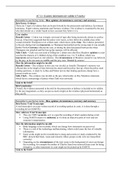
AC 2.3 Understand rules in relation to the use of evidence in criminal investigations [4 marks]
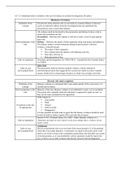
Disclosure of evidence
Definition of the The process when someone who is convicted of a criminal offence is allowed
concept access to material/evidence from the investigation that can undermine the
prosecution's case or assist their defence.
All evidence must be disclosed by the prosecution and defence before a trial to
ensure the procedures are fair.
Prosecution – Discloses all evidence it will use in court, even if it goes against
their case.
Brief explanation of the Defence – Discloses the nature of their argument along with names and addresses.
‘rule’ The defence makes a written statement asking the prosecution to disclose
evidence, it should include:
§ The nature of their argument
§ The evidence/facts the defence will challenge and why
§ Facts they will rely on
§ Relevant points of law
Links to legislation Procedure and Investigations Act 1996 (CPIA) - Amended by the Criminal Justice
Act (2003)
Sally Clark
Links to case The prosecution failed to disclose medical evidence, which contained a
law/examples/brief microbiological report that suggested her second sons' death was due to natural
causes, which led to a miscarriage of justice, as Clark was wrongly convicted.
Hearsay rule (and exceptions)
Definition of the Hearsay evidence is a statement that’s been made outside of the court room, it is
concept second hand evidence.
Brief explanation of the Majority of the time Hearsay evidence is not admitted in court, as it is unreliable.
‘rule’ The person who originally made the statement is supposed to speak in court, so
they can be cross-examined by the opposition.
If the witness is:
§ Unavailable
§ Dead
Exceptions to the rule § Abroad
(if appropriate) § Unfit to testify
§ Disappeared
It is also possible for both sides to agree that the hearsay evidence should be used
in trial, in order to achieve justice (The court also has to agree).
Section 114 (1) Criminal Justice Act, 2003 – States Hearsay evidence is a
Links to legislation ‘Statement not made in oral evidence in the proceedings that is evidence of any
matter stated’.
Al Khawaja
Links to case He was a psychiatrist who was convicted of the sexual assault of 2 of his patients,
law/examples/brief while they were under hypnosis. A statement was made to the police prior to the
trial by one of the victims (who committed suicide before the trial) that was crucial
to the prosecution, so it was decided the victim's statement would be read to the
jury, as there was no other evidence that directly showed what had happened.
Disclosure of evidence
Definition of the The process when someone who is convicted of a criminal offence is allowed
concept access to material/evidence from the investigation that can undermine the
prosecution's case or assist their defence.
All evidence must be disclosed by the prosecution and defence before a trial to
ensure the procedures are fair.
Prosecution – Discloses all evidence it will use in court, even if it goes against
their case.
Brief explanation of the Defence – Discloses the nature of their argument along with names and addresses.
‘rule’ The defence makes a written statement asking the prosecution to disclose
evidence, it should include:
§ The nature of their argument
§ The evidence/facts the defence will challenge and why
§ Facts they will rely on
§ Relevant points of law
Links to legislation Procedure and Investigations Act 1996 (CPIA) - Amended by the Criminal Justice
Act (2003)
Sally Clark
Links to case The prosecution failed to disclose medical evidence, which contained a
law/examples/brief microbiological report that suggested her second sons' death was due to natural
causes, which led to a miscarriage of justice, as Clark was wrongly convicted.
Hearsay rule (and exceptions)
Definition of the Hearsay evidence is a statement that’s been made outside of the court room, it is
concept second hand evidence.
Brief explanation of the Majority of the time Hearsay evidence is not admitted in court, as it is unreliable.
‘rule’ The person who originally made the statement is supposed to speak in court, so
they can be cross-examined by the opposition.
If the witness is:
§ Unavailable
§ Dead
Exceptions to the rule § Abroad
(if appropriate) § Unfit to testify
§ Disappeared
It is also possible for both sides to agree that the hearsay evidence should be used
in trial, in order to achieve justice (The court also has to agree).
Section 114 (1) Criminal Justice Act, 2003 – States Hearsay evidence is a
Links to legislation ‘Statement not made in oral evidence in the proceedings that is evidence of any
matter stated’.
Al Khawaja
Links to case He was a psychiatrist who was convicted of the sexual assault of 2 of his patients,
law/examples/brief while they were under hypnosis. A statement was made to the police prior to the
trial by one of the victims (who committed suicide before the trial) that was crucial
to the prosecution, so it was decided the victim's statement would be read to the
jury, as there was no other evidence that directly showed what had happened.