FSWSM-9020 Research Design and Methods
Week 1
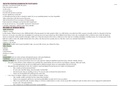
Weblecture – Research Questions
Research statement consists of:
- Research aim: a specified end goal that guides research (achieve A by doing B)
- Research question that mentions relationship between variables to manage expectations
Types of research questions (the lower the list, the more knowledge available):
- Exploratory: little to no knowledge on a topic
- Descriptive: oftentimes about properties of a research object
- Explanatory: determine what causes have led to certain outcomes, relationship in the question
- Testing: based on expectations and can be answered with yes or no
- Diagnostic: helps with finding problems
- Design: results in a design/solution which solves problems
- Evaluation: whether an intervention achieved certain outcomes
Subquestions divide the research question into smaller parts and creates structure, 3 types:
1. Theoretical: what is known about X?
2. Empirical: what forms of X are found in context Z?
3. Analytical: what is the influence of X on Y in context Z?
Weblecture – Philosophical Worldviews
2 streams that led to the rise of worldviews:
1. Positivism: with Comte’s search for causal laws in the social world through empirical
observation, and Durkheim’s sociological method that social facts should be sought among
the social facts preceding it and not among the states of individual consciousness
2. Idealism: with Weber’s methodology of social sciences, whereby sociology attempts to
interpret social action to arrive at a causal explanation of its course and effects
4 parts of worldviews:
1. Ontology: the nature of reality
2. Epistemology: how reality is known, what counts as knowledge
3. Axiology: the role of values
4. Methodology: the approach to inquiry
4 worldviews:
, 1. Postpositivism, or scientific method (Durkheim)
o Ontology: a single reality beyond us, which the researcher may not fully understand
o Epistemology: reality can only be approximated through research and statistics, with
a limited interaction with research subjects, validity coming from peers and not
participants
o Axiology: researcher’s bias needs to be controlled, not expressed in a study,
objectivity
o Methodology: scientific method, deductive with testing theories and making
comparisons, typically quantitative
o Important concepts: reductionism (reduce ideas into small sets to test), empirical
observation and measurement, theory verification (causation)
2. Constructivism (Weber)
o Ontology: multiple realities are constructed through experiences and interactions
o Epistemology: reality is co-constructed by researcher and researched, and shaped by
individual experiences
o Axiology: individual values are honored and negotiated among individuals
o Methodology: literary style of subjective understandings, inductive with interviews,
observations, and analysis
o Important concepts: Verstehen, multiple meanings, social and hierarchical
construction, theory generation
3. Transformatism (Marx)
o Ontology: participation between researcher and individuals creates a subjective-
objective reality
o Epistemology: co-created findings with multiple ways of knowing
o Axiology: respect for indigenous values that must be problematized and interrogated
o Methodology: collaborative research processes, encourage political participation,
questioning of methods, often qualitative
o Important concepts: inequities, collaborative, political, power-, change- and justice-
oriented,
4. Pragmatism (Peirce)
o Ontology: reality is what is useful, practical, and “works”
o Epistemology: reality is known through whatever works, multiple tools that reflect
both induction and deduction
o Axiology: values are discussed or neglected as they reflect researcher’s and
participants’ views
o Methodology: mixed methods approach, depends on RQ and sources available
Week 1
Weblecture – Research Questions
Research statement consists of:
- Research aim: a specified end goal that guides research (achieve A by doing B)
- Research question that mentions relationship between variables to manage expectations
Types of research questions (the lower the list, the more knowledge available):
- Exploratory: little to no knowledge on a topic
- Descriptive: oftentimes about properties of a research object
- Explanatory: determine what causes have led to certain outcomes, relationship in the question
- Testing: based on expectations and can be answered with yes or no
- Diagnostic: helps with finding problems
- Design: results in a design/solution which solves problems
- Evaluation: whether an intervention achieved certain outcomes
Subquestions divide the research question into smaller parts and creates structure, 3 types:
1. Theoretical: what is known about X?
2. Empirical: what forms of X are found in context Z?
3. Analytical: what is the influence of X on Y in context Z?
Weblecture – Philosophical Worldviews
2 streams that led to the rise of worldviews:
1. Positivism: with Comte’s search for causal laws in the social world through empirical
observation, and Durkheim’s sociological method that social facts should be sought among
the social facts preceding it and not among the states of individual consciousness
2. Idealism: with Weber’s methodology of social sciences, whereby sociology attempts to
interpret social action to arrive at a causal explanation of its course and effects
4 parts of worldviews:
1. Ontology: the nature of reality
2. Epistemology: how reality is known, what counts as knowledge
3. Axiology: the role of values
4. Methodology: the approach to inquiry
4 worldviews:
, 1. Postpositivism, or scientific method (Durkheim)
o Ontology: a single reality beyond us, which the researcher may not fully understand
o Epistemology: reality can only be approximated through research and statistics, with
a limited interaction with research subjects, validity coming from peers and not
participants
o Axiology: researcher’s bias needs to be controlled, not expressed in a study,
objectivity
o Methodology: scientific method, deductive with testing theories and making
comparisons, typically quantitative
o Important concepts: reductionism (reduce ideas into small sets to test), empirical
observation and measurement, theory verification (causation)
2. Constructivism (Weber)
o Ontology: multiple realities are constructed through experiences and interactions
o Epistemology: reality is co-constructed by researcher and researched, and shaped by
individual experiences
o Axiology: individual values are honored and negotiated among individuals
o Methodology: literary style of subjective understandings, inductive with interviews,
observations, and analysis
o Important concepts: Verstehen, multiple meanings, social and hierarchical
construction, theory generation
3. Transformatism (Marx)
o Ontology: participation between researcher and individuals creates a subjective-
objective reality
o Epistemology: co-created findings with multiple ways of knowing
o Axiology: respect for indigenous values that must be problematized and interrogated
o Methodology: collaborative research processes, encourage political participation,
questioning of methods, often qualitative
o Important concepts: inequities, collaborative, political, power-, change- and justice-
oriented,
4. Pragmatism (Peirce)
o Ontology: reality is what is useful, practical, and “works”
o Epistemology: reality is known through whatever works, multiple tools that reflect
both induction and deduction
o Axiology: values are discussed or neglected as they reflect researcher’s and
participants’ views
o Methodology: mixed methods approach, depends on RQ and sources available