Inventories notes
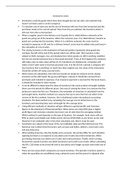
Inventories could be goods which have been bought but not yet sold, raw materials that
haven’t yet been used or work in progress.
To calculate cost of sales you do the sum of inventory left over from the last period and the
purchases made in the current period. Then from this you subtract the inventory which is
left over from the current period.
When a supplier pays for the delivery cost of goods this is called delivery outwards as the
goods are going out of the business. When the customer pays, it is called delivery inwards as
goods are coming into the business. When it is a delivery outward, the costs must be
included in expenses in SPL and for a delivery inward, costs must be added onto purchases in
the calculation of cost of sales.
The closing inventory in the statement of financial position represents what goods the
company has left at the end of the period which can still be sold. This inventory is also
subject to theft, damages, loss, and obsolescence (when goods are still in working condition
but are not wanted anymore due to decreased demand). If any of this happens the company
will make a loss as sales value will be nil. Or if products are obsolescent, companies will
make a loss if sales value is less than purchase cost. If at the end of a period a company still
has inventory that is worthless or worth less than original cost, the value of the inventories
should be written off using a journal entry.
When losses are substantial, then the loss should not simply be reduced on the closing
inventory as this will impact the gross profit figure. Instead, it should be removed from
purchases and included in expenses. If an insurance payment is received for the stock losses,
it should be included in other income.
It can be difficult to determine the value of inventory if the same product is bought multiple
times over the period for different prices. One way of valuing the items is to assume the first
products in were the first out. Therefore, the remainder of inventory is calculated from the
last bought items. Another method is to assume the last in were the first out which is the
reverse of the first method. However, this is disallowed under international accounting
standards. The final method is by calculating the average cost of all the items in the
inventory and assuming they were all bought for this average price.
Using different methods of valuation will give different reported profits and inventory
figures in the statement of financial position. When prices are rising FIFO gives a higher
profit figure and inventory valuation but lower cost of sales than the averaging method.
Which method is used depends on the type of business. For example, food stores will use
FIFO as stock is perishable and clothes stores will use AVCO/WAC as any items can be sold.
However if net realizable value is less than calculated cost, then it must be used.
Inventories are valued at the lower of the net realisable value and the historical cost. The
historical cost is determined by factors such as taxes and duties, delivery, conversion costs
and purchase price.
When putting inventory into the double entry accounts, the entries differ for each situation.
Opening inventory is an expense so you debit cost of sales and credit inventories. When
purchasing inventory you debit cost of sales and credit purchases. Finally, when carrying
forward the closed inventory you debit inventories and credit cost of sales. When calculating
the SPL, COS needs to be closed off and so you debt p and l ledger account and credit cost of
sales.
There are two ways which companies can count inventory. The periodic inventory system is
when the quantities are established using a physical count and the journal is adjusted after
Inventories could be goods which have been bought but not yet sold, raw materials that
haven’t yet been used or work in progress.
To calculate cost of sales you do the sum of inventory left over from the last period and the
purchases made in the current period. Then from this you subtract the inventory which is
left over from the current period.
When a supplier pays for the delivery cost of goods this is called delivery outwards as the
goods are going out of the business. When the customer pays, it is called delivery inwards as
goods are coming into the business. When it is a delivery outward, the costs must be
included in expenses in SPL and for a delivery inward, costs must be added onto purchases in
the calculation of cost of sales.
The closing inventory in the statement of financial position represents what goods the
company has left at the end of the period which can still be sold. This inventory is also
subject to theft, damages, loss, and obsolescence (when goods are still in working condition
but are not wanted anymore due to decreased demand). If any of this happens the company
will make a loss as sales value will be nil. Or if products are obsolescent, companies will
make a loss if sales value is less than purchase cost. If at the end of a period a company still
has inventory that is worthless or worth less than original cost, the value of the inventories
should be written off using a journal entry.
When losses are substantial, then the loss should not simply be reduced on the closing
inventory as this will impact the gross profit figure. Instead, it should be removed from
purchases and included in expenses. If an insurance payment is received for the stock losses,
it should be included in other income.
It can be difficult to determine the value of inventory if the same product is bought multiple
times over the period for different prices. One way of valuing the items is to assume the first
products in were the first out. Therefore, the remainder of inventory is calculated from the
last bought items. Another method is to assume the last in were the first out which is the
reverse of the first method. However, this is disallowed under international accounting
standards. The final method is by calculating the average cost of all the items in the
inventory and assuming they were all bought for this average price.
Using different methods of valuation will give different reported profits and inventory
figures in the statement of financial position. When prices are rising FIFO gives a higher
profit figure and inventory valuation but lower cost of sales than the averaging method.
Which method is used depends on the type of business. For example, food stores will use
FIFO as stock is perishable and clothes stores will use AVCO/WAC as any items can be sold.
However if net realizable value is less than calculated cost, then it must be used.
Inventories are valued at the lower of the net realisable value and the historical cost. The
historical cost is determined by factors such as taxes and duties, delivery, conversion costs
and purchase price.
When putting inventory into the double entry accounts, the entries differ for each situation.
Opening inventory is an expense so you debit cost of sales and credit inventories. When
purchasing inventory you debit cost of sales and credit purchases. Finally, when carrying
forward the closed inventory you debit inventories and credit cost of sales. When calculating
the SPL, COS needs to be closed off and so you debt p and l ledger account and credit cost of
sales.
There are two ways which companies can count inventory. The periodic inventory system is
when the quantities are established using a physical count and the journal is adjusted after