Funding for work done before D is charged:
Police station advice:
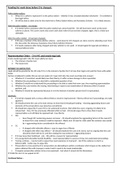
When DS is called to represent D at the police station – whether D was arrested/attended voluntarily – D is entitled to
free legal advice.
DS will be able to claim a fee for this work from a Police Station Advice and Assistance Scheme – it is a fixed amount.
After the police station – no charge:
If D needs further assistance after the police station but cannot fund this – DS will fund more work via the same
scheme as above. This covers work only covers work done when D has not been charged. Again, this is a fixed sum
claimable.
After the police station – D has been charged:
If DS was a member of the duty solicitor scheme – work done for D if charged can claim costs for attending court from
the LAA under the Advocacy Assistance (Court Duty Solicitor) Scheme.
If D needs assistance after being charged (and duty solicitor is not used) – D should apply for legal aid and obtain a
representational order.
Representation Order – D in MC and needs legal aid:
D who needs legal aid in the MC must satisfy two tests:
1. The interest of justice test
2. The means test.
INTEREST OF JUSTICE TEST:
Legal aid will be granted by the MC only if it is in the interest of justice for D to have their legal costs paid for them with public
funds.
Factors considered to satisfy this are set out under sch 3 para 5(2) AJA: the court must take into account
a. Whether D, if convicted, would likely lose their liberty or suffer serious damage to their reputation
b. Whether the proceedings is to deal with a substantial question of law
c. Whether D would not understand the proceedings or be able to state their own case, thus requiring representation
d. Whether the case involves the tracing, interviewing or expert cross-examination of witnesses which D cannot
perform, and
e. Whether D should be represented because it is in the interest of another person that D is represented.
EXAMLES:
If D will be charged with a serious offence likely to result in imprisonment = liberty will be lost if proceedings are made
against D.
DS should present the case at its most serious to show that D should get funding – showing aggravating factors and
elements of the prosecutions case (previous convictions)
DS should also argue this if, even if D is not sentenced to prison, that while the case is ongoing, D is likely to be
refused bail – thus, if D has previously offended whilst on bail – DS should argue this to show that D needs
representation as D will likely be opposed bail = lose liberty.
MC:
o Even though MC sentencing powers are lesser – DS should emphasis the aggravating factors of the case/of D
to show that a max sentence could be imposed = liberty lost. (if need to: state what the sentence max would
be + aggravating factors considered for the offence)
CC:
o If charged with indictable offence = easy to argue loss of liberty
o If charged with either way offence – DS should emphasis the case at its worst, such as arguing that the case
should be dealt with by CC and then stating the max sentence + aggravating factors
If D may loose their livelihood – job – this will be a reason for representation
D is young/old/vulnerable/mental disability – need representation to assist as D may not understand proceedings
Tracing a witness – may be hard to argue they need assistance in tracing W – but if the evidence is vital to a
defence/alibi – better way to argue this.
Prosecution to cross-examine D or prosecution are attempting to admit a confession which D gave at the station but
police obtained this with improper conduct and it needs to be made inadmissible.
D requires prosecution witness to be cross examined – but when D cannot do this themselves.
If D fails this test can appeal to MC.
Continued below…
Police station advice:
When DS is called to represent D at the police station – whether D was arrested/attended voluntarily – D is entitled to
free legal advice.
DS will be able to claim a fee for this work from a Police Station Advice and Assistance Scheme – it is a fixed amount.
After the police station – no charge:
If D needs further assistance after the police station but cannot fund this – DS will fund more work via the same
scheme as above. This covers work only covers work done when D has not been charged. Again, this is a fixed sum
claimable.
After the police station – D has been charged:
If DS was a member of the duty solicitor scheme – work done for D if charged can claim costs for attending court from
the LAA under the Advocacy Assistance (Court Duty Solicitor) Scheme.
If D needs assistance after being charged (and duty solicitor is not used) – D should apply for legal aid and obtain a
representational order.
Representation Order – D in MC and needs legal aid:
D who needs legal aid in the MC must satisfy two tests:
1. The interest of justice test
2. The means test.
INTEREST OF JUSTICE TEST:
Legal aid will be granted by the MC only if it is in the interest of justice for D to have their legal costs paid for them with public
funds.
Factors considered to satisfy this are set out under sch 3 para 5(2) AJA: the court must take into account
a. Whether D, if convicted, would likely lose their liberty or suffer serious damage to their reputation
b. Whether the proceedings is to deal with a substantial question of law
c. Whether D would not understand the proceedings or be able to state their own case, thus requiring representation
d. Whether the case involves the tracing, interviewing or expert cross-examination of witnesses which D cannot
perform, and
e. Whether D should be represented because it is in the interest of another person that D is represented.
EXAMLES:
If D will be charged with a serious offence likely to result in imprisonment = liberty will be lost if proceedings are made
against D.
DS should present the case at its most serious to show that D should get funding – showing aggravating factors and
elements of the prosecutions case (previous convictions)
DS should also argue this if, even if D is not sentenced to prison, that while the case is ongoing, D is likely to be
refused bail – thus, if D has previously offended whilst on bail – DS should argue this to show that D needs
representation as D will likely be opposed bail = lose liberty.
MC:
o Even though MC sentencing powers are lesser – DS should emphasis the aggravating factors of the case/of D
to show that a max sentence could be imposed = liberty lost. (if need to: state what the sentence max would
be + aggravating factors considered for the offence)
CC:
o If charged with indictable offence = easy to argue loss of liberty
o If charged with either way offence – DS should emphasis the case at its worst, such as arguing that the case
should be dealt with by CC and then stating the max sentence + aggravating factors
If D may loose their livelihood – job – this will be a reason for representation
D is young/old/vulnerable/mental disability – need representation to assist as D may not understand proceedings
Tracing a witness – may be hard to argue they need assistance in tracing W – but if the evidence is vital to a
defence/alibi – better way to argue this.
Prosecution to cross-examine D or prosecution are attempting to admit a confession which D gave at the station but
police obtained this with improper conduct and it needs to be made inadmissible.
D requires prosecution witness to be cross examined – but when D cannot do this themselves.
If D fails this test can appeal to MC.
Continued below…