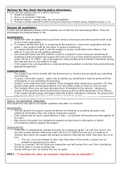
Options for the client during police interviews:
A client has four options when at a police interview:
1. Answer all questions
2. Give a ‘no comment’ interview
3. Selective silence – answer some but not all questions
4. Provide a written statement either during the interview or before being charged but give a ‘no
Answer all questions:
A client may be advised to answer all the question put to them by the interviewing officer. There are
advantages and disadvantages to this.
ADVANTAGES:
o Allows the client an opportunity to give their version of the facts and events and for them to do
so at an early opportunity.
o If a suspect admits their guilt answering all the questions = show their cooperation with the
police = may receive credit for this when it comes to sentencing.
o If a suspect admits their guilt and the suspect is young / committed minor offence / first
offence may end up only getting cautioned.
o One essential reason why this could be crucial to a suspect’s case is because; answering all
questions if likely to protect the suspect from the court of jury from drawing adverse inferences
under s34,36 or 37 CJPOA – this is provided the client provides all the relevant information during
the interview such as any defence or alibi.
o If the suspect has a strong defence or alibi answering all question is also the most productive and
appropriate approach.
DISADVANTAGE:
o The suspect may not be familiar with the environment or nervous and accidently say something
incriminating.
o A young / vulnerable suspect – again may accidently say something to help the police with the
investigation or say something incriminating.
o Suspect could undermine their credibility if they misspeak when answering a question, of if they
become angry when answering questions, this may reflect badly on them to a jury at court.
o The Custody officer may not have disclosed much information to the solicitor – advising to
answer all the questions would be bad advice seeing as DS has little information of the offence.
o If the suspect became angry and began attacking another individual’s character, the prosecution
later may be able to raise the suspect previous convictions at trial.
Give a ‘no comment’ interview:
The suspect has the right to not answer questions and state ‘no comment’.
ADVANTAGES:
o This can prevent the suspect saying something incriminating or providing the police with
additional information they may need to charge the suspect.
o If the suspect did not have a good defence or alibi – no comment will prevent any interrogation of
the story.
o May result in the police not charging the suspect as they have no information or further
incriminating evidence against the suspect.
DISADVANTAGE:
o If the client is subsequently charged and goes on to plead not guilty = at trial, the court or jury
are able to draw adverse inferences under s35,36 or 37 CJPOA from the lack of a defence or
relevant facts which the suspect did not give during the interview but which they later rely on at
trial.
o The jury / court are allowed to infer: later fabrication of the events / suspect has no
answer for questions put to them
o Giving ‘no comment’ will not show any cooperation and will prevent the court from considering
this factor when it comes to sentencing.
o Saying nothing is also not saying they are not guilty.
APPLY – ***see below for when ‘no comment’ interview may be advisable***
A client has four options when at a police interview:
1. Answer all questions
2. Give a ‘no comment’ interview
3. Selective silence – answer some but not all questions
4. Provide a written statement either during the interview or before being charged but give a ‘no
Answer all questions:
A client may be advised to answer all the question put to them by the interviewing officer. There are
advantages and disadvantages to this.
ADVANTAGES:
o Allows the client an opportunity to give their version of the facts and events and for them to do
so at an early opportunity.
o If a suspect admits their guilt answering all the questions = show their cooperation with the
police = may receive credit for this when it comes to sentencing.
o If a suspect admits their guilt and the suspect is young / committed minor offence / first
offence may end up only getting cautioned.
o One essential reason why this could be crucial to a suspect’s case is because; answering all
questions if likely to protect the suspect from the court of jury from drawing adverse inferences
under s34,36 or 37 CJPOA – this is provided the client provides all the relevant information during
the interview such as any defence or alibi.
o If the suspect has a strong defence or alibi answering all question is also the most productive and
appropriate approach.
DISADVANTAGE:
o The suspect may not be familiar with the environment or nervous and accidently say something
incriminating.
o A young / vulnerable suspect – again may accidently say something to help the police with the
investigation or say something incriminating.
o Suspect could undermine their credibility if they misspeak when answering a question, of if they
become angry when answering questions, this may reflect badly on them to a jury at court.
o The Custody officer may not have disclosed much information to the solicitor – advising to
answer all the questions would be bad advice seeing as DS has little information of the offence.
o If the suspect became angry and began attacking another individual’s character, the prosecution
later may be able to raise the suspect previous convictions at trial.
Give a ‘no comment’ interview:
The suspect has the right to not answer questions and state ‘no comment’.
ADVANTAGES:
o This can prevent the suspect saying something incriminating or providing the police with
additional information they may need to charge the suspect.
o If the suspect did not have a good defence or alibi – no comment will prevent any interrogation of
the story.
o May result in the police not charging the suspect as they have no information or further
incriminating evidence against the suspect.
DISADVANTAGE:
o If the client is subsequently charged and goes on to plead not guilty = at trial, the court or jury
are able to draw adverse inferences under s35,36 or 37 CJPOA from the lack of a defence or
relevant facts which the suspect did not give during the interview but which they later rely on at
trial.
o The jury / court are allowed to infer: later fabrication of the events / suspect has no
answer for questions put to them
o Giving ‘no comment’ will not show any cooperation and will prevent the court from considering
this factor when it comes to sentencing.
o Saying nothing is also not saying they are not guilty.
APPLY – ***see below for when ‘no comment’ interview may be advisable***