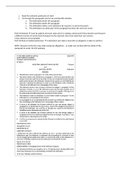
1. Read the claimants particulars of claim
2. Go through the paragraphs one by one and identify whether:
a. The Defendant denies the paragraph
b. The defendant admits the paragraph
c. The defendant makes a non-admission (D requires C to prove the point)
d. The defendant can admit part of the paragraph but deny the rest (vice versa)
R16.5(1) Denials must be explicit and must state why D is making a denial and if they intend to put forward
a different version of events from that given by the claimant, they must state their own version.
A bare denial is not acceptable
R16.5(5) Rule of implied admissions A defendant who fails to deal with an allegation is taken to admit it.
NOTE: One para in the PoC may make numerous allegations – so make sure to deal with the whole of the
paragraph to avoid r16.5(5) applying.
2. Go through the paragraphs one by one and identify whether:
a. The Defendant denies the paragraph
b. The defendant admits the paragraph
c. The defendant makes a non-admission (D requires C to prove the point)
d. The defendant can admit part of the paragraph but deny the rest (vice versa)
R16.5(1) Denials must be explicit and must state why D is making a denial and if they intend to put forward
a different version of events from that given by the claimant, they must state their own version.
A bare denial is not acceptable
R16.5(5) Rule of implied admissions A defendant who fails to deal with an allegation is taken to admit it.
NOTE: One para in the PoC may make numerous allegations – so make sure to deal with the whole of the
paragraph to avoid r16.5(5) applying.