Is the company insolvent?
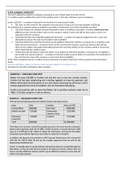
The test to determine whether a company is insolvent or not is found under s122 and s123 IA.
If a creditor wants to petition the court for the winding-up of ‘x’ then they will have to prove insolvency…
Under s122(1)(f) – a company is deemed to be insolvent if it cannot pay its debts.
The court can then order for the company to be wound up so long as it is just and equitable (s122(1)(g).
The definition of a company having an inability to pay debts is found under s123 where thresholds are listed:
1. S123(1)(a) dictates the statutory demand threshold to show an inability to pay debts- A creditor owed more than
£750 has served a formal written notice on the company, waited 3 weeks and still not been paid or come to an
agreement with the company.
2. S123(1)(b) describes the unsatisfied judgement threshold – a creditor has obtained judgement from a court and
attempted to execute the order but the debt is still unsatisfied.
3. S123(1)(e) defines the cash-flow test which can be applied to determine whether a company has an inability to pay
debts and may be insolvent – it must be shown to the court that the company cannot pay debts as they fall due,
either by the creditor reasonably demanding payment but receiving nothing, or the company admits it cannot pay -
which would indicate cashflow issues.
4. S123(2) describes the balance sheet test which can be applied to determine whether a company has an inability to
pay its debt and may be insolvent – ‘a company is deemed unable to pay its debts if it is proved to the satisfaction of
the court that the value if the company’s assets is less that its liabilities’.
NOTE: That it would be hard for a creditor to prove insolvency via balance sheet test as they would not have the balance
sheets
State the definitions, apply it to the facts and conclude whether it is insolvent or not.
See below for cash flow and balance sheet examples.
, Liquidation:
This option will bring the company to an end as it will cease to exist. It will also mean the director’s powers cease to exist as the
liquidator will take over managing the company. (For a CL, the directors appointments are terminated)
There are three types of liquidation – what is applicable on the facts?
Compulsory liquidation:
Initiated by creditors: petitioner presents a winding-up petition to the court, all done against the company’s wishes.
Note: company/directors/administrator/receiver/
Requirements:
The company must be insolvent, and the petitioner must prove that one or more grounds under s122 IA is present
Therefore: apply the tests above to determine insolvency!
The company should show:
it may recover its financial position OR could dispute the debt owed to the creditor for the court to dismiss the petition
The company should then issue injunctive proceedings against creditor to prohibit them from making further petitions.
If winding-up petition is accepted by the court:
The winding-up order is made and the Official Receiver will automatically become a liquidator – but they will decide if
creditors should appoint an insolvency practitioner instead – over 50% in value of creditors will need to vote for this.
Creditor’s voluntary liquidation:
Initiated by directors: then it is progressed by the creditors – this procedure is usually due to external creditor pressure.
Member’s voluntary liquidation:
Requirements: only available when the company is solvent – company must be solvent.
If a liquidator later realises the company to be insolvent, they should convert a MVL into a CVL – s95 IA.
They may want to do this if everyone wants to retire / subsidiary is no longer operational or of any use.
Directors will have to:
Swear a statutory declaration that the company is solvent – liable to a fine/prison if the declaration is made without
reasonable grounds…so…
Must make sure they have taken appropriate advice before hand
Shareholders will have to:
Pass a special resolution to approve voluntary liquidation (s84(1)(b) IA) – notice will need to be given to any qualifying
floating charge holder too.
NOTE: There is NO MORATORIUM available for any procedure.
Liquidation process:
The liquidation will/can:
Challenge voidable transactions (see below)
Collect assets and distribute them in accordance with a statutory order
Sell assets
Investigate director’s conduct – fraudulent / wrongful trading. (see below)
End of liquidation:
When:
L sells the available assets
Distributed money to creditors (see below for order of distribution)
L is released from their position
The accounts are given to CH and court
Three months later the company is dissolved by the Registrar of Companies.
The test to determine whether a company is insolvent or not is found under s122 and s123 IA.
If a creditor wants to petition the court for the winding-up of ‘x’ then they will have to prove insolvency…
Under s122(1)(f) – a company is deemed to be insolvent if it cannot pay its debts.
The court can then order for the company to be wound up so long as it is just and equitable (s122(1)(g).
The definition of a company having an inability to pay debts is found under s123 where thresholds are listed:
1. S123(1)(a) dictates the statutory demand threshold to show an inability to pay debts- A creditor owed more than
£750 has served a formal written notice on the company, waited 3 weeks and still not been paid or come to an
agreement with the company.
2. S123(1)(b) describes the unsatisfied judgement threshold – a creditor has obtained judgement from a court and
attempted to execute the order but the debt is still unsatisfied.
3. S123(1)(e) defines the cash-flow test which can be applied to determine whether a company has an inability to pay
debts and may be insolvent – it must be shown to the court that the company cannot pay debts as they fall due,
either by the creditor reasonably demanding payment but receiving nothing, or the company admits it cannot pay -
which would indicate cashflow issues.
4. S123(2) describes the balance sheet test which can be applied to determine whether a company has an inability to
pay its debt and may be insolvent – ‘a company is deemed unable to pay its debts if it is proved to the satisfaction of
the court that the value if the company’s assets is less that its liabilities’.
NOTE: That it would be hard for a creditor to prove insolvency via balance sheet test as they would not have the balance
sheets
State the definitions, apply it to the facts and conclude whether it is insolvent or not.
See below for cash flow and balance sheet examples.
, Liquidation:
This option will bring the company to an end as it will cease to exist. It will also mean the director’s powers cease to exist as the
liquidator will take over managing the company. (For a CL, the directors appointments are terminated)
There are three types of liquidation – what is applicable on the facts?
Compulsory liquidation:
Initiated by creditors: petitioner presents a winding-up petition to the court, all done against the company’s wishes.
Note: company/directors/administrator/receiver/
Requirements:
The company must be insolvent, and the petitioner must prove that one or more grounds under s122 IA is present
Therefore: apply the tests above to determine insolvency!
The company should show:
it may recover its financial position OR could dispute the debt owed to the creditor for the court to dismiss the petition
The company should then issue injunctive proceedings against creditor to prohibit them from making further petitions.
If winding-up petition is accepted by the court:
The winding-up order is made and the Official Receiver will automatically become a liquidator – but they will decide if
creditors should appoint an insolvency practitioner instead – over 50% in value of creditors will need to vote for this.
Creditor’s voluntary liquidation:
Initiated by directors: then it is progressed by the creditors – this procedure is usually due to external creditor pressure.
Member’s voluntary liquidation:
Requirements: only available when the company is solvent – company must be solvent.
If a liquidator later realises the company to be insolvent, they should convert a MVL into a CVL – s95 IA.
They may want to do this if everyone wants to retire / subsidiary is no longer operational or of any use.
Directors will have to:
Swear a statutory declaration that the company is solvent – liable to a fine/prison if the declaration is made without
reasonable grounds…so…
Must make sure they have taken appropriate advice before hand
Shareholders will have to:
Pass a special resolution to approve voluntary liquidation (s84(1)(b) IA) – notice will need to be given to any qualifying
floating charge holder too.
NOTE: There is NO MORATORIUM available for any procedure.
Liquidation process:
The liquidation will/can:
Challenge voidable transactions (see below)
Collect assets and distribute them in accordance with a statutory order
Sell assets
Investigate director’s conduct – fraudulent / wrongful trading. (see below)
End of liquidation:
When:
L sells the available assets
Distributed money to creditors (see below for order of distribution)
L is released from their position
The accounts are given to CH and court
Three months later the company is dissolved by the Registrar of Companies.