Pearson BTEC Level 3 National Extended Diploma In Applied Science
Unit 14 assignment D
Applications of organic chemistry
Halogenoalkanes from alcohol
NUCLEOPHILIC SUBSTITUTION;
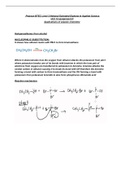
It shows how ethanol reacts with PBr3 to form bromoethane
Where it demonstrates how the oxygen from ethanol attacks the potassium from pbr3
where potassium breaks one of its bonds with bromine in which the lone pair of
electrons from oxygen are transferred to potassium to bromine. bromine attacks the
central carbon in ethanol causing it to break its bond with OH therefore the bromine
forming a bond with carbon to form bromoethane and the OH forming a bond with
potassium from potassium bromide to also form phosphorus dibromide acid
Reaction mechanism
,Conditions
Concentrated sulfuric acid
Potassium bromide
Heat under reflux
Distillation
Apparatus
Reflux condenser
Round bottomed flask
Graduated cylinder
Large beaker
Stirring rod
Importance of
conditions used
It shows how distillation
was an important use in the bromoethane production as it enables the high quality of
removal of all impurities mixed with the bromoethane therefore increasing the purity of
the bromoethane produced .
It implies how concentrated sulfuric acid is used in the bromoethane production as it
speeds up the ethanol oxidation reaction therefore increasing the amount ethanal
,produced due to the activation energy being lowered therefore reactant particles gaining
enough kinetic energy therefore more collisions taking place.
Reflux was also an important condition used as it allows the reaction to take without the
reactants of ethanol and pbr to be escape through the surroundings therefore increasing
the amount of bromoethane produced by using reflux
What would happen if conditions were not used
It implies how if conc sulfuric acid was not used in the reaction the amount of
bromoethane produced would decrease due to the reaction not speeding up therefore
the activation energy not being lowered therefore particles not gaining enough kinetic
energy
It shows if reflux was not used in the reaction the amount of bromoethane produced
could potentially decrease due to the high possibility of the reactants (ethanol, pbr)
escapibg to the surroundings therefore decreasing yield of bromoethane
Results
It demonstrates how we had 1 hour to complete the experiment in which involved reflux
the reactant solution in which we able to produce the haloalkane bromoethane
Risk assessment
Butanol - flammable - cause fire explosion - make sure no naked flames are present
Conc sulfuric acid - corrosive - skin and eye irritation
Potassium bromide - toxic - cause severe mouth and throat burns if inhaled and cause
gastrointestinal system problems - wear mask, keep fair distance away from chemical
Method
1) Using a graduated cylinder pour out 18.5mL of HBr to a round bottomed flask
2) using a stirring rod stir the mixture while adding 4.1 mL of sulfuric acid into the
mixture using a graduated cylinder in drops
3) use a boss and a clamp stand and clamp the round bottomed flask
4) add the proud bottomed flask into an ice bath beaker
5)While the flask is in the ice bath Add 11mL of ethanol into the round bottomed flask
using a graduated cylinder
6)Using a graduated cylinder add 3.3mL of conc sulfuric acid
7)Lower the round bottomed flask into the heating mantle
8)Place a reflux condenser on top of the flask
9) reflux the solution for 3 hours
10)Once reflux time is up turn off the heating mantle and cool the flask
11)Use distillation to isolate the bromoethane produced
Purifying bromoethane
1) transfer the impure bromoethane from the flask into the separation funnel
,2 add a bit of water into the funnel and shake it a few times
3) discard the water from the separation funnel
4) add sodium carbonate into the funnel and shake
5) pour off the sodium carbonate lower
6) add water to the bromoethane in the funnel and wash the alkane
7) add the layer of bromoethane into a test tube
8) add some calcium chloride into the test tube and let the solution stand
9) transfer the bromoethane to a distillation flask and distill it
Refluxing the reactants
(ethanol, potassium
bromide)
Bromoethane produced
Preparation of a
compound with a
carbonyl functional group
,Aldehyde from an alcohol:
Ethanol + oxidizing agent = ethanal + water
It demonstrates when ethanol is oxidized by sodium dichromate it produces the
aldehyde ethanal as it implies how sodium dichromate-oxidizing agent removes 2H from
ethanol to produce the aldehyde ethanal in which the 2H removed from ethanol bonds
with oxygen from sodium dichromate to also form a water product
Reaction mechanism
Conditions
Heat under reflux
oxidation agent - sodium dichromate
Dilute Sulfuric acid
, Apparatus
Bunsen burner
Graduated cylinder
Dropping pipette
Large beaker
Test tube
Delivery tube
Risk assessment
Ethanol - toxic - can cause respiratory problems if inhaled - wear mask, keep fair
distance away
Sodium dichromate - corrosive - cause eye and skin irritation and damage
Unit 14 assignment D
Applications of organic chemistry
Halogenoalkanes from alcohol
NUCLEOPHILIC SUBSTITUTION;
It shows how ethanol reacts with PBr3 to form bromoethane
Where it demonstrates how the oxygen from ethanol attacks the potassium from pbr3
where potassium breaks one of its bonds with bromine in which the lone pair of
electrons from oxygen are transferred to potassium to bromine. bromine attacks the
central carbon in ethanol causing it to break its bond with OH therefore the bromine
forming a bond with carbon to form bromoethane and the OH forming a bond with
potassium from potassium bromide to also form phosphorus dibromide acid
Reaction mechanism
,Conditions
Concentrated sulfuric acid
Potassium bromide
Heat under reflux
Distillation
Apparatus
Reflux condenser
Round bottomed flask
Graduated cylinder
Large beaker
Stirring rod
Importance of
conditions used
It shows how distillation
was an important use in the bromoethane production as it enables the high quality of
removal of all impurities mixed with the bromoethane therefore increasing the purity of
the bromoethane produced .
It implies how concentrated sulfuric acid is used in the bromoethane production as it
speeds up the ethanol oxidation reaction therefore increasing the amount ethanal
,produced due to the activation energy being lowered therefore reactant particles gaining
enough kinetic energy therefore more collisions taking place.
Reflux was also an important condition used as it allows the reaction to take without the
reactants of ethanol and pbr to be escape through the surroundings therefore increasing
the amount of bromoethane produced by using reflux
What would happen if conditions were not used
It implies how if conc sulfuric acid was not used in the reaction the amount of
bromoethane produced would decrease due to the reaction not speeding up therefore
the activation energy not being lowered therefore particles not gaining enough kinetic
energy
It shows if reflux was not used in the reaction the amount of bromoethane produced
could potentially decrease due to the high possibility of the reactants (ethanol, pbr)
escapibg to the surroundings therefore decreasing yield of bromoethane
Results
It demonstrates how we had 1 hour to complete the experiment in which involved reflux
the reactant solution in which we able to produce the haloalkane bromoethane
Risk assessment
Butanol - flammable - cause fire explosion - make sure no naked flames are present
Conc sulfuric acid - corrosive - skin and eye irritation
Potassium bromide - toxic - cause severe mouth and throat burns if inhaled and cause
gastrointestinal system problems - wear mask, keep fair distance away from chemical
Method
1) Using a graduated cylinder pour out 18.5mL of HBr to a round bottomed flask
2) using a stirring rod stir the mixture while adding 4.1 mL of sulfuric acid into the
mixture using a graduated cylinder in drops
3) use a boss and a clamp stand and clamp the round bottomed flask
4) add the proud bottomed flask into an ice bath beaker
5)While the flask is in the ice bath Add 11mL of ethanol into the round bottomed flask
using a graduated cylinder
6)Using a graduated cylinder add 3.3mL of conc sulfuric acid
7)Lower the round bottomed flask into the heating mantle
8)Place a reflux condenser on top of the flask
9) reflux the solution for 3 hours
10)Once reflux time is up turn off the heating mantle and cool the flask
11)Use distillation to isolate the bromoethane produced
Purifying bromoethane
1) transfer the impure bromoethane from the flask into the separation funnel
,2 add a bit of water into the funnel and shake it a few times
3) discard the water from the separation funnel
4) add sodium carbonate into the funnel and shake
5) pour off the sodium carbonate lower
6) add water to the bromoethane in the funnel and wash the alkane
7) add the layer of bromoethane into a test tube
8) add some calcium chloride into the test tube and let the solution stand
9) transfer the bromoethane to a distillation flask and distill it
Refluxing the reactants
(ethanol, potassium
bromide)
Bromoethane produced
Preparation of a
compound with a
carbonyl functional group
,Aldehyde from an alcohol:
Ethanol + oxidizing agent = ethanal + water
It demonstrates when ethanol is oxidized by sodium dichromate it produces the
aldehyde ethanal as it implies how sodium dichromate-oxidizing agent removes 2H from
ethanol to produce the aldehyde ethanal in which the 2H removed from ethanol bonds
with oxygen from sodium dichromate to also form a water product
Reaction mechanism
Conditions
Heat under reflux
oxidation agent - sodium dichromate
Dilute Sulfuric acid
, Apparatus
Bunsen burner
Graduated cylinder
Dropping pipette
Large beaker
Test tube
Delivery tube
Risk assessment
Ethanol - toxic - can cause respiratory problems if inhaled - wear mask, keep fair
distance away
Sodium dichromate - corrosive - cause eye and skin irritation and damage