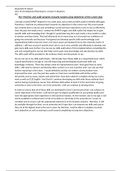
SAE3701 ASSIGNMENT 02 S1 2023
South African Education System
SAE3701
SAE3701 ASSIGNMENT 02 S1 2023
QUESTION 1
The Soweto uprising in 1976 contributed largely in changing, among other things,
the landscape of the education system in South Africa.
On 16 June, 1976, students in South Africa organised a formidable protest against the
apartheid regime’s education policies, an epic fight that brought the demise of
apartheid.
Soweto uprising was triggered by a decree issued by the Bantu Education Department,
Deputy Minister Andries Treurnicht that Afrikaans should be put on an equal basis with
English as a medium of instruction in all schools. The uprising eventually spread
country-wide and overwhelmingly changed the socio-political landscape in South Africa.
Underlying key issues that grieved the students include: the standard of education, the
quality of teaching and finally the poor state of school buildings and equipment. The
Soweto Uprising had a very negative impact on South Africa's image overseas.
Sadly long before 1948 white elections, there was a system of segregated and unequal
education in the country. While white schooling was free, compulsory and expanding,
on the other hand black education was sorely neglected. The white minority government
spent four times more on a white child's education than it did on a black child. Although
this disparity no longer exists, nonetheless the legacy remains and in recent years
students have protested against the huge cost of their education.
Another turning point occurred with the introduction of People’s Education during the
mid-1980s and early 1990s an alternative philosophy of education. During an education
conference at the University of Witwatersrand in December 1985, Father Mkatshwa
defined the new concept:
1
, SAE3701 ASSIGNMENT 02 S1 2023
"When we speak of alternative of people's education we mean one which prepares
people for total human liberation; one which helps people to be creative, to develop a
critical mind, one that prepares people for full participation in all social, political, or
cultural spheres of society" ( Hlatshwayo, 2000). It was understood as providing a
foundation for an equal education system in a democratic South Africa and represented
a clear alternative vision from Bantu education.
The uprising ignited a domino effect of reform and transformations, and led to some
concessions by the state, including the abandonment of the compulsory use of
Afrikaans, allowing African teachers' unions to officially submit complaints to the Bantu
Education Department, increased admittance of black students to "white" universities,
and the Department of Bantu Education changing its name to the Department of
Education and Training (Hlatshwayo, 2000).
The De Lange commission was launched in order to create a better education system
and eleven points from the commission were put into place. In 1994 education was
positioned atop the hierarchy of transformation priorities (Chisholm & Petersen 1999;
Harber & Brock 2013). When Apartheid ended, all restrictions on racial mixing in
schools were officially abolished, and the 1996 South African Schools Act extended
most of the financing and governance provisions of Model C schools to all public
schools, (Selod & Zenou, 2002). The key areas of reform include: Development of
rigorous standards and better assessments, adoption of better data systems to provide
schools, teachers, and parents with information about student progress, and support for
teachers and school leaders to become more effective.
South African’s education reforms were driven mainly by an equity imperative but,” for
several reasons, the country has been far less successful in promoting equal
educational opportunity or educational adequacy. Thus equity has remained elusive”
(Fiske & Ladd, 2004). The country has been less successful, in promoting equal
educational opportunity for students of all races. Overwhelming, majority of black
learners still attend schools with inferior facilities, poorly trained teachers, and
inadequate supplies of textbooks and other teaching resources (Fiske & Ladd, 2004).
2
South African Education System
SAE3701
SAE3701 ASSIGNMENT 02 S1 2023
QUESTION 1
The Soweto uprising in 1976 contributed largely in changing, among other things,
the landscape of the education system in South Africa.
On 16 June, 1976, students in South Africa organised a formidable protest against the
apartheid regime’s education policies, an epic fight that brought the demise of
apartheid.
Soweto uprising was triggered by a decree issued by the Bantu Education Department,
Deputy Minister Andries Treurnicht that Afrikaans should be put on an equal basis with
English as a medium of instruction in all schools. The uprising eventually spread
country-wide and overwhelmingly changed the socio-political landscape in South Africa.
Underlying key issues that grieved the students include: the standard of education, the
quality of teaching and finally the poor state of school buildings and equipment. The
Soweto Uprising had a very negative impact on South Africa's image overseas.
Sadly long before 1948 white elections, there was a system of segregated and unequal
education in the country. While white schooling was free, compulsory and expanding,
on the other hand black education was sorely neglected. The white minority government
spent four times more on a white child's education than it did on a black child. Although
this disparity no longer exists, nonetheless the legacy remains and in recent years
students have protested against the huge cost of their education.
Another turning point occurred with the introduction of People’s Education during the
mid-1980s and early 1990s an alternative philosophy of education. During an education
conference at the University of Witwatersrand in December 1985, Father Mkatshwa
defined the new concept:
1
, SAE3701 ASSIGNMENT 02 S1 2023
"When we speak of alternative of people's education we mean one which prepares
people for total human liberation; one which helps people to be creative, to develop a
critical mind, one that prepares people for full participation in all social, political, or
cultural spheres of society" ( Hlatshwayo, 2000). It was understood as providing a
foundation for an equal education system in a democratic South Africa and represented
a clear alternative vision from Bantu education.
The uprising ignited a domino effect of reform and transformations, and led to some
concessions by the state, including the abandonment of the compulsory use of
Afrikaans, allowing African teachers' unions to officially submit complaints to the Bantu
Education Department, increased admittance of black students to "white" universities,
and the Department of Bantu Education changing its name to the Department of
Education and Training (Hlatshwayo, 2000).
The De Lange commission was launched in order to create a better education system
and eleven points from the commission were put into place. In 1994 education was
positioned atop the hierarchy of transformation priorities (Chisholm & Petersen 1999;
Harber & Brock 2013). When Apartheid ended, all restrictions on racial mixing in
schools were officially abolished, and the 1996 South African Schools Act extended
most of the financing and governance provisions of Model C schools to all public
schools, (Selod & Zenou, 2002). The key areas of reform include: Development of
rigorous standards and better assessments, adoption of better data systems to provide
schools, teachers, and parents with information about student progress, and support for
teachers and school leaders to become more effective.
South African’s education reforms were driven mainly by an equity imperative but,” for
several reasons, the country has been far less successful in promoting equal
educational opportunity or educational adequacy. Thus equity has remained elusive”
(Fiske & Ladd, 2004). The country has been less successful, in promoting equal
educational opportunity for students of all races. Overwhelming, majority of black
learners still attend schools with inferior facilities, poorly trained teachers, and
inadequate supplies of textbooks and other teaching resources (Fiske & Ladd, 2004).
2