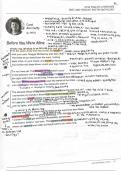
FM2 Ch 3 summary. The adjusting process
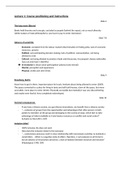
Notes from lecture.
Accrual = outstanding liabilities. For example rent payable.
NEVER use the word cash.
Double entry systems.
Ppt is important.
The continuity assumption states that unless there is evidence to the contrary, the accountant
assumes that the business is a going concern and will continue to operate indefinitely.
A 12 month accounting period is called a fiscal year. It may be the same as the calendar year or some
other 12 month period. Periods of less than a year are called interim periods.
Nature of the adjusting process.
The economic life of the business is divided into time period. This requires that revenues and expenses
be reported in the proper period. GAAP, accrual basis of accounting.
Under the accrual basis of accounting, revenues are reported on the income statement in the period
in which they are earned. For example, Revenue is reported when the services are provided to
customers. revenue recognition concept.
Under the accrual basis, expenses are reported in the same period as the revenues to which they
relate. For example, utility expenses incurred in Dec are reported as an expense and matched against
Dec revenues even though the utility bill may not be paid until matching concept, net income or
loss properly recorded.
Some businesses use the cash basis of accounting. Revenues and expenses are reported on the income
statement in the period in which cash is received or paid. For example, fees are recorded when cash is
received from clients; likewise, wages are recorded when cash is paid to employees. Net income or
loss, revenues and expenses.
The adjusting process.
Many accounts are reported without change. Some require updating because:
1. Some expenses are not recorded daily
2. Some revenues and expenses are incurred as time passes rather than as separate transactions
3. Some revenues and expenses may be unrecorded
The analysis and updating of accounts is called the adjusting process. The journal entries that bring
the accounts up to date are called adjusting entries. All adjusting entries affect at least one income
statement and one balance sheet account. Thus, an adjusting entry will always involve a revenue or
and expense account and an asset or a liability account.
Types of accounts requiring adjustment.
There are four basic accounts that require adjusting entries:
1. Prepaid expenses are the advance payment of future expenses and are recorded as assets
when cash is paid. Become expenses overtime or during normal operations. Examples: prepaid
insurance, supplies, prepaid advertising and prepaid interest. Recorded as a debit to a prepaid
expense account and a credit to the cash account. the prepaid expense account is decreased
(credited) for the amount of the prepaid expense and the related expense account is increased
(debited).
2. Unearned revenues are the advance receipt of future revenues, recorded as liabilities when
cash is received. Examples: tuition received in advance by a school, annual retainer fee
received by an attorney, premiums received in advance by an insurance company, and
Notes from lecture.
Accrual = outstanding liabilities. For example rent payable.
NEVER use the word cash.
Double entry systems.
Ppt is important.
The continuity assumption states that unless there is evidence to the contrary, the accountant
assumes that the business is a going concern and will continue to operate indefinitely.
A 12 month accounting period is called a fiscal year. It may be the same as the calendar year or some
other 12 month period. Periods of less than a year are called interim periods.
Nature of the adjusting process.
The economic life of the business is divided into time period. This requires that revenues and expenses
be reported in the proper period. GAAP, accrual basis of accounting.
Under the accrual basis of accounting, revenues are reported on the income statement in the period
in which they are earned. For example, Revenue is reported when the services are provided to
customers. revenue recognition concept.
Under the accrual basis, expenses are reported in the same period as the revenues to which they
relate. For example, utility expenses incurred in Dec are reported as an expense and matched against
Dec revenues even though the utility bill may not be paid until matching concept, net income or
loss properly recorded.
Some businesses use the cash basis of accounting. Revenues and expenses are reported on the income
statement in the period in which cash is received or paid. For example, fees are recorded when cash is
received from clients; likewise, wages are recorded when cash is paid to employees. Net income or
loss, revenues and expenses.
The adjusting process.
Many accounts are reported without change. Some require updating because:
1. Some expenses are not recorded daily
2. Some revenues and expenses are incurred as time passes rather than as separate transactions
3. Some revenues and expenses may be unrecorded
The analysis and updating of accounts is called the adjusting process. The journal entries that bring
the accounts up to date are called adjusting entries. All adjusting entries affect at least one income
statement and one balance sheet account. Thus, an adjusting entry will always involve a revenue or
and expense account and an asset or a liability account.
Types of accounts requiring adjustment.
There are four basic accounts that require adjusting entries:
1. Prepaid expenses are the advance payment of future expenses and are recorded as assets
when cash is paid. Become expenses overtime or during normal operations. Examples: prepaid
insurance, supplies, prepaid advertising and prepaid interest. Recorded as a debit to a prepaid
expense account and a credit to the cash account. the prepaid expense account is decreased
(credited) for the amount of the prepaid expense and the related expense account is increased
(debited).
2. Unearned revenues are the advance receipt of future revenues, recorded as liabilities when
cash is received. Examples: tuition received in advance by a school, annual retainer fee
received by an attorney, premiums received in advance by an insurance company, and