RNSG 1538 - Exam 4 Cell Reg & Grief.
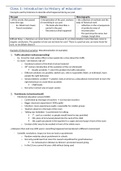
Exam 4 Cell Regulation & Grief CELLURAL REGULATION (30) Cellular Regulation is the process by which cells replicate, proliferate, and grow. Refers to all functions carried out within the cells to maintain homeostasis, including their responses to extracellular signals (e.g., hormones, neurotransmitters) and the way each cell produces an intracellular response. Included within these functions is cellular replication and growth Proliferation: production of new cells through cell division Differentiation: acquisition of specific cell function Neoplasm /tumor: new and abnormal tissue growth that is uncontrolled and progressive Benign → does not invade surrounding tissue or spread to other parts of the body; not cancer. Malignant→ cancerous tumor cells Exemplars Solid Tumors (5): → NO LIQUID Abnormal (localized) mass of tissue that does not contain cysts or liquids May be benign (non-cancerous) or malignant ( cancerous) Types of tumors: Sarcoma → Begin in the connective tissue; the tissue that the body uses to connect or support other tissues Carcinoma → originate from the epithelial tissues; this tissue that lines your organs ( lungs, liver, breast , colon or prostate) Lymphoproliferative Disorder (2): → FLUID Refer to several conditions in which lymphocytes are produced in excessive quantities Leukemia→ cancer of blood cells NO TUMOR Leukemia happens when the DNA of immature blood cells, mainly white cells, becomes damaged in some way. This causes the blood cells to grow /divide rapidly, so that there are too many. Healthy blood cells die after a while and are replaced by leukemia cells, which are produced in the bone marrow. Lymphoma → lump is a type of neoplasm that affects lymphoid tissue. TWO TYPES: Hodgkin lymphoma (HL): Reed Sternberg cells (malignant , proliferation giant multinucleated cells) > men Two peaks: 15-30; above 55- 75 years of age Originates in lymph nodes (cervical nodes) ↑ in pts w/HIV Onset: Insidious Non-Hodgkin lymphoma Often involves malignant B Cells, usually originates outside lymph node Most common Affects 50-70 yr old Common: men/white race No known cause → linked to viruses, immune disorders, genetic
Written for
- Institution
- Del Mar College
- Module
- RNSG 1538
Document information
- Uploaded on
- March 1, 2023
- Number of pages
- 35
- Written in
- 2022/2023
- Type
- Exam (elaborations)
- Contains
- Questions & answers
Subjects
-
rnsg 1538 exam 4 cell reg amp grief