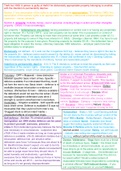
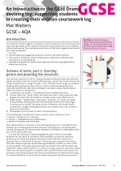
An introduction to the GCSE Drama devising log:
supporting students in creating their written
coursework log
Introduction
This scheme of work suggests a simple structure and plan for the devising written unit, directly
related to the creation of the piece itself, and focuses on an entirely written devising log. The
maximum word count is 2500 with suggested sections of 650 to 800 words each.
It covers:
The demands and suggested structure of each of the three sections
The process of linking research, development, rehearsal, realisation and evaluation to the
devising log
Example paragraphs for each section with key indicators highlighted that follow this
structure.
Scheme of work, part 1: Starting points and planning the structure
A. A painting or art project – something without a definite narrative.
B. A short video clip – music videos are extremely useful. They inspire through images and
make the students consider using sound effects/music.
C. Single words – ‘Expectations,’ ‘Popularity,’ ‘Isolation,’ etc. These can prove to be excellent
starting points for more symbolic work in the early stages of setting up the project. Creating a
series of tableaux with music-based transitions on single, challenging words is an excellent way
to get students away from naturalism.
D. Photographs that are open to several interpretations.
The Devising log is comprised of three sections, each marked out of 20:
Section 1: Response to a stimulus
Section 2: Development and collaboration
Section 3: Analysis and evaluation.
Scheme of work, part 2: Section 1 – What to include
and in what order?
Section 1 focuses on stimuli and the initial development of ideas. My students are given a piece of
A3 paper which has eight boxes drawn on it. This is for the ‘storyboard’ of their piece, which will
have a maximum of eight scenes in it, the aims of which can be summed up in two sentences under
each box. This initial experimentation with the stimulus material is directly relevant to the devising
process itself. So, at the end of every devising lesson, make sure your students spend the last 10
minutes making notes, individually, on everything they have completed in that lesson and then set
themselves targets for the next lesson, e.g.:
A. What each student will bring to the next lesson: music, props, costume, specific ideas for
which of the eight scenes they will be working on next.
B. How they will plan out their use of time in the next lesson: first 10 minutes, run everything
created so far; 5 minutes brainstorming the new ideas group members have brought; 25
minutes creating new material; 10 minutes running everything together and timing their work;
10 minutes writing up notes on work completed and rehearsal techniques used.
It is so important the students do not spend the first part of devising lessons deciding what they are
going to do. They should arrive with ideas to try.
Turning these experiences into Section 1?
supporting students in creating their written
coursework log
Introduction
This scheme of work suggests a simple structure and plan for the devising written unit, directly
related to the creation of the piece itself, and focuses on an entirely written devising log. The
maximum word count is 2500 with suggested sections of 650 to 800 words each.
It covers:
The demands and suggested structure of each of the three sections
The process of linking research, development, rehearsal, realisation and evaluation to the
devising log
Example paragraphs for each section with key indicators highlighted that follow this
structure.
Scheme of work, part 1: Starting points and planning the structure
A. A painting or art project – something without a definite narrative.
B. A short video clip – music videos are extremely useful. They inspire through images and
make the students consider using sound effects/music.
C. Single words – ‘Expectations,’ ‘Popularity,’ ‘Isolation,’ etc. These can prove to be excellent
starting points for more symbolic work in the early stages of setting up the project. Creating a
series of tableaux with music-based transitions on single, challenging words is an excellent way
to get students away from naturalism.
D. Photographs that are open to several interpretations.
The Devising log is comprised of three sections, each marked out of 20:
Section 1: Response to a stimulus
Section 2: Development and collaboration
Section 3: Analysis and evaluation.
Scheme of work, part 2: Section 1 – What to include
and in what order?
Section 1 focuses on stimuli and the initial development of ideas. My students are given a piece of
A3 paper which has eight boxes drawn on it. This is for the ‘storyboard’ of their piece, which will
have a maximum of eight scenes in it, the aims of which can be summed up in two sentences under
each box. This initial experimentation with the stimulus material is directly relevant to the devising
process itself. So, at the end of every devising lesson, make sure your students spend the last 10
minutes making notes, individually, on everything they have completed in that lesson and then set
themselves targets for the next lesson, e.g.:
A. What each student will bring to the next lesson: music, props, costume, specific ideas for
which of the eight scenes they will be working on next.
B. How they will plan out their use of time in the next lesson: first 10 minutes, run everything
created so far; 5 minutes brainstorming the new ideas group members have brought; 25
minutes creating new material; 10 minutes running everything together and timing their work;
10 minutes writing up notes on work completed and rehearsal techniques used.
It is so important the students do not spend the first part of devising lessons deciding what they are
going to do. They should arrive with ideas to try.
Turning these experiences into Section 1?