

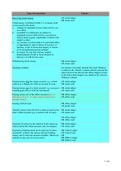
Type of transaction Entries
Receiving client money CR client ledger
DR client cash
Client money is defined in Rule 2.1 as money held
or received by [the firm]:
a. relating to regulated services delivered by you
to a client;
b. on behalf of a third party in relation to
regulated services delivered by you (such as
money held as agent, stakeholder or held to the
sender’s order);
c. as a trustee or as the holder of a specified office
or appointment, such as donee of a power of
attorney, Court of Protection deputy or trustee
of an occupational pension scheme;
d. in respect of your fees and any unpaid
disbursements if held or received prior to
delivery of a bill for the same.
Withdrawing client money DR client ledger
CR client cash
Opening a balance No entries to be made: instead, the word ‘Balance’
is added to the ‘Details’ column and the amount the
client owed to the firm (in the office ledger) or had
at the firm (client ledger) was added to the relevant
‘Balance’ column
Paying money into the client account: e.g. a client CR client ledger
sends you a cheque for £500 on account of costs DR client cash
Paying money out of a client account: e.g. you pay a DR client ledger
Land Registry fee of £140 for documents. CR client cash
Paying money out of the office account (only if DR office ledger
directed to do so? - or where client doesn’t have CR office cash
enough money)
Issuing a bill of costs DR office ledger
CR profit costs
Transfer money from the firm’s client account to the DR client ledger
firm’s office account (e.g. to settle a bill of costs) CR client cash
CR office ledger
DR office cash
Payment of money by the solicitor to the client (so DR client ledger
what is left in the client account; sent via cheque) CR client cash
Payment of disbursement (to be paid out of client DR Client Ledger
account IF 1) that is the reason solicitor holding CR Client Cash
money and 2) relevant amount available. Otherwise OR
solicitor to pay out of own account). DR Office Ledger
DR Office Cash
1 of 8
 
, SPLIT payment (will be paid into Client or Office CR client ledger
Ledger) DR client cash
OR
CR Office ledger
DR office cash
THEN (SPLIT)
CR office ledger (cheque split - note amounts)
DR Office cash (cheque split - note amounts)
OR
CR Client ledger (cheque split - note amounts)
DR client cash (cheque split - note amounts)
Withdrawing money to keep as petty cash CR Office Cash (withdrawal of petty cash)
DR Petty Cash (withdrawal of petty cash)
Paying something out of petty cash DR office ledger (item)
CR petty cash (item)
Receipt of the deposit from the buyer pending CR client ledger: buyer client
exchange (step 1 - when required) DR client cash
Payment of the deposit to the seller’s solicitors (step DR client ledger: buyer client
2 - on EXCHANGE of contract, not completion) CR client cash
Receiving the deposit as stakeholder - separate CR client ledger: stakeholder
ledger DR client cash
(kind of trust under which the seller’s solicitor holds
the deposit on trust for both the buyer and the seller
until it is clear to whom the money should be paid
to) at exchange [PART 1]
Completion of the sale (stakeholder) [PART 2] DR client ledger: stakeholder
CR client ledger: seller client (not the cash)
The point at which the seller’s solicitor gives the
money to the seller.
Receiving the deposit as agent CR client ledger: seller client
DR client cash
[agree that the deposit belongs to the seller at
exchange rather than completion]
Payment of the cheque to the client (agent) DR client ledger: seller client
CR client cash
[payment taken from client account to give to client
basically]
Receiving mortgage funds (no separate ledger, CR client ledger: buyer/borrower client
method 1) DR client cash
Receiving mortgage funds (separate ledger, method CR client ledger: lender client
2): receipt of mortgage funds DR client cash
Completion of the sale (mortgage funds; for either DR client ledger: lender client
approach) CR client ledger: buyer/borrower client
2 of 8


Receiving client money CR client ledger
DR client cash
Client money is defined in Rule 2.1 as money held
or received by [the firm]:
a. relating to regulated services delivered by you
to a client;
b. on behalf of a third party in relation to
regulated services delivered by you (such as
money held as agent, stakeholder or held to the
sender’s order);
c. as a trustee or as the holder of a specified office
or appointment, such as donee of a power of
attorney, Court of Protection deputy or trustee
of an occupational pension scheme;
d. in respect of your fees and any unpaid
disbursements if held or received prior to
delivery of a bill for the same.
Withdrawing client money DR client ledger
CR client cash
Opening a balance No entries to be made: instead, the word ‘Balance’
is added to the ‘Details’ column and the amount the
client owed to the firm (in the office ledger) or had
at the firm (client ledger) was added to the relevant
‘Balance’ column
Paying money into the client account: e.g. a client CR client ledger
sends you a cheque for £500 on account of costs DR client cash
Paying money out of a client account: e.g. you pay a DR client ledger
Land Registry fee of £140 for documents. CR client cash
Paying money out of the office account (only if DR office ledger
directed to do so? - or where client doesn’t have CR office cash
enough money)
Issuing a bill of costs DR office ledger
CR profit costs
Transfer money from the firm’s client account to the DR client ledger
firm’s office account (e.g. to settle a bill of costs) CR client cash
CR office ledger
DR office cash
Payment of money by the solicitor to the client (so DR client ledger
what is left in the client account; sent via cheque) CR client cash
Payment of disbursement (to be paid out of client DR Client Ledger
account IF 1) that is the reason solicitor holding CR Client Cash
money and 2) relevant amount available. Otherwise OR
solicitor to pay out of own account). DR Office Ledger
DR Office Cash
1 of 8
 
, SPLIT payment (will be paid into Client or Office CR client ledger
Ledger) DR client cash
OR
CR Office ledger
DR office cash
THEN (SPLIT)
CR office ledger (cheque split - note amounts)
DR Office cash (cheque split - note amounts)
OR
CR Client ledger (cheque split - note amounts)
DR client cash (cheque split - note amounts)
Withdrawing money to keep as petty cash CR Office Cash (withdrawal of petty cash)
DR Petty Cash (withdrawal of petty cash)
Paying something out of petty cash DR office ledger (item)
CR petty cash (item)
Receipt of the deposit from the buyer pending CR client ledger: buyer client
exchange (step 1 - when required) DR client cash
Payment of the deposit to the seller’s solicitors (step DR client ledger: buyer client
2 - on EXCHANGE of contract, not completion) CR client cash
Receiving the deposit as stakeholder - separate CR client ledger: stakeholder
ledger DR client cash
(kind of trust under which the seller’s solicitor holds
the deposit on trust for both the buyer and the seller
until it is clear to whom the money should be paid
to) at exchange [PART 1]
Completion of the sale (stakeholder) [PART 2] DR client ledger: stakeholder
CR client ledger: seller client (not the cash)
The point at which the seller’s solicitor gives the
money to the seller.
Receiving the deposit as agent CR client ledger: seller client
DR client cash
[agree that the deposit belongs to the seller at
exchange rather than completion]
Payment of the cheque to the client (agent) DR client ledger: seller client
CR client cash
[payment taken from client account to give to client
basically]
Receiving mortgage funds (no separate ledger, CR client ledger: buyer/borrower client
method 1) DR client cash
Receiving mortgage funds (separate ledger, method CR client ledger: lender client
2): receipt of mortgage funds DR client cash
Completion of the sale (mortgage funds; for either DR client ledger: lender client
approach) CR client ledger: buyer/borrower client
2 of 8




