Week 1 Module introduction
15 September 2022 10:47
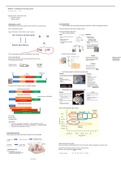
Cognitive science: study human mind
• Cognitive processes
• Cognitive abilities
EXPERIMENTAL COG PSY COG NEUROSCIENCE
Understanding human cog through observation of behaviour during cog tasks • Understanding human cog through observation of behaviour using brain imaging during tasks
Mind = information processor Functional anatomy: 4 lobes and 52 brodmann areas
Flow of information in brain: Bottom-up vs Top-down COG NEURO RESEARCH METHODS
• • SINGLE UNIT RECORDING
•
•
So it can interpreted as either A or H depending on the context • EVENT-RELATED POTENTIALS
COG PSY ASSUMPTIONS Different WAYS
Information is processed in functionally specialized areas in brain OBSERVING
Processing proceeds in stages COGNITION
• FUNCTIONAL MAGNETIC RESOANCE IMAGING (fMRI)
The crown is not as used as train in the English language
• TRANSCRANIAL MAGNETIC STIMULATION (TMS)
How we process it differently
SPATIAL AND TEMPORAL RESOLUTIONS
Serial model
Parallel model
Cascading model
LIMITATIONS
• Test scores applicable to population --> generalisability of results
• What relation between test score and cog abilities --> ecological validity
• Possible to test hypotheses of theory?
COG NEUROPSYCHOLOGY
Understanding cog through observation of behavior with brain damage.
COMPUTATIONAL COG SCIENCE
Using computational models (algorithms) of brain (of specific modules, language) to understand cog
Connectionist mimicking an aspect of human cog functioning
Teaches us how cog function could be realised
Notes Page 1
15 September 2022 10:47
Cognitive science: study human mind
• Cognitive processes
• Cognitive abilities
EXPERIMENTAL COG PSY COG NEUROSCIENCE
Understanding human cog through observation of behaviour during cog tasks • Understanding human cog through observation of behaviour using brain imaging during tasks
Mind = information processor Functional anatomy: 4 lobes and 52 brodmann areas
Flow of information in brain: Bottom-up vs Top-down COG NEURO RESEARCH METHODS
• • SINGLE UNIT RECORDING
•
•
So it can interpreted as either A or H depending on the context • EVENT-RELATED POTENTIALS
COG PSY ASSUMPTIONS Different WAYS
Information is processed in functionally specialized areas in brain OBSERVING
Processing proceeds in stages COGNITION
• FUNCTIONAL MAGNETIC RESOANCE IMAGING (fMRI)
The crown is not as used as train in the English language
• TRANSCRANIAL MAGNETIC STIMULATION (TMS)
How we process it differently
SPATIAL AND TEMPORAL RESOLUTIONS
Serial model
Parallel model
Cascading model
LIMITATIONS
• Test scores applicable to population --> generalisability of results
• What relation between test score and cog abilities --> ecological validity
• Possible to test hypotheses of theory?
COG NEUROPSYCHOLOGY
Understanding cog through observation of behavior with brain damage.
COMPUTATIONAL COG SCIENCE
Using computational models (algorithms) of brain (of specific modules, language) to understand cog
Connectionist mimicking an aspect of human cog functioning
Teaches us how cog function could be realised
Notes Page 1