PATHO 370 Midterm Study Guide (Dr. Song) Question and answer already passed
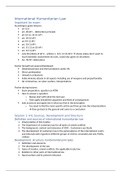
PATHO 370 Midterm Study Guide (Dr. Song) Question and answer already passedHomeostasis Reflects a tendency to stabilize an organism's functional systems, despite changes both internally and externally Allostasis Intricate regulatory processes orchestrated by the brain and the ability to successfully adapt to changes ‣ Dynamic process that maintains or re-establishes homeostasis in light of environmental and lifestyle changes Clinical Manifestations Signs and symptoms or evidence of disease Specificity The probability that a test will be negative when applied to a person who does not have a given condition Sensitivity The probability that the test will be positive when applied to a person with the condition Exacerbation A relatively sudden increase in the severity of a disease or any of its signs/symptoms Remission An abatement or decline in severity of signs/symptoms of a disease ‣ If a remission is permanent (5 yrs) the person is said to be cured Convalescence The stage of recovery after a disease, injury, or surgical operation Etiology The study of the causes or reasons for phenomena Risk Factors Characteristics or behaviors that increase the likelihood of developing a medical disorder or disease ‣ Modifiable ‣ Non-Modifiable Modifiable Risk Factor A behavioral risk factor that can be reduced or controlled by intervention, thereby reducing the probability of disease ‣ Drug/alcohol use, weight, stress management Non-Modifiable Risk Factor A risk factor that cannot be reduced or controlled by intervention ‣ Age, race/ethnicity, genetics Stress/Stressor Physical, chemical, or emotional factor that result in tension of body or mind ‣ Actual physical and mental state that tension produces ‣ Real or perceived state to homeostasis General Adaptation Syndrome (GAS) Selye's concept of the body's adaptive response to stress in three phases: 1. Alarm 2. Resistance/adaptation 3. Exhaustion. Catecholamine Secreted by the sympathetic nervous system (SNS) and adrenal medulla when hypothalamus senses a stressful stimulus in internal or external environment ‣ Epinephrine ‣ Norepinephrine ‣ Play integral roles in allostasis Corticosteroid Secreted by the adrenal cortex when hypothalamus senses a stressful stimulus in internal or external environment Epinephrine (E) Neurotransmitter secreted by the adrenal medulla in response to stress. Also known as adrenaline. Norepinephrine (NE) ‣ Constricts blood vessels and raises blood pressure • alpha receptor ‣ Enhances myocardial contractility, increases heart rate, and increases cardiac output • beta 1 receptor ‣ Causes bronchodilation • beta 2 receptor ‣ Increases the release of glucose from the liver (glycogenolysis) and elevates blood glucose levels ‣ Reduces gastric secretions ‣ Increases night/far vision Adrenocortical Steroids Critical to maintain homeostasis and may synergize/antagonize effects of catecholamines ‣ Cortisol and aldosterone Cortisol (Steroid) Primary glucocorticoid that affects protein metabolism, promotes appetite and food-seeking behaviors ‣ Results in immune suppression ‣ Has anti-inflammatory effects Aldosterone Primary mineralocorticoid that promotes reabsorption of sodium and water ‣ Increases blood pressure (BP) Cellular Injury Mechanisms • Hypoxic Injury • Free radical injury (oxidative stress) • Physical agents of injury • Chemical Injury • Infectious Injury • Immunologic and Inflammatory Injury • Nutritional injury Ischemia and Hypoxic Injury Tissue hypoxia is most often caused by ischemia; causes power failure in the cell ‣ Ischemia is the most common cause of cell injury and injures cells faster than hypoxia alone ‣ Combination of disruption of oxygen supply with accumulation of metabolic waste Ischemia Cellular events that lead to lactic acidosis ‣ Cellular proteins and enzymes become more dysfunctional ‣ Reversible, but cell death occurs when plasma, mitochondrial, and lysosomal membranes are critically damaged (irreversible) Reversible Cell Injury Hydropic swelling and intracellular accumulations
Written for
- Institution
- PATHO 370
- Module
- PATHO 370
Document information
- Uploaded on
- February 2, 2023
- Number of pages
- 46
- Written in
- 2022/2023
- Type
- Exam (elaborations)
- Contains
- Questions & answers
Subjects
-
patho 370 midterm study guide dr song question and answer already passed
-
homeostasis reflects a tendency to stabilize an organisms functional systems
-
despite changes both internally and extern

Also available in package deal