Unit 6: The Rate of Chemical Changes
Collision Theory
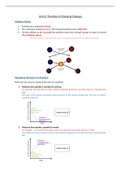
Particles are constantly moving
For a chemical reaction to occur, the reactant particles must collide first
For the collision to be successful the particles must have enough energy to equal or exceed
the activation energy
- activation energy is the minimum amount of energy required for an effective collision.
Measuring the Rate of a Reaction
There are two ways to measure the rate of a reaction:
1. Measure how quickly a reactant is used up
For example, how the mass of some calcium carbonate decreases over time when it is reacting with
acid.
The mass of the calcium carbonate would decrease as the reaction progressed. The rate of reaction
would look like this:
MASS OF CALCIUM CARBONATE
STEEP
GRADIENTFAST
quantity of reactant used
REACTION mean rate of reaction=
time taken
SHALLOW
GRADIENTSLOW
REACTION
TIME
2. Measure how quickly a product is made
For example, in a reaction that makes a gas you could time how quickly the gas is made.
The volume of the gas would increase as the reaction progressed. The rate of reaction would look like
this:
SHALLOW
VOLUME OF GAS PRODUCED
GRADIENTSLOW
REACTION
quantity of product formed
mean rate of reaction=
time taken
STEEP
GRADIENTFAST
REACTION
TIME
, Factors Affecting the Rate of Reaction
The two main factors which can affect the rate of reaction based on Collision Theory:
1. The amount of energy particles have
- more energy to transfer during a collision
2. Frequency of collisions
- how often particles collide
- not all collisions are successful
MORE MORE SUCCESSFUL
COLLISIONS COLLISIONS
There are four things which can cause these affects:
1. TEMPERATURE
As the temperature of a reaction increases particles gain energy… they move faster… collide more
frequently… collide with more energy… likely to exceed the activation energy during collisions… more
successful collisions… therefore faster rate of reaction.
2. CONCENTRATION
Increasing the concentration (liquid) or pressure (gas)… means how many more particles are present in the
same set volume… there are more frequent collisions… therefore faster rate of reaction.
3. SURFACE AREA
If solid reactants are cut into small pieces or powdered… the surface are is increased… more area for
collisions to occur… there is a higher frequency of collisions… therefore faster rate of reaction.
4. PRESENCE OF A CATALYST
Catalyst = a substance that speeds up the rate of a reaction, not being used up in the reaction themselves.
They provide an alternative pathway for a reaction to occur… this has lower activation energy… this means
there are more successful collisions… therefore faster rate of reaction,
Collision Theory
Particles are constantly moving
For a chemical reaction to occur, the reactant particles must collide first
For the collision to be successful the particles must have enough energy to equal or exceed
the activation energy
- activation energy is the minimum amount of energy required for an effective collision.
Measuring the Rate of a Reaction
There are two ways to measure the rate of a reaction:
1. Measure how quickly a reactant is used up
For example, how the mass of some calcium carbonate decreases over time when it is reacting with
acid.
The mass of the calcium carbonate would decrease as the reaction progressed. The rate of reaction
would look like this:
MASS OF CALCIUM CARBONATE
STEEP
GRADIENTFAST
quantity of reactant used
REACTION mean rate of reaction=
time taken
SHALLOW
GRADIENTSLOW
REACTION
TIME
2. Measure how quickly a product is made
For example, in a reaction that makes a gas you could time how quickly the gas is made.
The volume of the gas would increase as the reaction progressed. The rate of reaction would look like
this:
SHALLOW
VOLUME OF GAS PRODUCED
GRADIENTSLOW
REACTION
quantity of product formed
mean rate of reaction=
time taken
STEEP
GRADIENTFAST
REACTION
TIME
, Factors Affecting the Rate of Reaction
The two main factors which can affect the rate of reaction based on Collision Theory:
1. The amount of energy particles have
- more energy to transfer during a collision
2. Frequency of collisions
- how often particles collide
- not all collisions are successful
MORE MORE SUCCESSFUL
COLLISIONS COLLISIONS
There are four things which can cause these affects:
1. TEMPERATURE
As the temperature of a reaction increases particles gain energy… they move faster… collide more
frequently… collide with more energy… likely to exceed the activation energy during collisions… more
successful collisions… therefore faster rate of reaction.
2. CONCENTRATION
Increasing the concentration (liquid) or pressure (gas)… means how many more particles are present in the
same set volume… there are more frequent collisions… therefore faster rate of reaction.
3. SURFACE AREA
If solid reactants are cut into small pieces or powdered… the surface are is increased… more area for
collisions to occur… there is a higher frequency of collisions… therefore faster rate of reaction.
4. PRESENCE OF A CATALYST
Catalyst = a substance that speeds up the rate of a reaction, not being used up in the reaction themselves.
They provide an alternative pathway for a reaction to occur… this has lower activation energy… this means
there are more successful collisions… therefore faster rate of reaction,