1
Neuropsychologische revalidatie
College 1 - intro
Wat is revalidatie?
Eerste associatie van patiënten vaak aan de fysieke kant: sporten, bewegen
Woordenboek definitie: het weer in staat maken werk te verrichten, een functie te vervullen;
een medische term die herstel betekent, of letterlijk weer valide worden na een ongeval of
medische ingreep zoals een operatie
Revalidatiegeneeskunde
Richt zich op gevolgen van ziekte (ipv op de ziekte zelf)
Accent op motoriek en/of cognitie
Neuropsychologisch: vaak multidisciplinair
Gericht op patiënten maar ook op naasten
Behandeling richt zich op: Verbeteren van autonomie, zelfredzaamheid en deelname in de
maatschappij
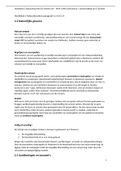
International Classification of Function (ICF)
In de revalidatiegeneeskunde wordt vaak gebruik gemaakt van dit model
1e laag: ziekte/ aandoening (neuroloog, medische mensen)
2e laag: gevolgen van aandoening (revalidatiearts + neuropsycholoog)
o Structuur en functie: dat zijn de cognitieve domeinen functies zoals Nut van model:
motorische functies, energiehuishouding, zintuigelijke functies
o Activiteiten: wat voor gevolgen heeft de functie voor de dagelijkse • Kapstok om
activiteiten zoals zelfzorg, koken, communiceren of problemen in kaart te
bewegingsactiviteiten zoals lopen, schrijven brengen
• Gemeenschappelijke
o Participatie: participatie gaat over je rol in de maatschappij. Hoe
taal
gaat het op sociaal gebied of op werk. Kan de patiënt zijn de rol • Gebruik in klinisch
vervullen in het gezinsleven. Kunnen hobby’s nog uitgevoerd onderzoek en klinische
worden? praktijk
3e laag: persoonlijke factoren en omgevingsfactoren
o Persoonlijke factoren: leeftijd, geslacht, verleden, coping
o Externe/ omgevingsfactoren: woonomgeving, werkomgeving,
naasten/familie/vrienden
Voorbeeld 2e laag
, 2
De diagnosegroep
De Neurorevalidatie houdt zich bezig met :
Niet Aangeboren Hersenletsel (NAH)
o CVA (infarcten en bloedingen)
o Traumatisch hersenletsel
o Hersentumoren
o Encefalitis
o Epilepsie
o HIV
o Oncologie-‘chemobrein’
o PICS
NeuroMusculaire Aandoeningen (NMA)
Houding en beweging
o Dwarslaesie
o Multitrauma(steeds meer onderzoek naar)
o Chronische pijn
o Oncologie (steeds meer onderzoek naar)
o amputatie
Cognitie
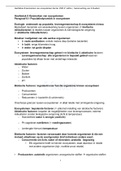
Neuropsychologische revalidatie omvat niet alleen cognitieve revalidatie, maar ook over emotionele
en gedragsmatige revalidatie:
cognitief Emotioneel gedrag
- initiatief verlies
- verschillende cognitieve - depressie
- kort lontje
stoornissen - angst
- geheugen, plannen,
aandacht
Cognitie in kaart brengen middels Hierbij werken we in een multidisciplinair
team
NPO
Observaties -Revalidatie arts: medische kennis, richting
cognitieve screening geven, evaluatie, eindverantwoordelijk
zelfrapportage -Fysiotherapeut: kijkt naar het bewegen,
heteroanamnese fitheid, ontspanning
-Ergotherapeut: vertaalslag naar het dagelijks
leven
-Logopediste: taal, communicatie
rollen van een naaste
-(Neuro)Psycholoog: NPO, psychologische en
Naasten zijn vaak mantelzorgers. Partners zijn persoonsfactoren
vaker minder tevreden over hun leven als -Maatschappelijk werk: naasten en werk
-Orthopedisch instrumentmaker:
geheel dan de patiënten is (3 jaar na een CVA).
Hulpmiddelen maken, protheses, spalken
Ook over de relatie zijn partners minder vaak
-Verpleegkundige
tevreden. Het is dus erg belangrijk om de
-Sportadviseur
partners van de patiënten te betrekken. -Revalidatietechnicus
-Orthopedisch schoentechnicus
, 3
Behandeling
De behandeling van patiënten kan zich richten op het zo goed mogelijk omgaan met de gevolgen van
het hersenletsel (op cognitief, emotioneel en gedragsmatig niveau). De hulpvraag staat centraal in de
behandeling. Deze kan per persoon erg verschillend.
Behandeling in de klinische praktijk
Psycho-educatie en voorlichting is een belangrijk onderdeel van de behandeling, dit geeft
meer inzicht en begrip van de patiënten over de ziekte. Daardoor snappen ze beter wat ze
moeten doen om vooruitgang te boeken.
Compensatie strategieën
o Interne geheugen strategieën
o Externe hulpmiddelen
o Dagplanning
o Goal management training
Behandelprotocol
o Niet Rennen Maar Plannen
o Stapsgewijs
o Centrale rol ergotherapeut
Aanpassen van de omgeving
Compensatie Groepsbehandelingen
Er is een verschil tussen verbeteren van Lotgenotencontact kan een belangrijk
cognitieve functies en compensatie. Uit onderdeel zijn in de behandeling,
onderzoek blijkt tot nu toe dat het verbeteren waarin ze herkenning en erkenning
van een cognitieve functie nog niet echt krijgen
mogelijk is. Bij het trainen van een cognitieve Brein in werking – voorlichtingsgroep
functie zijn er namelijk tot nu toe enkel taak- voor patiënten en partner
specifieke effecten gevonden, het heeft dus Weer aan het werk – voorlichting wet
vervolgens geen invloed in het dagelijks leven. en regelgeving
Wel geeft het mensen soms motivatie en Mindfulness
inzicht. Vaak is leren compenseren dus NAH-fitgroep
realistischer dan het daadwerkelijk
verbeteren.
, 4
Literatuur college 1:
An overview of outcome measures used in neuropsychological rehabilitation research on adults
with acquired brain injury - van Heugten, C., Caldenhove, S., Crutsen, J., & Winkens, I. (2020).
Abstract:
Outcome measurement is the cornerstone of evidence-based health care including
neuropsychological rehabilitation. A complicating factor for outcome measurement in
neuropsychological rehabilitation is the enormous number of measures available and the lack of a
standard set of outcome measures. As a first step towards such a set, we reviewed intervention
evaluation studies of the last 20 years to get an overview of instruments used for measuring
outcome. The instruments were divided into two main categories: neuropsychological tests
(International Classification of Functioning (ICF) level of functions) and other instruments (all other
ICF domains). We considered the most common cognitive domains: memory, attention, executive
functions, neglect, perception, apraxia, language/communication and awareness. Instruments used
most for measuring outcome were neuropsychological tests (n = 215) in the domains of working
memory, reaction times, neglect and aphasia. In the second category (n = 166) the multi-domain
instruments were most represented. Several steps can be taken to select a standard set of outcome
measures for future use. Next to evaluation of quality and feasibility of the instruments, expert
opinion and consensus procedures can be applied.
Measuring the outcome of health care is “a central component of determining therapeutic
effectiveness and, therefore, the provision of evidence-based healthcare”.
It is common to test and measure extensively as part of the diagnostic assessment. However,
neuropsychological assessment is less often used to measure post-treatment outcomes.
The focus on other domains besides neuropsychological impairments (i.e., activities,
participation, and quality of life) has evolved later and therefore less validated instruments
are available for use in clinical neuropsychology.
Since the aim of neuropsychological rehabilitation is much broader than reducing cognitive
deficits but rather to enable patients to live with, manage, bypass, or come to terms with
cognitive deficits precipitated by injury to the brain other outcome measures, in addition to
neuropsychological tests are needed.
There are many reasons why outcome measurement is important:
o to document improvement or deterioration, for differential diagnosis, to evaluate
treatment effectiveness, to identify areas of need, plan treatments, help people
make practical decisions, and educate people with traumatic brain injury (TBI) and
their family professionals and other professionals
o quality assurance and accountability purposes
Outcome measurement can have different goals for various stakeholders.
o For (fundamental) researchers and clinicians efficacy is most relevant: does this
treatment work, why and how and for whom?
o For applied researchers, clinicians but also for the patients and their family
effectiveness is more important: Is the treatment beneficial/helpful for the patient
group or for the individual patient?
o And finally, one can also consider efficiency: does the treatment work as expected
and what is the cost–benefit ratio? In current health care, quality, cost-effectiveness
and patient-centricity are key elements leading to many different systems and ways
of measuring outcome
Neuropsychologische revalidatie
College 1 - intro
Wat is revalidatie?
Eerste associatie van patiënten vaak aan de fysieke kant: sporten, bewegen
Woordenboek definitie: het weer in staat maken werk te verrichten, een functie te vervullen;
een medische term die herstel betekent, of letterlijk weer valide worden na een ongeval of
medische ingreep zoals een operatie
Revalidatiegeneeskunde
Richt zich op gevolgen van ziekte (ipv op de ziekte zelf)
Accent op motoriek en/of cognitie
Neuropsychologisch: vaak multidisciplinair
Gericht op patiënten maar ook op naasten
Behandeling richt zich op: Verbeteren van autonomie, zelfredzaamheid en deelname in de
maatschappij
International Classification of Function (ICF)
In de revalidatiegeneeskunde wordt vaak gebruik gemaakt van dit model
1e laag: ziekte/ aandoening (neuroloog, medische mensen)
2e laag: gevolgen van aandoening (revalidatiearts + neuropsycholoog)
o Structuur en functie: dat zijn de cognitieve domeinen functies zoals Nut van model:
motorische functies, energiehuishouding, zintuigelijke functies
o Activiteiten: wat voor gevolgen heeft de functie voor de dagelijkse • Kapstok om
activiteiten zoals zelfzorg, koken, communiceren of problemen in kaart te
bewegingsactiviteiten zoals lopen, schrijven brengen
• Gemeenschappelijke
o Participatie: participatie gaat over je rol in de maatschappij. Hoe
taal
gaat het op sociaal gebied of op werk. Kan de patiënt zijn de rol • Gebruik in klinisch
vervullen in het gezinsleven. Kunnen hobby’s nog uitgevoerd onderzoek en klinische
worden? praktijk
3e laag: persoonlijke factoren en omgevingsfactoren
o Persoonlijke factoren: leeftijd, geslacht, verleden, coping
o Externe/ omgevingsfactoren: woonomgeving, werkomgeving,
naasten/familie/vrienden
Voorbeeld 2e laag
, 2
De diagnosegroep
De Neurorevalidatie houdt zich bezig met :
Niet Aangeboren Hersenletsel (NAH)
o CVA (infarcten en bloedingen)
o Traumatisch hersenletsel
o Hersentumoren
o Encefalitis
o Epilepsie
o HIV
o Oncologie-‘chemobrein’
o PICS
NeuroMusculaire Aandoeningen (NMA)
Houding en beweging
o Dwarslaesie
o Multitrauma(steeds meer onderzoek naar)
o Chronische pijn
o Oncologie (steeds meer onderzoek naar)
o amputatie
Cognitie
Neuropsychologische revalidatie omvat niet alleen cognitieve revalidatie, maar ook over emotionele
en gedragsmatige revalidatie:
cognitief Emotioneel gedrag
- initiatief verlies
- verschillende cognitieve - depressie
- kort lontje
stoornissen - angst
- geheugen, plannen,
aandacht
Cognitie in kaart brengen middels Hierbij werken we in een multidisciplinair
team
NPO
Observaties -Revalidatie arts: medische kennis, richting
cognitieve screening geven, evaluatie, eindverantwoordelijk
zelfrapportage -Fysiotherapeut: kijkt naar het bewegen,
heteroanamnese fitheid, ontspanning
-Ergotherapeut: vertaalslag naar het dagelijks
leven
-Logopediste: taal, communicatie
rollen van een naaste
-(Neuro)Psycholoog: NPO, psychologische en
Naasten zijn vaak mantelzorgers. Partners zijn persoonsfactoren
vaker minder tevreden over hun leven als -Maatschappelijk werk: naasten en werk
-Orthopedisch instrumentmaker:
geheel dan de patiënten is (3 jaar na een CVA).
Hulpmiddelen maken, protheses, spalken
Ook over de relatie zijn partners minder vaak
-Verpleegkundige
tevreden. Het is dus erg belangrijk om de
-Sportadviseur
partners van de patiënten te betrekken. -Revalidatietechnicus
-Orthopedisch schoentechnicus
, 3
Behandeling
De behandeling van patiënten kan zich richten op het zo goed mogelijk omgaan met de gevolgen van
het hersenletsel (op cognitief, emotioneel en gedragsmatig niveau). De hulpvraag staat centraal in de
behandeling. Deze kan per persoon erg verschillend.
Behandeling in de klinische praktijk
Psycho-educatie en voorlichting is een belangrijk onderdeel van de behandeling, dit geeft
meer inzicht en begrip van de patiënten over de ziekte. Daardoor snappen ze beter wat ze
moeten doen om vooruitgang te boeken.
Compensatie strategieën
o Interne geheugen strategieën
o Externe hulpmiddelen
o Dagplanning
o Goal management training
Behandelprotocol
o Niet Rennen Maar Plannen
o Stapsgewijs
o Centrale rol ergotherapeut
Aanpassen van de omgeving
Compensatie Groepsbehandelingen
Er is een verschil tussen verbeteren van Lotgenotencontact kan een belangrijk
cognitieve functies en compensatie. Uit onderdeel zijn in de behandeling,
onderzoek blijkt tot nu toe dat het verbeteren waarin ze herkenning en erkenning
van een cognitieve functie nog niet echt krijgen
mogelijk is. Bij het trainen van een cognitieve Brein in werking – voorlichtingsgroep
functie zijn er namelijk tot nu toe enkel taak- voor patiënten en partner
specifieke effecten gevonden, het heeft dus Weer aan het werk – voorlichting wet
vervolgens geen invloed in het dagelijks leven. en regelgeving
Wel geeft het mensen soms motivatie en Mindfulness
inzicht. Vaak is leren compenseren dus NAH-fitgroep
realistischer dan het daadwerkelijk
verbeteren.
, 4
Literatuur college 1:
An overview of outcome measures used in neuropsychological rehabilitation research on adults
with acquired brain injury - van Heugten, C., Caldenhove, S., Crutsen, J., & Winkens, I. (2020).
Abstract:
Outcome measurement is the cornerstone of evidence-based health care including
neuropsychological rehabilitation. A complicating factor for outcome measurement in
neuropsychological rehabilitation is the enormous number of measures available and the lack of a
standard set of outcome measures. As a first step towards such a set, we reviewed intervention
evaluation studies of the last 20 years to get an overview of instruments used for measuring
outcome. The instruments were divided into two main categories: neuropsychological tests
(International Classification of Functioning (ICF) level of functions) and other instruments (all other
ICF domains). We considered the most common cognitive domains: memory, attention, executive
functions, neglect, perception, apraxia, language/communication and awareness. Instruments used
most for measuring outcome were neuropsychological tests (n = 215) in the domains of working
memory, reaction times, neglect and aphasia. In the second category (n = 166) the multi-domain
instruments were most represented. Several steps can be taken to select a standard set of outcome
measures for future use. Next to evaluation of quality and feasibility of the instruments, expert
opinion and consensus procedures can be applied.
Measuring the outcome of health care is “a central component of determining therapeutic
effectiveness and, therefore, the provision of evidence-based healthcare”.
It is common to test and measure extensively as part of the diagnostic assessment. However,
neuropsychological assessment is less often used to measure post-treatment outcomes.
The focus on other domains besides neuropsychological impairments (i.e., activities,
participation, and quality of life) has evolved later and therefore less validated instruments
are available for use in clinical neuropsychology.
Since the aim of neuropsychological rehabilitation is much broader than reducing cognitive
deficits but rather to enable patients to live with, manage, bypass, or come to terms with
cognitive deficits precipitated by injury to the brain other outcome measures, in addition to
neuropsychological tests are needed.
There are many reasons why outcome measurement is important:
o to document improvement or deterioration, for differential diagnosis, to evaluate
treatment effectiveness, to identify areas of need, plan treatments, help people
make practical decisions, and educate people with traumatic brain injury (TBI) and
their family professionals and other professionals
o quality assurance and accountability purposes
Outcome measurement can have different goals for various stakeholders.
o For (fundamental) researchers and clinicians efficacy is most relevant: does this
treatment work, why and how and for whom?
o For applied researchers, clinicians but also for the patients and their family
effectiveness is more important: Is the treatment beneficial/helpful for the patient
group or for the individual patient?
o And finally, one can also consider efficiency: does the treatment work as expected
and what is the cost–benefit ratio? In current health care, quality, cost-effectiveness
and patient-centricity are key elements leading to many different systems and ways
of measuring outcome