CONTROL OF RESPIRATION
During inspiration, the cause of contraction of the inspiratory muscles is
stimulation from the phrenic (C3-C5) and external intercostal (T1-11)
nerves.
Respiratory rhythm is generated in the medulla and the pons.
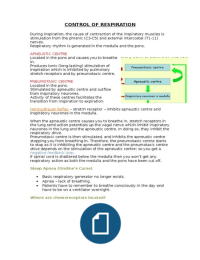
APNEUSTIC CENTRE
Located in the pons and causes you to breathe
in.
Produces tonic (long-lasting) stimulation of
inspiration which is inhibited by pulmonary
stretch receptors and by pneumotaxic centre.
PNEUMOTAXIC CENTRE
Located in the pons.
Stimulated by apneustic centre and outflow
from inspiratory neurones.
Activity of these centres facilitates the
transition from inspiration to expiration.
Hering-Breuer Reflex – stretch receptor – inhibits apneustic centre and
inspiratory neurones in the medulla.
When the apneustic centre causes you to breathe in, stretch receptors in
the lung send action potentials up the vagal nerve which inhibit inspiratory
neurones in the lung and the apneustic centre. In doing so, they inhibit the
respiratory drive.
Pneumotaxic centre is then stimulated, and inhibits the apneustic centre
stopping you from breathing in. Therefore, the pneumotaxic centre starts
to stop as it is inhibiting the apneustic centre and the pneumotaxic centre
drive depends on the stimulation of the apneustic centre; so you get a
negative feedback loop.
If spinal cord is shattered below the medulla then you won’t get any
respiratory action as both the medulla and the pons have been cut off.
Sleep Apnea (Ondine’s Curse)
Basic respiratory generator no longer exists.
Apnea – lack of breathing.
Patients have to remember to breathe consciously in the day and
have to be on a ventilator overnight.
Where are chemoreceptors located?
During inspiration, the cause of contraction of the inspiratory muscles is
stimulation from the phrenic (C3-C5) and external intercostal (T1-11)
nerves.
Respiratory rhythm is generated in the medulla and the pons.
APNEUSTIC CENTRE
Located in the pons and causes you to breathe
in.
Produces tonic (long-lasting) stimulation of
inspiration which is inhibited by pulmonary
stretch receptors and by pneumotaxic centre.
PNEUMOTAXIC CENTRE
Located in the pons.
Stimulated by apneustic centre and outflow
from inspiratory neurones.
Activity of these centres facilitates the
transition from inspiration to expiration.
Hering-Breuer Reflex – stretch receptor – inhibits apneustic centre and
inspiratory neurones in the medulla.
When the apneustic centre causes you to breathe in, stretch receptors in
the lung send action potentials up the vagal nerve which inhibit inspiratory
neurones in the lung and the apneustic centre. In doing so, they inhibit the
respiratory drive.
Pneumotaxic centre is then stimulated, and inhibits the apneustic centre
stopping you from breathing in. Therefore, the pneumotaxic centre starts
to stop as it is inhibiting the apneustic centre and the pneumotaxic centre
drive depends on the stimulation of the apneustic centre; so you get a
negative feedback loop.
If spinal cord is shattered below the medulla then you won’t get any
respiratory action as both the medulla and the pons have been cut off.
Sleep Apnea (Ondine’s Curse)
Basic respiratory generator no longer exists.
Apnea – lack of breathing.
Patients have to remember to breathe consciously in the day and
have to be on a ventilator overnight.
Where are chemoreceptors located?